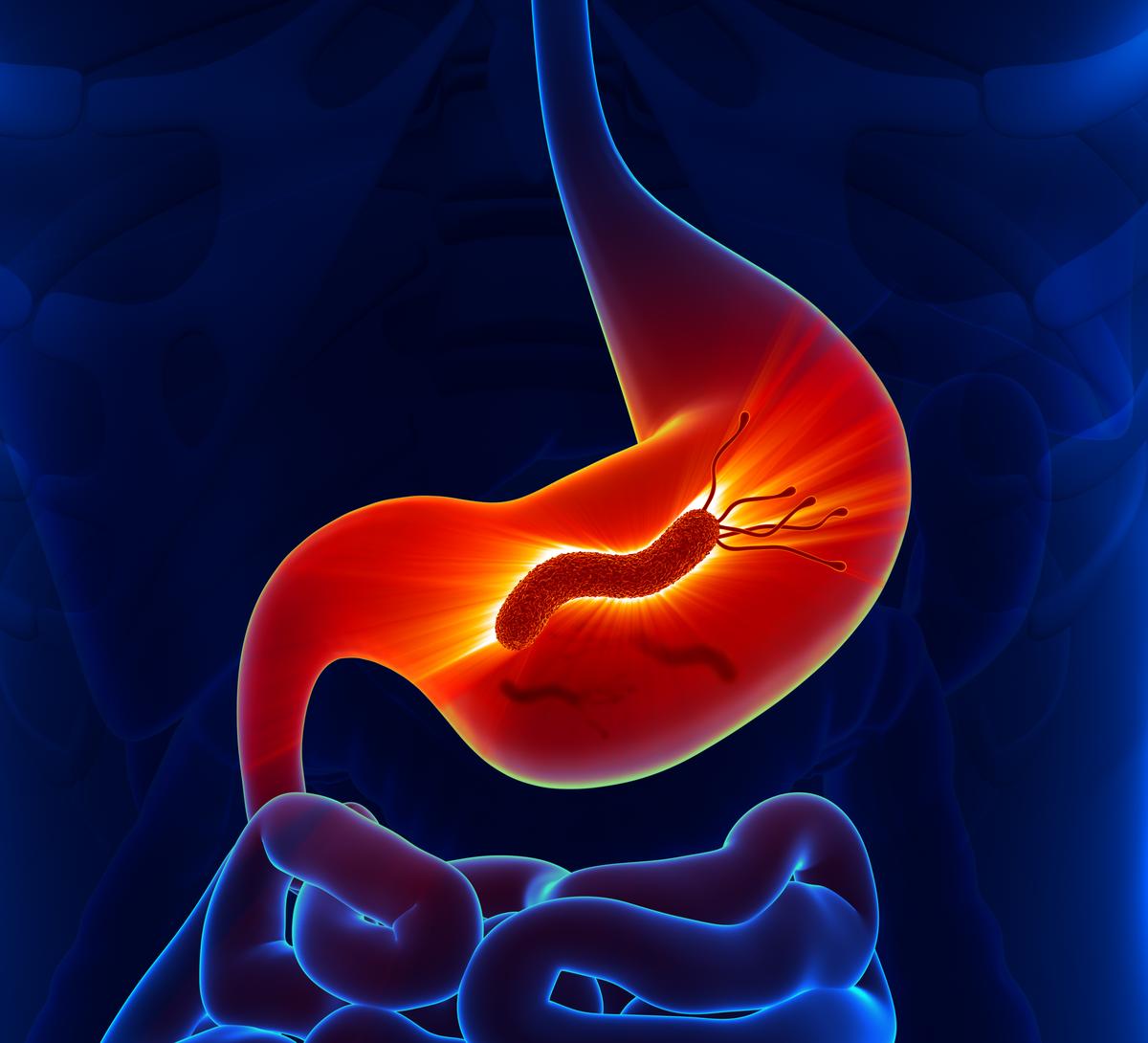
New Delhi: Eradicating Helicobacter pylori (H. pylori) infection early could become an important strategy for preventing gastric cancer, Nobel laureate and gastroenterologist Dr Barry Marshall said, stressing the need for wider testing, appropriate treatment and confirmation that the infection has been cleared.
Marshall, who shared the 2005 Nobel Prize in Physiology or Medicine with Robin Warren for their discovery of H. pylori and its role in gastritis and peptic ulcer disease, said the bacterium should no longer be regarded only as a cause of ulcers.
“H. pylori is much more than an ulcer organism. If the infection persists for many years, it can cause chronic inflammation in the stomach and increase the risk of gastric cancer. That gives us an opportunity because this is a potentially preventable cause of cancer,” Marshall told PTI.
Marshall was in India to attend the World Congress of Gastroenterology (WCOG 2026) in the national capital.
Held in India for the first time, the four-day event, which concluded on October 3, brought together around 3,000 delegates from 61 countries to discuss the changing global burden of gastrointestinal and liver diseases, including H. pylori infection, gastric cancer prevention, early diagnosis and treatment.
His comments come amid renewed global focus on population-based H. pylori “screen-and-treat” programmes for gastric cancer prevention.
The International Agency for Research on Cancer (IARC) working group has recommended such programmes in populations where the benefits are expected to outweigh potential harms.
Marshall said the priority should be to identify infected individuals and ensure they receive effective eradication therapy.
“If we can find the infection before there has been extensive damage to the stomach, we have a much better chance of preventing the chain of events that can eventually lead to cancer,” he said.
However, rising antibiotic resistance is emerging as a major challenge to this approach, he highlighted.
A 2026 review in Gastroenterology noted that increasing antimicrobial resistance is threatening the success of established H. pylori treatment regimens, while concerns also remain about the effects of repeated antibiotic exposure on the microbiome.
“We cannot simply keep giving the same antibiotics and expect the same results. Resistance varies between countries and even between regions, so treatment needs to take local resistance patterns into account,” Marshall said.
The IARC guidance similarly emphasises antibiotic stewardship, treatment based on local resistance patterns and follow-up testing to determine whether eradication has been successful.
Marshall said India, where H. pylori infection is common, has an important role to play in generating evidence on local bacterial strains and antibiotic resistance.
“India has a very large population with H. pylori, so it is an important setting for research. We need to understand which strains are circulating, what antibiotics are still effective and how we can make testing and treatment accessible,” he said.
According to the IARC guidance, Indian recommendations have included bismuth-containing quadruple therapy in areas with high clarithromycin resistance, highlighting the importance of regional resistance patterns in treatment decisions.
Marshall also stressed that successful treatment should not be assumed simply because symptoms improve.
“Treating the patient is only half the job. We should confirm that the bacterium has actually been eradicated. Otherwise, the patient may continue to carry the infection and remain at risk,” he said.
He said non-invasive testing could make detection easier and help expand screening.
“The future should be about making H. pylori testing simple, accurate and accessible. We should be able to identify people who are infected without making the process unnecessarily complicated,” Marshall said.
Marshall has also invented PYtest, a C14 urea breath test that provides a 15-minute, non-invasive and quantitative method for detecting current H.pylori infection using a breath sample from the patient.
The patient-friendly test could help Indian doctors detect active H. pylori infection through a quick diagnostic procedure.
PYtest is available in India through Pylorium Diagnostics, part of Trimed Australia, founded by Dr Marshall and headed by Bhanu Rahoni in India.
The need for prevention has gained urgency as gastric cancer remains a major global health burden, with the highest incidence concentrated in several Asian regions.
Dr Marshall said the H. pylori story also demonstrates the importance of questioning established medical assumptions.
“For many years, the stomach was considered too acidic to harbour bacteria and ulcers were largely attributed to other causes. The lesson is that medicine must remain open to new evidence, even when it challenges conventional wisdom,” he said.
Marshall’s discovery that H. pylori could survive in the human stomach and contribute to ulcer disease fundamentally changed the understanding and treatment of peptic ulcers, shifting management from acid suppression alone towards eradication of the underlying infection.