


Baramulla, Sep 5: Early detection of genetic and metabolic disorders can significantly improve health outcomes for children, experts said at a workshop in Baramulla on Saturday, stressing the need for timely screening, diagnosis and counselling at the primary healthcare level.
The one-day workshop, titled “UMMID: Early Genetic Screening, Diagnosis and Counselling for a Healthier Future,” was organised by Sher-i-Kashmir Institute of Medical Sciences (SKIMS), Soura, in collaboration with the Chief Medical Officer, Baramulla. The programme brought together doctors, Block Medical Officers and frontline health workers to strengthen awareness and capacity for early identification of genetic and metabolic disorders among pregnant women and newborns.
According to officials, the workshop focused on equipping healthcare workers with the knowledge required to identify high-risk pregnancies and newborns and ensure timely referral for specialised investigations and treatment.
Addressing the gathering, Additional Deputy Commissioner Baramulla, Syed Altaf Hussain Musavi, said early screening and diagnosis are crucial in identifying disorders that may otherwise remain undetected during the initial stages of a child’s life.
He said timely identification enables appropriate medical intervention, follow-up care and genetic counselling, while helping families make informed decisions regarding treatment and long-term management.
The ADC also called for stronger coordination between tertiary-care institutions and field-level health workers to improve implementation of genetic screening programmes.
During the workshop, experts highlighted challenges associated with identifying genetic and metabolic disorders before symptoms become severe and emphasised the role of frontline healthcare personnel in facilitating early detection.
Participants were briefed on screening protocols, warning signs, identification of high-risk cases, referral mechanisms and counselling procedures for affected families. Discussions also covered common genetic and metabolic disorders among newborns and pregnant women.
Experts from SKIMS Soura and Government Medical College (GMC) Baramulla delivered presentations and interacted with participants during technical sessions, addressing queries related to diagnosis, management and referral pathways.
Officials said the capacity-building programme was aimed at strengthening the ability of public health workers to identify cases requiring specialised screening and ensure timely referral for diagnostic evaluation and treatment.
The workshop concluded with a call for integrating genetic screening more effectively into maternal and newborn healthcare services and strengthening referral networks for early intervention.
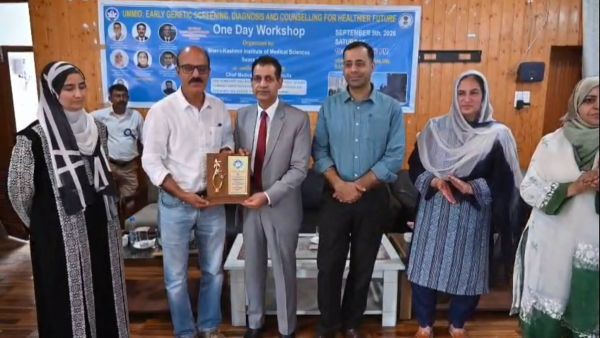
During the programme, an award of appreciation was presented to Block Medical Officer Sheeri, Dr Naseer Ahmad, for his performance, while other healthcare workers were also recognised for their contribution to awareness and early screening initiatives.