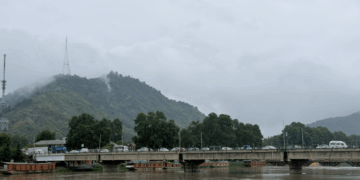
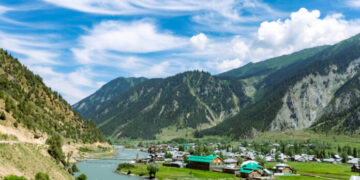
The Kashmir Valley fondly called ‘Paradise on Earth’, has long been admired for its breathtaking beauty, diverse culture, and unique climate. Nestled among snow-clad mountain ranges, the Valley draws its charm from the mighty Himalayas and Pir Panjal mountains that cradle it from all sides. From the hearts of these towering peaks emerge countless pristine streams, ponds, and springs, water veins that sustain the soul of Kashmir. The snow-covered mountains, dense forests, shimmering glaciers, and mesmerizing water bodies form a natural symphony that has attracted travellers not only from across India but from the farthest corners of the world.
Kashmir’s climate has always been one of its greatest treasures. With a temperate climate and distinct seasons- mild summers, crisp springs, golden autumns, and snowy winters- the Valley resembles a garland of sparkling gems, each season reflecting beauty in its own way. For decades, the region’s winter snowfall transformed the landscape into a white kingdom, its mountains appearing like crowned monarchs draped in glittering crystals of ice.
However, this cherished climate, which once defined the identity and livelihood of the Kashmiri people, is now undergoing alarming changes. Climate change, driven by global warming and environmental degradation, is steadily reshaping the ecological, cultural, and socioeconomic fabric of the region. What was once a paradise shaped by nature is now confronting unprecedented environmental challenges.
A Changing Climate: From Snow Paradise to Uncertain Winters
Two decades ago, Kashmir’s winters were long, harsh, and magical. Snowfall was abundant and prolonged, roofs had to be cleared of heavy snow, and children played with blocks of frozen ice even in the month of March. Snow blanketed not only the high mountains but also the plains, orchards, and villages. Those memories remain vivid for the older generation, who recall building chairs, tables, and play structures from solid slabs of ice formed after weeks of freezing temperatures. Today, that world has faded. Winters have grown warmer, shorter, and increasingly unpredictable. Snowfall in the plains has become rare, often turning into a distant winter dream for the younger generation. The once-massive snow pools have been replaced by dust pools, and the rhythm of the seasons has lost its traditional balance.
The temperature trends confirm this transformation. Kashmir is experiencing a clear warming pattern, with average temperatures rising consistently over the last decade. The Valley has broken several multi-decade temperature records in both winter and summer seasons. For instance: January 2024 was one of the warmest and driest Januarys in over 40 years. July 2024 recorded the hottest day in 25 years. In May 2024, temperatures rose sharply to 34.0°C in Qazigund and 34.4°C in Srinagar, nearly 9°C above normal. The average annual temperature has increased by 0.8°C over the last 37 years, and the warming rate in the greater Himalayan belt is twice the global average. These rising temperatures have directly contributed to reduced snowfall, longer dry spells, and irregular weather patterns that disrupt the natural seasonal cycle of the Valley.
Glacier Retreat and Vanishing Water Veins
Kashmir’s glaciers, once seen as eternal crowns of ice, are now retreating at alarming rates. Glaciers such as: Kolahoi Glacier (Pir Panjal), Machoi Glacier (Zanskar Range), Thajwas Glacier, Drang Glacier and Hoksar Glacier are shrinking due to accelerated melting, reduced snowfall, and persistent warming. These glaciers are the birth sources of countless rivers, streams, and springs that form Kashmir’s lifelines.
Major water bodies such as the Jhelum, Sindh, Dudhganga, and Kishanganga originate from glacier-fed springs and lakes like Verinag, Gangbal, and Kausar Nag. Over the years, many smaller streams, once vibrant sources of life and recreation, have dried up completely or lost their strength. Villagers recall the days when children bathed in cold, clean streams during summer holidays. Today, many of these nallahs have either disappeared or remain active only during brief monsoon seasons. The lowering water levels in rivers, especially during winter and early spring, now threaten: irrigation systems, hydropower generation, aquatic biodiversity
and the overall ecological balance of the Valley. A region historically rich in water is now grappling with water scarcity- a direct reflection of climate-induced changes.
Disrupted Agriculture and Fruit Economy
Kashmir’s economy is deeply weather-dependent. The Valley’s famed apple orchards, saffron fields, walnut trees, and vegetable farms depend heavily on stable seasonal patterns. However, climate change has severely impacted the agricultural sector. Farmers have reported: irregular flowering cycles, unseasonal rainfall damaging blossoms, unexpected frost in spring, extended dry periods leading to drought-like conditions, heat stress reducing fruit size, quality, and production. Apple orchards, which contribute significantly to the Valley’s economy, are particularly vulnerable. A single episode of heavy rain during flowering season can destroy an entire year’s crop. Similarly, above-normal winter temperatures fail to provide the necessary chilling hours required for proper bud development, directly reducing yield. Saffron cultivation has also suffered because the plant thrives only under specific climatic conditions, conditions increasingly disrupted by warming trends and rainfall imbalance.
Tourism Under Threat
Tourism, the backbone of Kashmir’s economy, is deeply tied to its climate—especially snowfall. Winter tourism at Gulmarg, Sonamarg, and Pahalgam depends heavily on timely snowfall. When snow becomes scarce or delayed, tourist footfall drops significantly, affecting livelihoods of thousands dependent on hotels, transportation, handicrafts, and outdoor sports.
Similarly, summer tourism also suffers when rivers shrink, lakes become polluted, or forest fires break out in hot, dry conditions. A paradise that once sold itself effortlessly on natural beauty now faces the challenge of preserving that very beauty.
Environmental Degradation: Forest Loss and Pollution
Climate change in Kashmir is intensified by human activities which includes rapid urbanization, unregulated construction, deforestation, wetland encroachment, pollution of water bodies and decline in green cover.
Forests in Kashmir are not only biodiversity hotspots but also natural climate regulators. Yet deforestation, driven by land hunger, timber smuggling, and the pressures of population growth has weakened the Valley’s natural defence against climate extremes. Shrinking wetlands like Hokersar, Wular, and Dal Lake have further reduced the region’s ability to absorb excess rainfall, filter pollutants, and regulate temperature. Wetlands that once supported fishing communities, water chestnut collectors, and lotus root harvesters are now struggling under sewage inflow, siltation, and climate stress. The result is a direct blow to the livelihoods dependent on water bodies.
Increasing Natural Disasters
The Valley has witnessed a rise in extreme weather events, including: flash floods, drought-like conditions, heatwaves, landslides and forest fire. These events were once rare but are now becoming frequent. The 2014 floods, for example, were a grim example of how climate change combined with poor land management can devastate a region. Warmer temperatures and prolonged dry spells have increased forest fires in many areas of South, North and Central Kashmir, destroying forests, wildlife, and contributing to air pollution.
Impacts on Society, Culture, and Heritage
Climate change is not only altering landscapes; it is reshaping culture. Many traditional practices, festivals, and rural customs that revolved around snowfall, seasons, and agricultural cycles are fading. The childhood memories of earlier generations, snow games, frozen ponds, long winter tales are no longer part of the experiences of today’s children. Even architectural traditions are changing. Earlier homes were built to survive harsh snowy winters, whereas today’s construction patterns reflect milder temperatures and changing needs. Climate change threatens heritage sites, wooden shrines, old settlements near rivers, and cultural landscapes shaped over centuries.
Conclusion:
A Valley at a Crossroads:
Climate change is one of the greatest environmental challenges facing humanity, and Kashmir stands at the frontline of this crisis. From rising temperatures and shifting seasons to shrinking glaciers and stressed water bodies, the Valley’s natural systems are under severe pressure.
Yet, the future is not hopeless. Protecting Kashmir’s fragile environment requires: strong climate policies, conservation of water bodies, sustainable tourism, reforestation, pollution control, scientific monitoring of glaciers, community awareness and responsible development.
If collective action is taken today, Kashmir can still preserve its natural heritage for future generations. The Valley has always symbolized beauty, resilience, and harmony with nature. With dedicated effort, it can remain a paradise not just in memory, but in reality.
The writer is an Educationist. Tawheed.biotech12@gmail.com