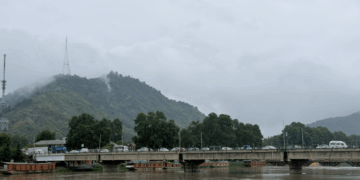
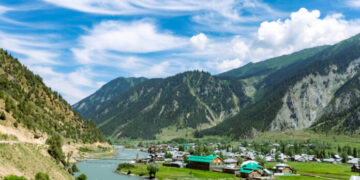
There was a time when Kashmir’s lakes and rivers were celebrated not merely for their breathtaking beauty but for the life they sustained. They nourished settlements, supported agriculture, regulated floods, preserved biodiversity, and shaped the Valley’s cultural identity. Dal Lake mirrored the Zabarwan hills in pristine clarity, Wular Lake breathed life into the Jhelum, Nigeen shimmered like a sapphire amidst the willows, while countless streams carried crystal-clear waters from glaciers and springs to villages across the Valley.
Today, that picture is fading.
Across Kashmir, a quiet ecological crisis is unfolding in plain sight. Our lakes, wetlands, rivers, and streams are dying a slow and painful death. What once symbolized abundance is increasingly becoming a reminder of neglect. Floating plastic bottles, untreated sewage, construction debris, encroachments, invasive weeds, and shrinking shorelines have become distressingly common sights. The tragedy is that this decline has not happened overnight. It has unfolded gradually, year after year, while society watched with concern but often without meaningful action.
The deterioration of Kashmir’s water bodies has become one of the greatest environmental challenges facing the region. Yet it is also among the most misunderstood. Public discourse often revolves around one recurring question: How can our lakes remain polluted despite hundreds of crores being spent on their restoration? It is a valid question, but it tells only part of the story.
The truth is that no amount of government spending can revive a lake if pollution continues to flow into it every single day. Mechanical dredging, weed removal, and beautification projects may offer temporary relief, but they cannot substitute for responsible governance, scientific planning, and public stewardship. Saving Kashmir’s waters requires much more than money—it demands a collective change in attitude.
KEY TAKEAWAY: The truth is that no amount of government spending can revive a lake if pollution continues to flow into it every single day.
The scale of the crisis is alarming. According to the Comptroller and Auditor General (CAG) of India, Jammu and Kashmir had 697 recorded water bodies in 1967. Today, 315 of them have disappeared completely, while another 203 have shrunk considerably. These are not merely disappearing ponds or marshes; they represent vanishing ecosystems that once stored floodwaters, recharged groundwater, supported wildlife, moderated local climate, and sustained livelihoods.
Dal Lake perhaps best illustrates both the beauty and the tragedy of Kashmir’s environmental story. Spread over nearly 25 square kilometres in the early twentieth century, the lake has steadily shrunk because of encroachments, siltation, pollution, and unchecked urban expansion. Decades of conservation programmes have involved dredging operations, de-weeding campaigns, relocation initiatives, and infrastructure development. Hundreds of crores of rupees have been spent over the years, yet the lake continues to battle eutrophication, nutrient enrichment, declining water quality, and increasing human pressure.
The problem lies not only within Dal itself but in everything that flows into it. Untreated sewage from surrounding settlements, household waste, detergents, agricultural runoff, and plastic waste continue to enter the lake through drains and channels. Every fresh load of pollutants undermines the progress made by restoration projects. It is like attempting to empty a flooded room while leaving the tap running.
Wular Lake presents an equally worrying picture. Recognised as one of Asia’s largest freshwater lakes and designated as a Ramsar Wetland of International Importance, Wular performs ecological functions that extend far beyond its shoreline. It acts as a natural flood basin for the Jhelum River, supports thousands of migratory birds, sustains fisheries that provide livelihoods to local communities, and plays a vital role in regulating Kashmir’s hydrological cycle.
Yet Wular has suffered extensive degradation due to excessive silt deposition, encroachments, willow plantations, agricultural expansion, and pollution carried by the Jhelum and its tributaries. Similar pressures are evident in Nigeen Lake, Manasbal Lake, Anchar Lake, Hokersar Wetland, Shallabugh Wetland, and numerous smaller streams that once formed the ecological arteries of the Valley.
The degradation of these water bodies is no longer merely an environmental concern; it has become an economic, social, and public health challenge.
Tourism—the backbone of Kashmir’s economy—depends heavily upon the Valley’s natural beauty. Visitors arrive expecting pristine lakes, tranquil waterways, and breathtaking landscapes. Polluted shorelines, foul-smelling waters, and floating garbage diminish that experience and threaten the reputation Kashmir has earned over generations.
Fisheries have also suffered. Declining water quality affects fish breeding, reduces aquatic biodiversity, and undermines the livelihoods of thousands of families dependent on freshwater resources. Farmers increasingly face uncertainty as degraded wetlands lose their capacity to store and gradually release water during dry periods.
Even more concerning is the impact on flood management. Wetlands function like natural sponges, absorbing excess rainwater during heavy precipitation and releasing it gradually afterwards. Their disappearance increases flood vulnerability. The devastating floods of 2014 reminded Kashmir that nature’s protective systems cannot be replaced simply by concrete embankments and engineering structures. Healthy lakes and wetlands remain among the Valley’s most effective natural flood defences.
Climate change has further intensified these challenges. Rising temperatures, declining snowfall, retreating glaciers, erratic rainfall patterns, and prolonged dry spells are placing unprecedented stress on freshwater ecosystems throughout the Himalayas. Reduced snow accumulation means less sustained inflow during summer months, while intense rainfall events increase erosion and sediment transport into rivers and lakes.
Ironically, just as climate change increases our dependence on healthy freshwater ecosystems, we continue to weaken them through pollution and poor planning.
KEY TAKEAWAY: Ironically, just as climate change increases our dependence on healthy freshwater ecosystems, we continue to weaken them through pollution and poor planning.
Government institutions undoubtedly bear a significant responsibility. Conservation cannot succeed without efficient sewage treatment plants, scientific catchment management, strict environmental regulation, regular monitoring of water quality, effective solid waste management, and firm action against illegal encroachments.
Equally important is transparency. Conservation projects involving public funds should be subject to periodic environmental audits, publicly accessible progress reports, and independent scientific evaluation. Citizens deserve to know not only how much money has been spent but also whether measurable improvements in water quality, biodiversity, and ecosystem health have actually been achieved.
However, it would be both unfair and inaccurate to assign the entire blame to government agencies alone.
Environmental degradation begins long before waste reaches a lake. It starts when a household dumps garbage into a nearby stream, when untreated wastewater is discharged into drains, when plastic bottles are discarded carelessly after picnics, when construction debris is dumped along riverbanks, or when commercial establishments bypass proper waste disposal systems. Every such action contributes incrementally to the degradation of Kashmir’s waters.
Perhaps the greatest challenge is not technological but behavioural.
No government can deploy enough workers to monitor every stream, every drain, and every village. Environmental protection ultimately depends upon civic responsibility. If citizens continue to treat rivers and lakes as convenient dumping grounds, even the most ambitious restoration programmes will struggle to achieve lasting success.
This calls for a new environmental ethic—one that recognises water bodies not merely as tourist attractions but as living ecosystems essential for human survival.
Schools and universities must strengthen environmental education beyond classroom textbooks. Community organisations should adopt local streams and wetlands for regular clean-up campaigns. Religious institutions can play an influential role by encouraging environmental stewardship as a moral obligation. Tourism operators should promote responsible tourism practices, while hotels, restaurants, and houseboat owners must comply strictly with waste management norms.
Local communities should become active partners rather than passive observers. Citizen-led monitoring groups can report illegal dumping, identify encroachments, and work alongside authorities in protecting neighbourhood water bodies. Such community participation has proven successful in several countries where lake restoration became a shared public movement rather than solely a government programme.
There is also much that policymakers can learn from successful restoration efforts across the world. London’s River Thames, once declared biologically dead, has been revived through decades of strict pollution control, sewage treatment, and continuous monitoring. South Korea restored Seoul’s Cheonggyecheon stream by removing concrete structures and reviving natural waterways. Similar examples demonstrate that degraded water bodies can recover when science, political commitment, and public participation work together.
Kashmir need not replicate these models blindly, but it can certainly adapt their guiding principles: pollution prevention before restoration, scientific planning over cosmetic beautification, transparency over bureaucracy, and public participation over administrative isolation.
The future demands a comprehensive and integrated water management strategy. Every lake, wetland, stream, and river must be viewed as part of one interconnected ecosystem rather than as isolated conservation projects. Catchment forests must be protected. Decentralised sewage treatment facilities should intercept wastewater before it enters natural water bodies. Modern technologies such as satellite monitoring, GIS mapping, drone surveys, and real-time water quality sensors should complement traditional ecological knowledge possessed by local communities.
Most importantly, conservation should become a permanent commitment rather than a seasonal campaign launched whenever environmental concerns dominate headlines.
Kashmir’s waters have shaped its civilisation for centuries. They have inspired poets, sustained communities, welcomed travellers, and nurtured extraordinary biodiversity. They are far more than scenic landscapes; they are living lifelines that support the Valley’s ecology, economy, and identity.
History will judge our generation not by the number of restoration projects we announced or the amount of money we spent, but by whether we had the wisdom to preserve these priceless natural treasures before it was too late.
Saving Dal, Wular, Nigeen, Manasbal, Hokersar, the Jhelum, and countless streams is not solely the responsibility of the government, nor can it be left entirely to environmental activists. It is a shared obligation that belongs equally to policymakers, local bodies, scientists, businesses, tourists, and every citizen who calls Kashmir home.
The silent choking of Kashmir’s waters can still be reversed. But that reversal will begin not with another dredging machine or another budget announcement. It will begin the day we collectively realise that every drop of water we protect today is an investment in the future of Kashmir.
KEY TAKEAWAY: The silent choking of Kashmir’s waters can still be reversed… it will begin the day we collectively realise that every drop of water we protect today is an investment in the future of Kashmir.
For if our lakes disappear, we will lose far more than beautiful landscapes. We will lose a part of our history, our culture, our resilience, and ultimately, ourselves.