

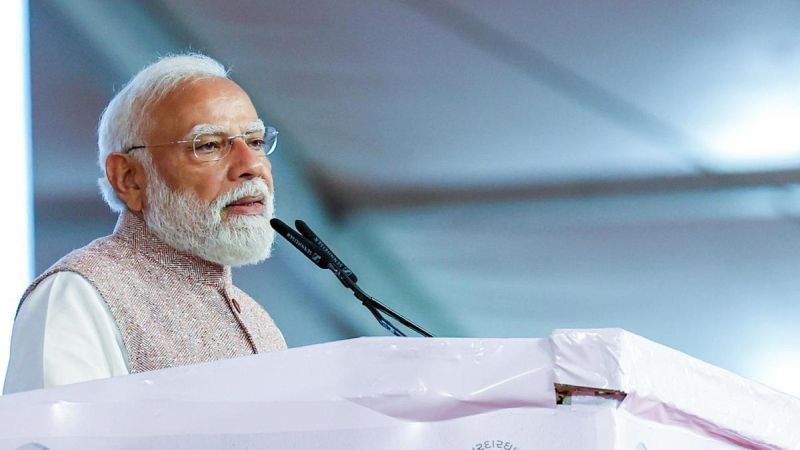
Following PM Narendra Modi’s visit to the Netherlands earlier in May, the bilateral relationship between the two countries have improved greatly. “Strategic Partnership”, the new agreement, signed by PM Rob Jetten and Modi is expected to move beyond trade, turning it into a long-term plan focusing on technology, clean energy, and secure supply chains.
The partnership connects Dutch expertise in advanced technology with India’s large economy and growing innovation sector.
Considering that the Netherlands views India not just as a place to sell goods, but as a major global power. This cooperation helps secure essential industries and supports India’s goals for modern manufacturing and development.
Trade, Technology, and Clean Energy
The Netherlands is one of India’s top trade partners in Europe. As per official reports, the total trade between them reached USD 27.8 billion recently, and India has a trade surplus of USD 17.393 billion.
The Netherlands is also the fourth-largest investor in India, with total investments reaching USD 55.6 billion. Over 300 Dutch companies reportedly operate in India, and an equal number of Indian companies are based in the Netherlands. To make trade easier, both sides have agreed to help small businesses, improve market access, and sign a new customs agreement to reduce trade costs and delays.
Technology and green energy exchange are the most important parts of this “Strategic Partnership”. A major highlight is the collaboration between the important companies i.e. India’s Tata Electronics and ASML, the Dutch tech company.
Furthermore, the improved ties between the two countries will support the building of a semiconductor factory in Dholera, Gujarat, helping India become a key player in the global microchip industry. Both sides are working alongside on critical minerals, which are necessary for advanced manufacturing.
For clean energy, the nations created a Roadmap on Green Hydrogen to speed up the production and export of clean fuels. They also formed a Joint Working Group on Renewable Energy to share knowledge on battery storage and bioenergy.
In terms of infrastructure, Dutch water experts will provide technical support for the Kalpasar Project in Gujarat, which aims to build a massive freshwater reservoir for drinking water, farming, and tidal power.
Agriculture, Education, and People-to-People Ties
The “Strategic Partnership” is deemed to bring practical benefits to daily life, farming, and healthcare through several local projects. A new training center for dairy farming will open in Bengaluru to improve milk production and farming skills. Another center for flowers will be set up in West Tripura to help local farmers earn more income.
Indian and Dutch health institutes will work together to research infectious diseases, digital healthcare, and how climate change affects public health. For schools, Nalanda University and the University of Groningen in the Netherlands will start joint academic programs, allowing students and teachers to study and work together across borders.
The human connection remains the key element in this collaboration and relationship.
The Netherlands is home to 240,000 people of Indian origin, which is the second-largest Indian community in Europe. Both governments are working to make visas faster and easier for skilled professionals and students.
The renewed ties could prove critical for cultural exchange. The Netherlands has previously returned 11th-century Chola Copper Plates to India. These ancient items contain royal writings in Tamil and Sanskrit, and their return helps restore an important piece of historical heritage. By linking technology, energy, and human connection, the partnership between India and Netherlands is likely going to build secure outcomes for both nations.
COURTESY- PIB SRINAGAR


