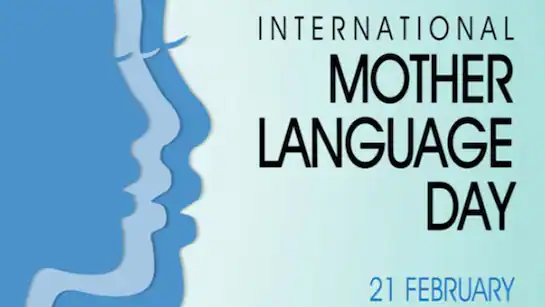
The International Mother Language Day, celebrated on 21 February each year, reminds us that languages are living expressions of identity, culture, and memory. The day, proclaimed by UNESCO in 1999, encourages linguistic diversity, multilingual education, and the preservation of endangered languages. The issues raised in the world this time are very close to the current state of the Kashmiri language.
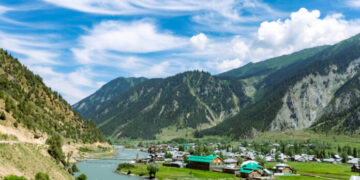
Kashmiri is a regional language in Jammu and Kashmir and the emotional fibre that connects generations. It bears folklore, poetry, spirituality, and common history. However, even with its richness, its daily use is slowly fading, especially among the younger generations.
Language and Cultural Identity
The first thoughts and feelings of a child are formed by the mother tongue. It is in this language that a child learns about love, discipline, tradition and belonging first. By losing its mother tongue, a community runs the risk of losing its attachment to its cultural heritage.
The wisdom of Kashmiri literature and spiritual traditions is immense. Mystic poet Lal Ded wrote profoundly philosophical verses in her Vakhs, and Sheikh ul-Alam (Nund Rishi) taught moral and spiritual lessons in simple verses in Kashmiri. Their speech defined the ethical basis of the society. To lose the fluency in Kashmiri would be to lose the richness of these original expressions.
The Increasing Insecurity of Speaking Kashmiri
One of the disturbing facts of the present day is that most individuals are not comfortable using Kashmiri, particularly in official or urban environments. English is commonly linked to smartness and chance, whereas Urdu is connected with culture and literature. Unfortunately, Kashmiri is occasionally viewed as informal or less prestigious.
We usually train our children to speak English and Urdu well thinking that this will make them successful. But we forget that their initial strength is their mother tongue. Some parents do not promote Kashmiri conversations at home, which sends the wrong message that it is not valuable.This attitude slowly breeds a generation that knows Kashmiri but is afraid to use it with confidence.
A Classroom Reflection by a Teacher
This change has been experienced by me as a teacher. Most students are reluctant to speak Kashmiri even when they feel more at ease with it. They are trying to put answers in English, and they are not always able to articulate ideas. However, when allowed to talk about ideas in Kashmiri, they get deeper, and their confidence increases.
I have noted that children understand complicated issues better when they are first explained in their native language. When they understand, they learn English terms with ease. This classroom experience has made me believe that a mother tongue is not an obstacle to contemporary education; on the contrary, it enhances the learning base.
Educational Significance of Mother Tongue
Education research has always highlighted that early learning in the mother tongue improves understanding, cognitive growth, and creativity. Children acquire knowledge more quickly when they are taught in a language they understand. They learn to think critically rather than memorize.
This principle is highly encouraged in the National Education Policy 2020. It suggests that, where feasible, the medium of instruction up to at least Grade 5, and preferably up to Grade 8, should be the mother tongue or local language. The policy emphasizes that children learn concepts more effectively in their native language and that multilingualism must be promoted instead of discouraged. In the case of areas such as Jammu and Kashmir, this policy offers a great chance to rejuvenate the Kashmiri in schools and early education.
Striking a Balance between Multilingualism and Modern Aspirations
It does not mean the rejection of English or Urdu. In the modern globalized world, speaking multiple languages is a strength. English connects students to the world of knowledge, while Urdu connects students to the world of literature. However, a strong background in one’s own language makes it easier to learn other languages and makes it more meaningful. It is the balance that is the true progress. A child who feels secure in his or her language feels secure in the world. When we value Kashmiri, we are promoting inclusive growth and not the destruction of culture.
Transforming Social Perceptions
Attitudes in society are critical to the survival of a language. When families start to be proud of speaking Kashmiri at home, children will automatically follow. To normalize the use of Kashmiri in formal spaces, schools can arrange cultural programs, storytelling, and debates in Kashmiri.
The International Mother Language Day is a reminder that linguistic diversity is a global responsibility. Defending Kashmir is not just a romantic endeavour; it is a promise to save history, knowledge, and identity.
Last but not least, the UNESCO message on International Mother Language Day encourages communities across the world to preserve their language. This call is very relevant in the context of Jammu and Kashmir.
As an educator, I have seen the reluctance and the potential in students. They take pride in their mother tongue when motivated. The National Education Policy 2020 guidelines also support the idea that the reinforcement of mother tongue education is not retrogressive but progressive.
Preserving Kashmiri ensures that growth advances alongside identity. Safeguarding our cultural memory and intellectual heritage, we have to start by appreciating the language that initially taught us how to speak, feel, and belong.