SRINAGAR: The Federation of Chambers of Industries Kashmir (FCIK) has urged Chief Secretary Atal Dulloo to seek a review of the recent electricity tariff order issued by the Joint Electricity Regulatory Commission (JERC), while also seeking interim relief from its implementation pending reconsideration.
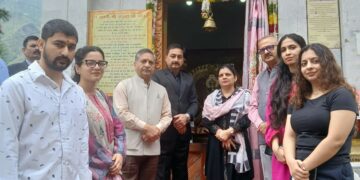
A delegation led by FCIK Advisory Committee Head Shahid Kamili met the Chief Secretary and discussed the impact of the tariff hike on the industrial sector. The delegation argued that while power distribution companies had sought an increase of around 5 per cent, the tariff hike approved for industry was substantially higher and imposed without stakeholder consultation.
FCIK said the increase comes at a time when industries are facing weak market conditions, industrial sickness, delayed payments and rising regulatory costs. It urged the government to consider the cumulative impact of prolonged disruptions and adverse business conditions before imposing additional power costs on enterprises.
The meeting followed FCIK’s recent interaction with Chief Minister Omar Abdullah on issues affecting existing industries pending the finalisation of the Revised Industrial Policy.
Besides the tariff issue, the Federation raised four priority concerns—ease of doing business, public procurement, revival of sick and stressed units, and raw material availability for mineral-based industries.
On ease of doing business, FCIK sought a trust-based regulatory framework featuring self-certification, automatic renewals, deemed approvals, single-window clearances, digitisation and rationalisation of recurring permissions and charges. It said regulatory processes should facilitate legitimate businesses rather than burden them.
The Federation also highlighted concerns over public procurement, stating that many local manufacturing units were receiving few government orders despite substantial procurement from outside J&K. It sought purchase preference for local industries at competitively discovered L1 rates without any compromise on quality standards.
FCIK proposed strengthening SICOP for identified locally manufactured products, introducing MSME-friendly tendering practices and separating industrial supplies from works contracts. It also offered to provide examples of GeM tenders that, it claimed, disadvantage local manufacturers.
On industrial sickness, the Federation sought power and other amnesty measures to help stressed units clear legacy liabilities. It also submitted a copy of the SBI One-Time Settlement (OTS) Scheme of 2020, seeking a similar settlement mechanism from banks operating in J&K, particularly J&K Bank.
The Federation further highlighted shortages of raw material faced by mineral-based industries, especially plaster of Paris processing and stone-crushing units, due to delays in finalisation or renewal of extraction arrangements. It sought an interim mechanism for regulated supply to prevent disruptions to industrial activity and employment.
According to FCIK, the Chief Secretary assured the delegation that the issues raised would be examined on priority with the concerned departments and authorities and extended support in addressing the challenges facing existing industries in the Union Territory.