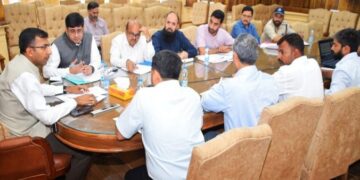
Srinagar: Chief Secretary Atal Dulloo on Tuesday reviewed the progress of the Jammu and Kashmir Competitiveness Improvement of Agriculture and Allied Sectors Project (JKCIP) with a visiting supervision mission of the International Fund for Agricultural Development (IFAD), directing implementing agencies to accelerate execution and ensure timely delivery of benefits to eligible beneficiaries.
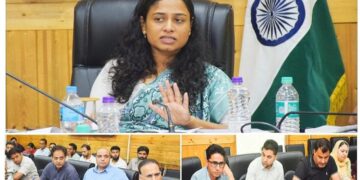
The review meeting was attended by IFAD Country Coordinator Meera Mishra, senior officers of the Agriculture Production Department, including Additional Chief Secretary Ashish Chandra Verma, Managing Director, Holistic Agriculture Development Programme (HADP), officials of the Project Management Unit (JKCIP), and other stakeholders.
The IFAD supervision mission, on a two-week visit to Jammu and Kashmir from July 2 to 14, is conducting field assessments to evaluate the implementation, quality and impact of interventions under the project, which is jointly financed by IFAD, the Government of India and the Jammu and Kashmir Government.
During the meeting, officials presented an overview of the project’s physical and financial progress, implementation status, digital governance initiatives and the Annual Work Plan and Budget for the coming financial year.
While appreciating the progress achieved, Dulloo said the focus should now shift from approvals to creation of tangible assets and sustainable livelihood opportunities. He directed all implementing agencies to expedite field-level execution and ensure benefits reach eligible beneficiaries within stipulated timelines.
Reviewing the project’s credit linkage component, the Chief Secretary noted that more than 2,550 applications had been forwarded to financial institutions but observed that loan disbursement needed to be expedited. He called for closer coordination with banks to remove procedural bottlenecks and ensure timely sanction and release of credit for rural enterprises.
The meeting was informed that farmer registrations under the project have increased to 58,307, while applications received have crossed 64,750. Of these, more than 39,900 applications have been approved and 7,406 livelihood units established across the Union Territory.
Officials said the Climate Smart and Market-Led Production component continued to account for the largest share of project interventions, followed by support for vulnerable communities and expansion of the agribusiness ecosystem.
The project has supported cultivation of high-value and niche crops, including vegetables, Bhaderwah Rajmash, Mushkbudji, Basmati and saffron, besides developing water management infrastructure, protected cultivation, mushroom and honey production units, seed villages and high-density horticulture orchards.
The meeting was also informed that the project has facilitated establishment of grading and post-harvest infrastructure, incubation of agri-startups, entrepreneurship development, buyer-seller interactions and participation in national trade fairs to strengthen agricultural value chains and improve market access.
Livelihood initiatives for pastoralists and vulnerable communities include establishment of income-generating sheep units, distribution of ice boxes to fisherfolk, support for diversified enterprises, creation of milk collection centres and promotion of improved livestock breeding programmes, officials said.
Reviewing the Annual Work Plan and Budget, the Chief Secretary stressed timely execution of proposed activities, efficient utilisation of available financial resources and strict adherence to project timelines to ensure intended developmental outcomes are achieved within the project period.
The IFAD delegation appreciated the progress made by the Jammu and Kashmir Government in institutionalising transparent digital systems for project implementation and acknowledged improvements since the previous supervision mission. It also shared recommendations to strengthen implementation quality, sustainability and community participation.
Speaking on the occasion, IFAD Country Coordinator Meera Mishra reiterated the organisation’s commitment to supporting sustainable agricultural transformation, climate-resilient farming, inclusive rural livelihoods and entrepreneurship development in Jammu and Kashmir.
Dulloo reaffirmed the government’s commitment to successful implementation of the project and directed all stakeholder departments to work closely with the IFAD mission to incorporate its recommendations. The meeting concluded with discussions on the roadmap for the remaining project period, focusing on implementation efficiency, faster credit flow, inter-departmental convergence and measurable socio-economic outcomes.