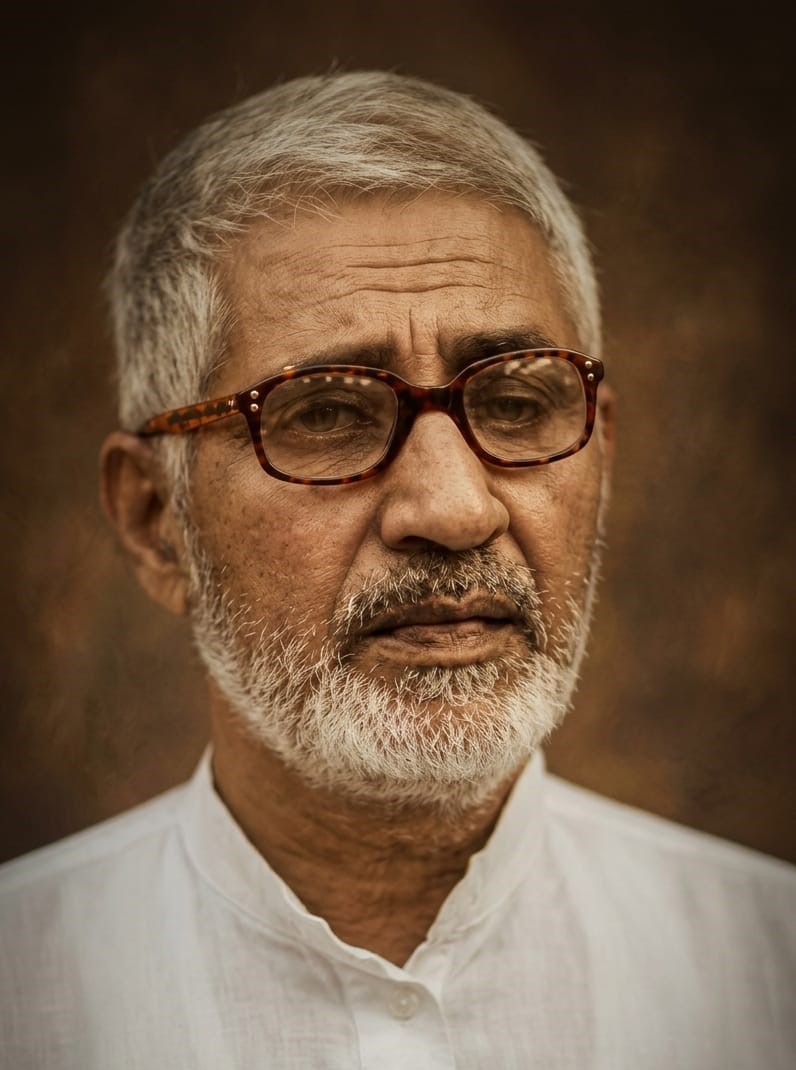
Human beings come into this world, spend a brief period of their lives, and eventually depart. Yet, there are some individuals whose contributions, character, and achievements leave an indelible mark on history. Though they are no longer physically present, their legacy continues to inspire generations. One such remarkable personality was Ghulam Mohammad Bhat, a legendary Kashmiri artist whose melodious voice and masterful command of the traditional Tumbaknaer continue to resonate in the cultural memory of Kashmir.
Born in 1925 in the historic village of Maliknag in Anantnag district, Ghulam Mohammad Bhat grew up in a modest family. From an early age, he displayed a deep passion for music and folk arts. Under the spiritual guidance of his mentor, he nurtured his God-gifted talent and devoted his life to the pursuit of music.
At a time when Jammu and Kashmir was under Dogra rule and educational and economic opportunities for Muslims were severely limited, Bhat adopted Gabba-making (traditional rug-making) as his livelihood. While working in Kadipora, he would often sing Kashmiri Sufi poetry, captivating those around him with his enchanting voice. People gathered simply to listen to him sing, and thus his talent gradually gained public recognition.
During the political awakening and freedom movements of the era, Bhat did not remain a silent observer. Through his revolutionary and inspirational songs, he instilled a spirit of courage, dignity, and self-respect among the people, especially the youth. His involvement in such activities led to his imprisonment in Srinagar Central Jail for six months.
Following the political transformation of the state, his talent and contributions were formally acknowledged. The then Deputy Prime Minister, Bakshi Ghulam Mohammad, recognized his artistic abilities and appointed him as an artist at Radio Jammu in 1947. When Radio Kashmir Srinagar was established in July 1948, Bhat became one of its pioneering artists.
Although he never received formal training in music, his natural brilliance enabled him to emerge as one of the most influential figures in Kashmiri folk music. He introduced fresh dimensions to traditional folk genres such as Chhakri and Rouf, enriching them with creativity and innovation.
Ghulam Mohammad Bhat was also the first artist to transform famous Kashmiri folk tales into musical narratives. Stories such as Yousuf Nama, Aka Nandun, Himal Nagrai, and Zanma Zor were brought to life through his powerful voice and artistic vision, making them accessible to wider audiences.
Alongside the renowned poet and lyricist Ali Mohammad Raih, Bhat played a pivotal role in introducing the Kashmiri ghazal format on Radio Kashmir. Throughout his career, he performed solo songs, duets, and group compositions, producing numerous memorable works. Among his most celebrated songs are:
Majnoon Gazas Cheeni Maye, Islamabad Chh Roni Kangriya, Gulab Paanas Kaala Rang Gom,
Mardaan Heza Watyi Na Mard Wepch Na Taata
One of the unique distinctions of his career was his collaboration with legendary Indian playback singer Asha Bhosle, for whom he played the Tumbaknaer in a Kashmiri song—an achievement that remains a proud chapter in Kashmir’s musical history.
Residents of Anantnag still recall the days when his songs were broadcast through the public radio speakers installed in Sherbagh Park. People would eagerly gather to listen to his voice, reflecting the immense popularity he enjoyed among the masses.
As a Tumbaknaer maestro, Ghulam Mohammad Bhat occupied an unmatched position. Such was his mastery of the instrument that the tune he played continues to be featured in the sign-off music of Radio Kashmir. His artistic excellence earned appreciation not only across India but also on international platforms. As part of various cultural delegations, he represented Kashmir in different states and showcased its rich musical heritage.
In 1985, he was invited to Japan, where he mesmerized audiences with his extraordinary talent. So impressed were the Japanese people and cultural institutions that his Tumbaknaer was preserved in an art museum as a token of admiration—an exceptional honor for both the artist and Kashmiri culture.
Ghulam Mohammad Bhat served Radio Kashmir Srinagar for nearly four decades before retiring in December 1985. On May 20, 2006, he passed away, leaving behind a rich artistic legacy that continues to inspire music lovers and cultural enthusiasts.
Beyond his artistic greatness, Bhat was widely respected for his humility, piety, and noble character. He was a devoted husband, a responsible father, and a man deeply rooted in spiritual values. Those who knew him still fondly remember his powerful and soul-stirring call to prayer, which reflected his deep faith and sincerity.
Artists, writers, and craftsmen are among the most valuable assets of any society. Preserving their contributions and passing them on to future generations is a collective responsibility. Institutions such as the Jammu and Kashmir Academy of Art, Culture and Languages, Radio Kashmir, Doordarshan, and other media organizations must continue to highlight the achievements of legendary figures like Ghulam Mohammad Bhat so that younger generations remain connected to their cultural heritage.
The life of Ghulam Mohammad Bhat stands as a shining testament to the fact that true art never dies. Time may pass and generations may change, but artists of his stature continue to live on through their voice, their work, and the enduring legacy they leave behind.