Introduction
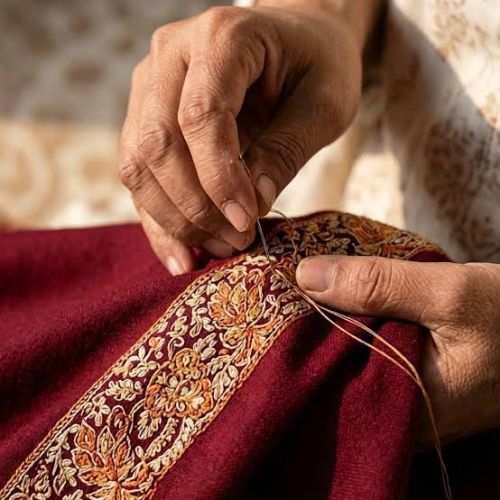
In the evolving social and economic landscape of Kashmir, women are playing an increasingly important role in supporting their families and shaping their futures. Among the various livelihood opportunities available, Sozni embroidery has emerged as a powerful means of empowerment. Renowned for its delicate and intricate needlework on Pashmina shawls and other garments, this traditional Kashmiri craft is not only a symbol of the region’s rich cultural heritage but also a source of dignity, confidence, and financial independence for many women.
In many parts of Kashmir, particularly in economically weaker households, women have limited access to higher education and formal employment opportunities. Under such circumstances, Sozni embroidery provides them with a valuable skill through which they can earn a livelihood and contribute to their family income. For many, it is not merely a profession but a necessity, as financial hardship compels them to shoulder family responsibilities, often in the absence of adequate support.
One of the greatest advantages of Sozni embroidery is that it allows women to work from home while balancing family responsibilities and cultural expectations. The craft nurtures patience, creativity, precision, and perseverance, while providing artisans with a sense of identity, purpose, and self-reliance. However, despite their dedication and exceptional craftsmanship, Sozni artisans continue to face numerous challenges, including low wages, limited market access, dependence on middlemen, and increasing competition from machine-made products.
This article examines the current status of Sozni embroidery in Kashmir and highlights its role not only as a traditional craft but also as an important pathway to women’s economic empowerment, resilience, and social development.
Problems Faced by Women Engaged in Sozni Embroidery
- Poverty
Many women engaged in Sozni embroidery belong to economically disadvantaged families where meeting even basic needs is a daily struggle. Financial hardship often forces them to begin working at an early age, limiting their educational opportunities and future career prospects.
- Low Wages
Sozni embroidery requires exceptional skill, patience, and countless hours of meticulous work. Despite this, artisans often receive very low wages. Middlemen usually earn a larger share of the profits, while the women who create the embroidery are paid only a small fraction of its market value.
- Limited Educational Opportunities
Economic constraints and family responsibilities prevent many women from completing their education. As a result, they remain dependent on low-income occupations with limited opportunities for advancement.
- Social Restrictions
In some communities, traditional social norms restrict women’s mobility and participation in economic activities outside the home. These limitations reduce their exposure to markets, training opportunities, and professional growth.
- Family Responsibilities
Many women bear significant family responsibilities, especially when household income is insufficient or when there are few earning members in the family. They often contribute substantially to meeting essential household expenses.
- Lack of Direct Market Access
Most Sozni artisans do not have direct access to buyers or larger markets. Instead, they rely on intermediaries to sell their work, which significantly reduces their earnings.
- Competition from Machine-Made Products
The increasing availability of machine-made embroidery, which is cheaper and produced more quickly, has reduced the demand for handcrafted Sozni work, affecting the livelihoods of traditional artisans.
- Health Problems
Long hours of embroidery can lead to several health issues, including eye strain, neck and back pain, hand fatigue, and physical exhaustion due to prolonged sitting and repetitive movements.
Benefits of Sozni Embroidery for Women
- Source of Income
Sozni embroidery provides a reliable source of income for many women, particularly in rural areas, enabling them to contribute to household expenses and improve their standard of living.
- Financial Independence
By earning their own income, women become more financially independent and are better able to support themselves and their families.
- Home-Based Employment
One of the greatest advantages of Sozni embroidery is that it can be practiced from home. This allows women to balance household responsibilities while earning a livelihood, especially in areas where mobility may be restricted.
- Skill Development
The craft develops valuable skills such as patience, creativity, concentration, precision, and fine hand coordination, which enhance both personal and professional growth.
- Support for Economically Weaker Families
For many economically disadvantaged households, Sozni embroidery serves as an important source of supplementary income and helps meet essential family needs.
- Preservation of Cultural Heritage
By practicing Sozni embroidery, women help preserve one of Kashmir’s most treasured traditional art forms and pass this valuable heritage on to future generations.
- Confidence and Empowerment
Earning an income enhances women’s confidence, self-esteem, and decision-making ability. It empowers them to participate more actively in family and community life while improving their social and economic status.
- Employment Opportunities
In regions where formal employment opportunities are limited, Sozni embroidery provides meaningful livelihood opportunities and supports rural employment.
Conclusion
Sozni embroidery is far more than a traditional craft; it is an important means of economic empowerment and social development for women in Kashmir. It enables thousands of women, particularly those from economically weaker families, to earn a livelihood, support their households, and achieve greater financial independence while preserving an invaluable aspect of Kashmir’s cultural heritage.
Despite its cultural and economic significance, Sozni embroidery continues to face several challenges, including low wages, limited market access, exploitation by intermediaries, social constraints, and competition from machine-made products. Addressing these issues through fair remuneration, skill development, better market access, government support, and educational opportunities can significantly improve the lives of Sozni artisans.
With sustained support from government agencies, non-governmental organizations, and society, Sozni embroidery can continue to thrive as both a cherished cultural tradition and a powerful instrument of women’s empowerment, ensuring a more secure, dignified, and prosperous future for the artisans of Kashmir.
Shaziya Hassan is a B.A. student at Government Degree College (GDC), Kreeri, Baramulla.
Email: Shaziyahassan019@gmail.com