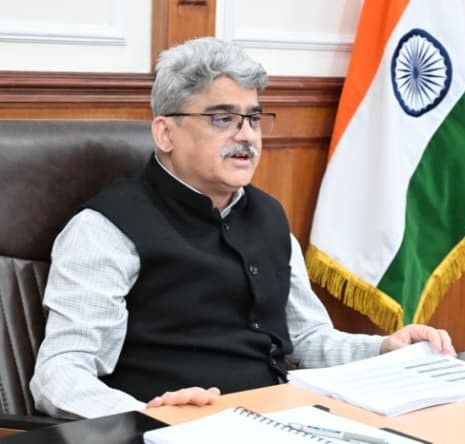
Srinagar: Chief Secretary Atal Dulloo on Tuesday chaired a high-level meeting to discuss the formulation of a comprehensive cancer control strategy for Jammu and Kashmir aimed at strengthening awareness, screening, diagnosis, treatment and preventive oncology across the Union Territory.
The meeting was attended by senior officials and experts, including the Commissioner Secretary of Health and Medical Education, the Director of the Sher-i-Kashmir Institute of Medical Sciences, the principals of government medical colleges in Srinagar and Jammu, representatives of the Indian Council of Medical Research, the Tata Memorial Centre and faculty members from various healthcare institutions.
During the meeting, the chief secretary stressed the need for extensive Information, Education and Communication activities to create awareness regarding cancer prevention and early diagnosis.
He also emphasised the importance of establishing a robust cancer registry for the collection and analysis of disease-related data, besides undertaking population-based screening in accordance with ICMR guidelines.
Atal Dulloo said early detection and timely treatment are critical for reducing the burden of cancer and improving survival outcomes.
He stressed the need for treatment protocols in line with established medical standards while simultaneously promoting preventive oncology measures.
Reviewing progress made so far, the chief secretary directed expert committees constituted earlier to prepare concrete action plans within one month after assessing cancer prevalence and existing treatment facilities across Jammu and Kashmir.
He also asked the committees to evaluate requirements for manpower strengthening and capacity building in the healthcare sector for effective implementation of the proposed strategy.
The chief secretary further directed the Health and Medical Education Department to establish a dedicated core team comprising professionals from different medical colleges for coordinated and time-bound implementation of the cancer control plan.
He also called for early framing of comprehensive screening guidelines in collaboration with the Indian Council of Medical Research to strengthen early detection mechanisms across the Union Territory.
During the meeting, experts from various healthcare institutions shared inputs regarding prevalence of cancer in Jammu and Kashmir and highlighted challenges faced by patients in accessing timely diagnosis and treatment, particularly in remote districts.
The participants also suggested measures for strengthening oncology infrastructure and improving accessibility of cancer care services across the Union Territory.