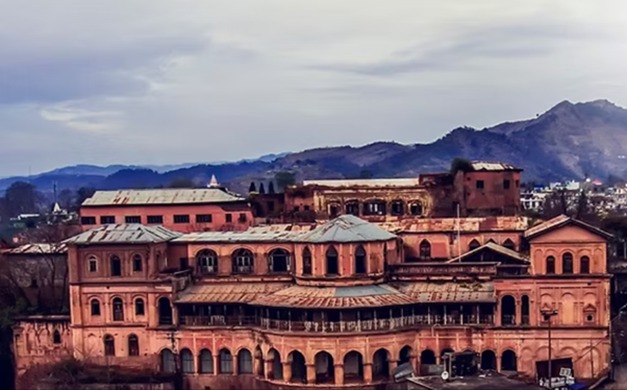
In the heart of Poonch, where history lives not just in memory but in stone, stands a monument that once defined the region’s political, cultural, and administrative life. Poonch Fort, which once echoed with authority and movement, today stands in a state of uneasy silence—partially restored, largely neglected, and steadily drifting towards irreversible ruin.
This is not merely the story of a structure falling apart. It is the story of a heritage that is being quietly abandoned, even as it continues to stand in plain sight.
- The Rise of a Hill Kingdom and Its Seat of Power
The origins of Poonch Fort are closely linked with the emergence of Poonch as an important hill principality in the 18th century. Built initially under Raja Abdul Razak Khan and later expanded by Raja Rustam Khan, the fort became the epicentre of governance in the region.
Poonch, historically situated along important routes connecting the plains with the mountainous hinterlands, held both strategic and economic importance. The fort functioned not only as a defensive structure but also as a comprehensive administrative complex. It housed offices, residential quarters, and open courtyards that facilitated governance and social interaction. Even during the Dogra period, the fort continued to serve administrative purposes, remaining relevant well into the modern era.
- Architecture That Tells a Story
The architectural character of Poonch Fort reflects a rare blend of Mughal elegance, Sikh influence, and Dogra strength. Its massive fortified walls, arched gateways, and expansive courtyards are not merely structural elements—they are expressions of a layered past.
The layout of interconnected halls and chambers shows thoughtful planning, balancing administrative functionality with residential needs. Even in its present condition, the fort offers glimpses of its past grandeur, standing as a silent yet powerful example of historical craftsmanship.
- A Witness to Turbulent Times
The history of the fort is inseparable from the history of Poonch itself. The region has witnessed political transitions, conflicts, and upheavals, particularly around the time of Partition in 1947. Being close to a sensitive border zone, the fort endured periods of uncertainty and conflict. Despite these challenges, it survived—continuing to stand through decades of change, political shifts, and natural calamities.
- A Strength That Still Stands Tall
What makes the condition of Poonch Fort even more striking is its resilience. Despite years of neglect, minimal maintenance, and the visible scars of the 2005 earthquake, the fort still stands. Its towering walls have not collapsed entirely. Its gateways have not lost their form. Its structure, though weakened, continues to hold itself together. This endurance is not accidental—it is a testament to the strength of its construction, the vision of its builders, and the quality of craftsmanship that defined its time.
In many ways, the fort is fighting to survive. But strength alone cannot ensure survival forever. What has endured for centuries now requires protection. A monument that has withstood the test of time, conflict, and nature must not be allowed to fall due to human indifference. It deserves to be preserved—not partially, not symbolically, but completely and with urgency.
- Between Restoration and Ruin
A visit to the fort today reveals a stark contrast. Certain portions of the outer structure have been restored, offering a glimpse of its former grandeur. These efforts, though limited, indicate that preservation is possible.
However, large sections remain untouched. Cracks run through the walls, roofs have weakened or collapsed, and the impact of the 2005 earthquake is still visible. Vegetation has taken root within the structure, accelerating its decay. Interior spaces remain unsafe and inaccessible, reflecting years of neglect. The fort today stands divided—partially preserved on the surface, but steadily deteriorating within.
- The Silence Within Its Walls
There is a deep and unsettling silence within Poonch Fort. The absence of activity, the emptiness of its chambers, and the stillness of its courtyards speak volumes about what has been lost. It is not just a physical silence—it is the silence of a forgotten past.
- The Neglected Surroundings and Lost Potential
The surroundings of the fort mirror its neglect. Despite its significance, the area lacks proper development, visitor infrastructure, and aesthetic planning. The monument stands isolated, without the environment needed to support its importance.
With thoughtful beautification, the entire space could be transformed. Landscaped pathways, proper lighting, organised entry points, and cultural spaces could bring life back to the site. Such efforts would not only enhance its visual appeal but also make it more accessible and engaging for visitors.
- Tourism Potential: An Opportunity Waiting to Be Realised
Restoring Poonch Fort is not just about preserving history—it is also about unlocking economic and cultural potential. In a region like Poonch, which remains relatively unexplored in mainstream tourism, a fully restored fort could emerge as a major attraction.
Heritage tourism has the power to transform local economies. A revitalised fort, supported by proper infrastructure and promotion, could attract historians, researchers, and travellers seeking authentic cultural experiences. This would create employment opportunities, boost local businesses, and bring recognition to the region.
- The Role of the Archaeological Survey of India
The preservation of Poonch Fort requires urgent and sustained intervention, particularly from the Archaeological Survey of India.
A comprehensive conservation plan must be implemented, focusing on structural stability, scientific restoration, and preventive care. Efforts must be continuous, well-funded, and monitored. The fort must also be integrated into a broader heritage and tourism framework, ensuring that preservation goes hand in hand with public engagement.
- Why This Neglect Matters
The condition of the fort reflects a broader reality—the marginalisation of heritage in regions where other priorities dominate. But heritage is not secondary. It is a foundation of identity and continuity.
When monuments like this are neglected, the loss extends beyond architecture. It becomes a loss of history, memory, and cultural connection.
- A Call Before It Is Too Late
Poonch Fort still stands—but it cannot stand alone forever. What it needs now is not acknowledgment, but action. Not temporary repair, but lasting commitment. Because a monument that has survived centuries of time, conflict, and neglect deserves to be protected at all costs—not tomorrow, but today.
The columnist is a Published Writer in daily leading newspapers of J&K, an Author, Independent Researcher & a motivational speaker. He can be contacted at shahidhakla360@gmail.com