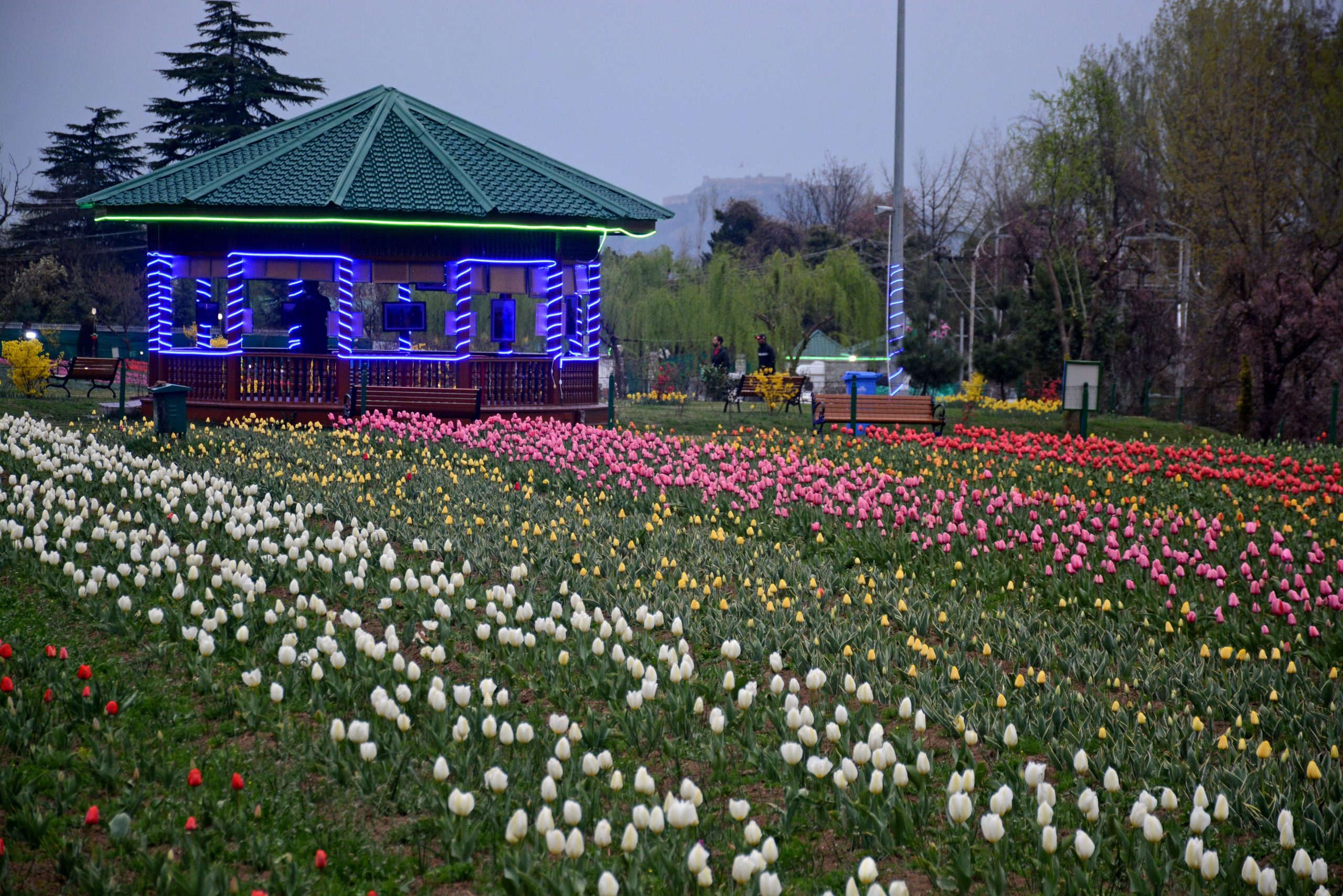
Turning a simple idea into something that attracts people from all over the world is never easy. It requires patience, vision, and the courage to believe that something beautiful can grow even from a small beginning. In a place like Kashmir, where nature already offers breathtaking landscapes, developing a project that adds to its beauty while also supporting the local economy is a meaningful achievement. One such example is the Indira Gandhi Memorial Tulip Garden in Srinagar, known today as the largest tulip garden in Asia.
Before the garden existed, the area at the foothills of the Zabarwan mountains near Dal Lake was simply open land. Kashmir was already famous for its mountains, lakes, and gardens, but the tourism season was mostly limited to summer and winter. Spring, despite being one of the most beautiful seasons in the valley, did not attract as many visitors. The idea behind developing the tulip garden was to change this and to introduce a new attraction that could bring tourists during the spring months as well.
The garden was officially established in 2007 by the Government of Jammu and Kashmir. In the beginning, it started on a modest scale with a limited number of tulip bulbs imported from the Netherlands. The goal was simple: to create a vibrant floral landscape that could highlight the natural beauty of Kashmir during spring. Over the years, the garden expanded significantly. Today, it spreads across more than fifty hectares and contains more than a million tulip bulbs in a wide variety of colors and species. Along with tulips, other flowers such as daffodils, hyacinths, and muscari are also planted, making the garden a breathtaking sight when the flowers bloom.
Every year during spring, the garden becomes the center of the Tulip Festival, an event that celebrates the arrival of the blooming season. Visitors from different parts of India and from abroad come to see the colorful fields of flowers arranged in terraces against the backdrop of mountains and Dal Lake. For many tourists, the tulip garden has become a symbol of Kashmir’s beauty and a must-visit destination during spring.
The development of the tulip garden has not only enhanced tourism but has also brought significant economic benefits to the region. During the blooming season, thousands of tourists visit the garden every day. This increase in visitors directly supports many local businesses. Hotels, guest houses, restaurants, and houseboats experience higher demand, while taxi drivers and tour guides find more opportunities to earn income.
Local artisans and shopkeepers also benefit from the increased flow of tourists. Kashmir is famous for its handicrafts, including shawls, carpets, wooden carvings, and traditional souvenirs. When visitors come to see the tulip garden, they often explore nearby markets as well, which helps local craftspeople sell their products and keep traditional skills alive.
Another important aspect of the tulip garden is the way it encourages local engagement. Maintaining such a large garden requires a dedicated workforce. Local gardeners, floriculture experts, and workers are involved in planting, nurturing, and maintaining the flowers throughout the year. This provides employment opportunities and helps people develop skills related to horticulture and floriculture.
The Tulip Festival itself also creates space for cultural participation. During the festival, local artists, musicians, and food vendors showcase Kashmiri culture and traditions. Visitors not only enjoy the flowers but also experience the region’s food, music, and handicrafts. In this way, the garden becomes more than just a tourist site; it becomes a platform where culture, nature, and local livelihoods come together.
The success of the tulip garden shows how thoughtful planning and the right use of natural resources can benefit an entire region. What began as a small effort to extend the tourism season has grown into one of the most recognizable attractions in Kashmir. It proves that development does not always require large factories or industries; sometimes it begins with an idea that respects the beauty of nature while creating opportunities for people.
Today, the tulip garden stands as a symbol of how tourism, environment, and community can support each other. It reminds us that when natural beauty is carefully preserved and creatively presented, it can bring both joy to visitors and economic growth to local communities.
As tourism continues to grow in Kashmir, initiatives like the tulip garden show the potential that lies within the valley. With proper planning and community involvement, many more projects can emerge that celebrate Kashmir’s natural beauty while strengthening the livelihoods of its people.
Email: haya64124@gmail.com