Humanity has always lived through stories. They are not just entertainment, they are how we remember, teach, and believe. From the earliest days, stories have carried knowledge, set moral boundaries, and held communities together. They shaped who we are long before books, screens, or the internet ever existed.
Stories that helped us survive
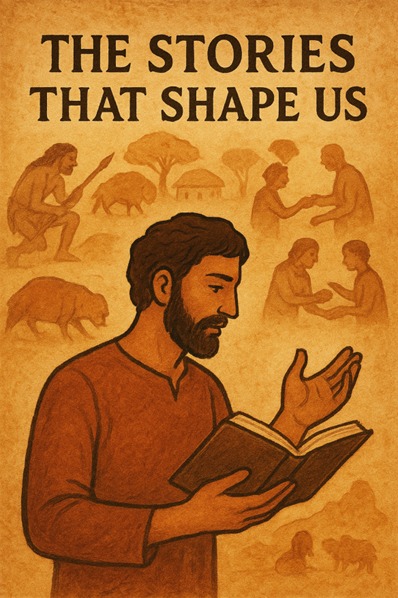
For early humans, stories were a matter of survival. They taught where to find food and water, which plants could heal or harm, and how to stay safe from predators. A story was easier to remember than a list of facts, and in a world full of danger, memory meant survival.
These shared narratives also helped people coordinate. Before a hunt or a journey, stories allowed them to plan, imagine, and act together. In that sense, storytelling was the first human technology, one that turned experience into wisdom and individuals into communities.
Stories that built societies
As humans settled and societies grew, stories did more than teach survival. They began to shape social order. They taught values, honesty, courage, fairness, and laid down unwritten rules for how people should live together. Even gossip, often dismissed as idle talk, played its part by reinforcing what was acceptable and what was not.
Every culture, in essence, is a collection of stories. These stories tell us who belongs, who doesn’t, what success looks like, and what is considered right or wrong. They give people a sense of purpose and identity, but they can also draw lines that divide.
Stories that shape our minds and hearts
Stories are not just about knowledge; they are about meaning. They help us make sense of the world, especially when it feels chaotic or unfair. Through them, we step into other lives, times, and worlds, developing empathy and understanding in the process.
They also shape our personal dreams and fears. What we believe about love, success, and justice often comes from the stories we have heard and chosen to believe. In that sense, storytelling doesn’t just reflect humanity, it defines it.
The power and peril of belief
Our modern world is still built on stories, powerful ones. Religion, politics, and economics all depend on shared belief. Take money, for example: a piece of paper has no real value, yet it works because we all agree on its story. It is, perhaps, humanity’s most successful shared fiction.
But not all stories unite us. Many divide. Across history, people have fought and died for the stories they believe in, about faith, freedom, race, or power. These stories, passed down through generations, still influence how we treat one another and how we see the world.
Time to rethink the stories we tell
Now, more than ever, we need to ask: what stories are we living by today? Are they stories that unite or divide, stories that heal or harm? Do they help us understand each other, or make us fear one another?
It’s time to examine the tales we have inherited. Some have advanced humanity; others have destroyed it. We must decide what stories to keep and which to leave behind.
That does not mean we should erase history. Instead, we must help future generations understand why the knowledge of history matters, how it can guide us to avoid repeating the mistakes of the past. This understanding should come without judgment of those who caused suffering or those who endured it. It is equally important to recognize that every story from the past has many sides, and only by seeing all perspectives can we truly learn from it.
For the sake of future generations, we should pass on stories that nurture compassion, cooperation, and coexistence, stories that remind us that despite our differences, we share one fragile planet and one common fate.
Stories made us human. The right ones can keep us that way.