

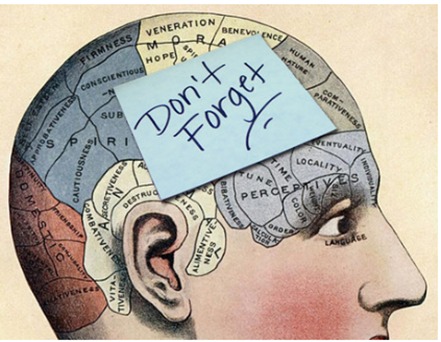
Have you ever studied for hours only to forget everything during the exam? Or remembered an old song but not your class notes? The difference lies not in how long you study — but how effectively your brain processes and stores information. Memory is the cornerstone of all learning. It helps you link past experiences to present understanding and future goals. For students, mastering memory is as important as mastering the syllabus.
What Is Memory?
The American Psychological Association (APA, 2022) defines memory as “the process by which information is encoded, stored, and retrieved when needed.”
In simpler words, it’s your brain’s filing system — recording what you learn, keeping it safe, and bringing it back when needed.
A strong memory is not a gift — it’s a skill that can be developed through awareness, practice, and healthy habits.
The Science Behind Memory
Memory involves three main stages — encoding, storage, and retrieval, each depending on how actively we use our brain.
- Encoding – Taking In Information
When you pay attention to a lecture, your brain transforms sensory inputs (sound, visuals, text) into neural signals that can be stored.
Scientific proof: Brewer et al. (1998, Science) found that hippocampal activity during learning predicts how well information will be remembered later.
Tips for Students:
- Sit in the first few rows — it reduces distractions.
- Explain a topic to a friend in your own words (teaching improves encoding).
- Relate new information to something meaningful — link anatomy to real-life cases.
- Avoid multitasking; focus on one subject at a time.
- Turn off social media notifications while studying
- Storage – Keeping It Safe
Once encoded, information must be stabilized through a process called consolidation, mainly during sleep.Revising the same material after a gap strengthens neural pathways — this is how long-term memory forms.
Scientific Insight: Rasch & Born (2013) found that sleep strengthens memory by reactivating learning-related brain circuits.
Example: Reviewing your lecture notes before bedtime helps your brain store the information overnight.
- Retrieval – Getting It Back
Retrieval happens when you recall a fact, name, or procedure during an exam or real-life situation.
The brain uses contextual cues (a word, smell, or situation) to trigger memory recall.
Tip for Students:
Practice active recall — close your book and try explaining what you learned aloud.
This trains your brain to fetch information quickly and confidently during exams.
Types of Memory
| Type | Duration & Role | Example |
| Sensory Memory | Stores raw sensory data for 1–3 seconds | Remembering your teacher’s tone or last slide image |
| Short-Term Memory | Holds 5–9 items for ~30 seconds | Remembering an OTP before typing it |
| Working Memory | Actively processes current information | Solving a math problem in your head |
| Long-Term Memory | Stores information indefinitely | Remembering all cranial nerves learned last semester |
Long-Term Memory divides into:
- Episodic: personal experiences (your first dissection class).
- Semantic: facts and meanings (definition of a synapse).
- Procedural: motor skills (suturing, typing).
The Brain’s Memory Network
Different brain regions play distinct roles:
- Hippocampus: Transfers short-term to long-term memory.
- Amygdala: Adds emotional colouring (why you remember joyful or traumatic events vividly).
- Prefrontal Cortex: Handles working memory and decision-making.
- Cerebellum: Manages procedural and motor skills.
Real-Life Case: The patient H.M. (Scoville & Milner, 1957) lost his ability to form new memories after hippocampal removal — proving its vital role in memory consolidation.
Factors Affecting Memory
- Sleep
Memory consolidation peaks during deep and REM sleep.
Students who stay up late revising lose the brain’s natural storage window.
- Stress
Mild stress helps focus, but chronic stress releases cortisol, which damages the hippocampus.
Emotional overload, fear of failure, and constant comparison can hinder learning.
- Nutrition
The brain needs:
- Omega-3 fatty acids (fish, walnuts, flaxseed) for neuronal health.
- Antioxidants (berries, turmeric, green tea) to reduce oxidative stress.
- Adequate hydration for concentration.
- Physical Exercise
Aerobic exercise increases blood flow and neurogenesis (growth of new neurons).
Evidence: Erickson et al. (2011, PNAS) — exercise enlarged the hippocampus and improved memory in older adults.
The Digital Dilemma: Social Media and Memory
In the age of smartphones, constant scrolling fragments attention — a process called “cognitive overload.”
When attention is split among messages, videos, and notifications, the brain’s encoding efficiency drops sharply.
Effects of Social Media on Learning:
- Reduces sustained focus needed for encoding.
- Creates “dopamine loops” — short-term pleasure replaces long-term motivation.
- Encourages multitasking, weakening working memory.
- Promotes superficial reading instead of deep learning.
Tips for Digital Discipline:
- Keep phones on silent or airplane mode during study sessions.
- Use apps that block distractions (e.g., Forest, Freedom).
- Designate “digital-free hours” before exams.
- Reward yourself with short social media breaks only after completing tasks.
Toxic Family Relations and Their Impact on Memory
A healthy emotional environment is crucial for cognitive development.
Toxic family relationships — marked by conflict, criticism, neglect, or unrealistic expectations — can harm concentration and memory.
How It Affects Students:
- Constant stress triggers cortisol release, impairing the hippocampus.
- Emotional insecurity drains cognitive energy, reducing focus and recall.
- Fear of failure or humiliation lowers self-esteem and intrinsic motivation.
Example: A student criticized for every minor mistake may perform poorly despite intelligence, due to emotional blockage and anxiety.
Coping and Healing Strategies:
- Seek guidance from mentors, teachers, or counsellors.
- Engage in journaling, meditation, or peer support.
- Focus on self-care routines — proper sleep, nutrition, and healthy social circles.
- Understand that your worth is not defined by toxic opinions.
Responsible Parenting: Building Memory-Friendly Minds
Parents play a central role in shaping a child’s learning and emotional resilience.
Research in developmental psychology shows that secure emotional attachment enhances memory, problem-solving, and self-control.
Healthy Parenting Practices:
- Emotional Support: Listen without judgment; validate feelings.
- Balanced Expectations: Encourage achievement without pressure.
- Learning Together: Discuss what children study — it reinforces their memory.
- Positive Reinforcement: Praise effort, not just success.
- Model Healthy Digital Habits: Limit phone use and encourage family reading time.
Evidence: Warm, responsive parenting enhances the development of the prefrontal cortex — the brain’s control centre for memory and emotional regulation (Ginsburg et al., 2014, Paediatrics).
How Students Can Improve Memory
| Method | How It Works | Student Example |
| Spaced Repetition | Strengthens long-term retention through timed review. | Revise notes after 1, 3, and 7 days. |
| Active Recall | Builds retrieval strength. | Test yourself using flashcards. |
| Mnemonics & Visualization | Creates associations. | Use acronyms for biological pathways. |
| Chunking | Simplifies information. | Learn drug classes by category, not alphabetically. |
| Mindfulness | Reduces stress and boosts attention. | Practice 10 minutes of deep breathing before studying. |
| Peer Teaching | Reinforces understanding. | Form study circles and explain topics to friends. |
When Memory Fails
Occasional forgetfulness is normal, but persistent issues may signal:
- Sleep deprivation
- Burnout
- Anxiety or depression
- Medical or nutritional deficiencies
Early intervention — rest, counselling, or medical consultation — can restore focus and mental clarity.
Conclusion
Memory is not a fixed ability — it is a trainable system, shaped by attention, emotion, environment, and habit. For students, understanding memory means unlocking the art of learning smarter, not harder. In an age of distractions, emotional turbulence, and digital noise, the key to a sharp memory lies in balance — balancing effort with rest, ambition with self-care, and technology with mindfulness. A healthy mind learns best in a healthy environment — supported by discipline, empathy, and encouragement from both teachers and parents.
The writer is MD, PGDMH, PGDDM Associate Professor, GHMC Kathua






