
10 steps that must be taken
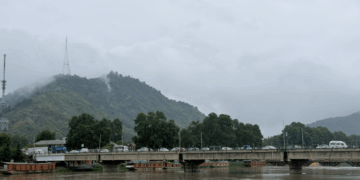
Srinagar lived under the shadow of floods again last week. Each heavy downpour revives the memories of September 2014, when the city was submerged, lives were lost, and property worth thousands of crores destroyed. The Jhelum – once the lifeline of the valley – turned into a monster, not because of nature alone, but because of human negligence and administrative inertia. The bitter truth is this: if we continue to sleep over flood preparedness, the next catastrophe will be worse. The question is not if Srinagar will flood again, but when.
If the administration is serious about saving Srinagar, it must start now, not when the water starts rising. Here are ten urgent measures that cannot be delayed anymore:
- Complete the Flood Spill Channel Revival
The Flood Spill Channel from Padshahi Bagh to Wular, designed by the Dogras, was Srinagar’s safety valve. Today, it is choked with encroachments, garbage, and silt. The government must immediately restore its original width, depth, and carrying capacity. Without this, all other measures are cosmetic.
- Dredge the Jhelum Scientifically
Siltation has reduced the Jhelum’s capacity drastically. A comprehensive dredging plan – scientifically executed, not ad-hoc contracts – must be taken up annually. This is not a one-time job but a recurring responsibility, linked with modern monitoring technology so that its health can be audited transparently.
- Protect and Revive Wetlands
Hokersar, Bemina, Narkara, Anchar, and other wetlands once acted as natural sponges, absorbing excess water. Today they are encroached, filled with debris, and treated as real estate. The administration must declare them “no-construction zones,” demolish illegal structures, and revive their water-holding capacity. Without wetlands, Srinagar is a bathtub with no drain.
- Stormwater Drainage Upgrade
Srinagar’s stormwater drains are archaic, narrow, and often blocked. The city requires a 21st-century drainage master plan, integrating rainfall patterns, population growth, and climate change projections. Pumping stations must be modernized, with backup power to prevent citywide blackouts during floods.
- Ban Construction on Floodplains
The tragedy of Srinagar is that houses, malls, and even government buildings are raised right on floodplains. This madness must stop. The administration must enforce a strict ban on construction along floodplains of the Jhelum and its tributaries, with legal action against violators, even if they are politically powerful.
- Introduce Flood Zoning and Mapping
Flood-prone zones must be mapped with GIS and made public. This will serve as a warning to citizens, insurers, and builders. The administration must publish a “flood zoning atlas” of Srinagar, updated every two years, so that urban planning decisions are guided by science, not greed.
- Revive Traditional Water Channels
The city once had a network of small water channels and khuls that carried excess rainwater into larger streams. Most have been filled with garbage or turned into roads. A citywide mission to identify, clear, and revive these traditional channels can drastically reduce waterlogging.
- Community-Based Flood Management
Preparedness cannot be left to officials alone. Mohalla-level disaster committees, equipped with boats, life jackets, and communication systems, must be created. In 2014, ordinary youth rescued thousands while the administration stood paralyzed. This spirit must be institutionalized.
- Smart Technology for Forecasting and Response
The administration must install real-time water-level sensors across Jhelum and its tributaries, linked with an app-based early warning system. Artificial intelligence can now predict flood surges days in advance. There is no excuse for not adopting this technology when even small nations are using it.
- Political Will and Accountability
Finally, the most important measure: accountability. Flood preparedness in Srinagar has been discussed for decades, with crores spent and little to show. The administration must set deadlines, publish progress reports, and hold officers answerable. Without political will, these measures will remain files gathering dust.
Need to Learn from Our Wounds
Srinagar can either continue on the suicidal path of negligence, or it can rise as a city that learns from its wounds. Restoring wetlands, reviving the flood spill channel, and enforcing flood zoning are not luxuries – they are survival necessities. The government must treat this not as an infrastructure issue, but as a life-and-death emergency. The bitter truth is simple: if Srinagar drowns again, it won’t be a natural disaster. It will be a man-made crime.