Synchronous with over whelming development in science and technology, waste generation has shown a significant increase around the world, and disposal turned into a herculean task. India – alone – generates about 100,000 metric tonnes (mt) of solid waste per day.
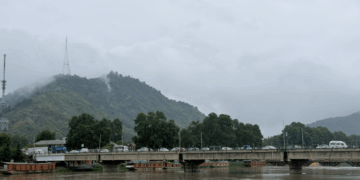
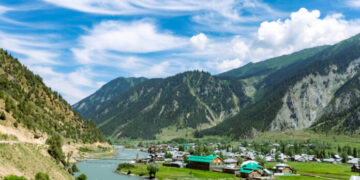
Likewise, waste generation in Kashmir valley has increased tremendously in the past few decades. This is attributed to the rise in population. An exponential spike in population density has contributed to over-utilization of resources – resulting in more residue. The population of ourValley – as per the 2011 census – was12,541,302, which represents 1.04% of the total population of India. Such growth – though of value with respect to human resources – has led to over consumption of our fixed ecological reservoir. And our footprint – carbon and otherwise – has escalated beyond measure as well.
What is Municipal Solid Waste (MSW)?
As per Solid Waste Management Rules (2016), solid waste is categorised into municipal, industrial, agricultural and hazardous waste. Municipal solid waste holds the torch for highest contribution towards total solid waste generated in our country. This type of waste is produced on a daily basis within households but unfortunately has non-existent disposal strategies in practice. Kashmir is no exception with regards to improper disposal techniques associated with MSW.
Municipal solid waste generation per capita in India ranges from approximately 0.17 kg per person per day in small towns to nearly 0.62 kg per person per day in cities. The average composition of MSW produced by Indian cities is approx. 40 wt.% inert, 41 wt.% organic, and with 19 wt.% potentially recyclable materials.
Segregation is Fundamental to Hygiene
Segregation forms the basic unit of waste disposal. You may even call it the standard unit or SI unit of waste disposal. It is through segregation that decomposable waste is separated from recyclable, and organic material is isolated from inorganic hazardous waste. Household waste consists of matter that can be used for compost. It also contains toxic hazardous waste, non-biodegradable waste, and at times construction and demolition waste – in addition to others. When standard procedures of segregation at source are followed, management of MSW becomes very easy. This is where we lack practice.
Deficient knowledge about waste disposal has given rise to incorrect storage, transportation, and management of municipal waste in the Valley. People are not well aware of handling solid waste generated in households every day. Although the government has allocated dustbins for disposal of waste – both biodegradable and non-biodegradable – in almost all major townships of Kashmir however, their proper use is still an enigma to majority of the populace. Many households do realize the importance of segregation of waste, but more than a vast number do not. This leads to piling up of heaps of garbage – with foul odour – along roads or in fields, increase in pest population, and spread of diseases. Regrettably, such sites are witnessed more often in Kashmir nowadays.
What escalates problems – pertaining to waste separation – is unorganized waste collection. Appointed waste collectors – whether using rickshaws, lorries or trucks – reportedly combine waste during collection at the locality dump site rather than transport landfill-assigned waste and recyclable material separately. Separate vehicles are not provided nor compartmentalization of waste executed. This leads us to another critical issue – overflow of waste at landfills.
Sanitary landfills in Kashmir are congested with waste more than what these can ecologically and structurally contain. As per estimates, the total waste generated in India is rich in organic matter – reusable and recoverable – than non-decomposable substances which are more suited for a landfill. Thus, mixing of all kinds of waste material makes way towards destruction of waste as a resource.
Waste as a Resource
Waste-to-Energy (WTE) plants increase the probability of utilizing non-degradable, inorganic waste material as a form of energy. It is from this domain the concept of refuse derived fuels (RDF) originates. Some techniques to produce RDF include pelletization, incineration, and pyrolysis. For catering to biodegradable wastes, technologies like bio-methanation have been developed.
All this is only possible when necessary information has been provided to residents regarding waste segregation at source. A thorough understanding of waste disposal processes is also needed to help people know waste and place it where it rightfully belongs. Also, waste collectors, municipal officials and caretakers at landfills should be properly briefed about their duties. As many as possible, separate vehicles for transport of landfill-appropriate waste and biodegradable waste should be allotted. More apparent need of the hour is reduction in generation of waste wherever possible – which gradually would prove advantageous in leading a healthy and sustainable life in our Valley.
Sustainable resource utilization – even for waste – can be practised to decelerate irreversible changes in our biosphere. And waste management forms one of the central pillars in this matrix. Resources we utilize are not something we inherit from the past but what we borrow from the future – remembering and following this piece of advice should be our adamant mantra.