By: Irfan Husain
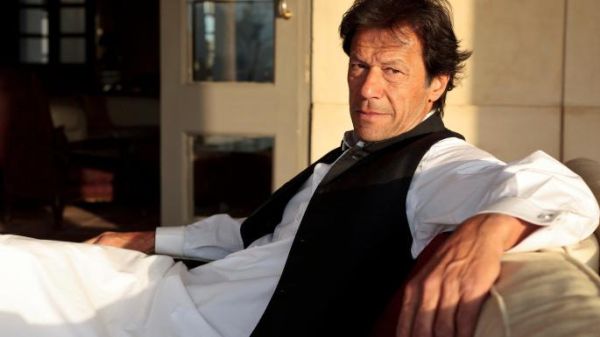
WHILE Imran Khan is perceived by many as the favourite of the establishment, the judiciary and the chattering classes, it remains to be seen if enough voters endorse him to become our next prime minister.
Although this is a dream that has devoured him for two decades, he may well find it a poisoned chalice if and when he finally grasps it. For starters, he will have to form a coalition to get a parliamentary majority, and here, his choices are limited. The Grand Democratic Alliance in Sindh, the PTI’s ally in the province, was dead in the water when it was launched, consisting as it does of ex-PPP members and nationalist leaders many of whom are way past their sell-by dates.
Despite seen as enjoying the establishment’s patronage, the MMA, a clerical alliance, has limited support, and is unlikely to get the number of seats that will be required. Ditto the radical Tehreek-i-Labbaik Pakistan. The MQM is on the ropes, and will find it hard to win the score or so of seats it used to when it was allegedly rigging the polls.
That leaves the PPP as Imran Khan’s only possible coalition partner. Even though the PTI leader has repeatedly dismissed this possibility, politics makes for strange bedfellows. Our political engineers forced the two parties to propel an unknown Baloch politician to the Senate chairmanship earlier this year, so it should not be that hard to knock heads again.
For the PPP, this arrangement would be a no-brainer: the shrewd Zardari would drive a hard bargain, knowing how badly Imran Khan wants the top job. And apart from a handful of PPP leaders who still have principles, the others would love to have the perks and clout that go with ministerial portfolios. Above all, for Zardari, even a lesser role as junior partner in the ruling coalition could buy him a high degree of immunity from further corruption probes.
And how will Nawaz Sharif’s supporters react to being left out in the cold? Even if he is given bail, the PML-N is not famous for manning the barricades, and nor does it have jiyalas who would fill the jails for their leaders. This is a party of the status quo, and has few foot soldiers to take on the state for a cause. So despite the front-end electoral massaging that has taken place, don’t hold your breath for any dharnas or long marches.
However, this does not mean that the victim card can’t play a role on election day: if enough Nawaz Sharif supporters decide to significantly increase voter turnout in Punjab, they could well derail the establishment’s calculus. The perception that the powers-that-be have ganged up against him could well cause a surprise next week, leaving our political engineers with egg on their faces.
But assuming Imran Khan does make it to the PM House, duly escorted by ‘aliens’, what then? For starters, he will have to address a tottering economy and a rupee in freefall. Thus far, with his populist promises, he has not revealed a mastery over economics. His pledge to create 10 million jobs in the next five years is as implausible as his vow to end corruption.
The reality is that any prime minister will have to take hard decisions to fix our economy that is currently on life support. With a rapidly sinking rupee, our imports will cost more, and the size of our fuel bill will increase at a time when oil prices are rising globally. Nawaz Sharif was fortunate in that during his tenure, world prices per barrel fell to below $30; today, oil is over $70. The fact that Pakistan had to ask China for an emergency loan of a billion dollars to bolster our foreign exchange reserves is a sign of things to come.
Then, of course, there is the small matter of a hyperactive judiciary perceived as encroaching on the executive’s turf. Even if superficially well-intentioned, it restricts the government’s freedom of action.
Imran Khan may also find — as Nawaz Sharif did — that the fawning media that helped him to get where he is might well turn on him, especially if certain quarters feel he’s not cooperating. International diplomacy could also remind the new prime minister that it is not OK to call opponents ‘donkeys’, as Khan did recently.
Oh, and I forgot to mention problems like illiteracy, a cripplingly high birth rate, jihadist militancy, water and power shortages, and a collapsing state education system. Above all, Imran Khan will find that those who ostensibly made him prime minister will demand their pound of flesh.
Imran Khan, with his single-item anti-corruption agenda, will find that other priorities demand his attention and political capital. This is the conflict between reality and wishful thinking.
Courtesy Dawn