

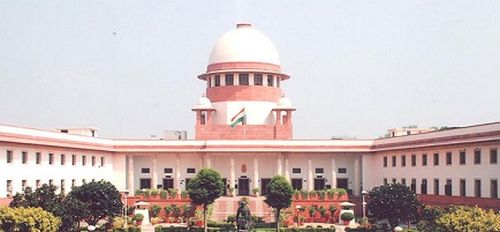
JUDICIAL activism is a virtue only when it is accompanied by restraint. In India, as in the US, the supreme court has been notable not for restraint, but for excess.
The US supreme court is in a pitiable state. There was a time when its rulings were regarded as persuasive authorities of high scholarship, for it was there that the debate on judicial activism versus judicial restraint began and continued for long.
As far back as 1921, justice Benjamin N. Cardozo gave a lecture on the nature of the judicial process in which he delivered a sound warning. “Judges have, of course, the power, though not the right, to ignore the mandate of a statute, and render judgement in despite of it. They have the power, though not the right, to travel beyond the walls of the interstices, the bounds set to judicial innovation by precedent and custom. Nonetheless, by that abuse of power, they violate the law.”
Misconceptions about the function of a constitution and the proper role of the judiciary in interpreting it lie at the root of the problem. Justice John Marshall Harlan pointed out, “The constitution is not a panacea for every blot upon the public welfare; nor should this court, ordained as a judicial body, be thought of as a general haven for reform movements. This constitution is an instrument of government, fundamental to which is the premise that in a diffusion of governmental authority lies the greatest promise that this nation will realise for all its citizens. This court, limited in function in accordance with that premise, does not serve its high purpose when it exceeds its authority even to satisfy justified impatience with the slow workings of the political process.”
The court is not a substitute for but a supplement to the democratic political process. Executive and legislative excesses can be cured by the courts. But who will cure judicial excess? “The only check on our own exercise of power is our self-restraint,” chief justice Harlan F. Stone once remarked.
The debate travelled to Britain, and the foremost advocate of judicial activism, Lord Denning, was rebuked by Lord Diplock (a confirmed judicial activist, at that), who said in 1980: “It endangers continued public confidence in the political impartiality of the judiciary, which is essential to the continuance of the rule of law, if judges, under the guise of interpretation provide their own preferred amendments to statutes which experience of their operation has shown to have had consequence that members of the court before whom the matter comes consider to be injurious to the public interests.”
Each of these strictures is applicable to the excesses committed in the last 30 years to many of the Indian supreme court’s decisions. It has prescribed norms for running prisons, mental homes and women’s shelters, issued detailed instructions to the government to implement labour laws at construction sites, ordered industries to be restarted with mandatory financial help of state governments, reorganised admissions in medical colleges and laid down their examination schedules, and prescribed hawking zones in metropolitan cities.
It has gone so far as to disregard the clear words of the constitution as well as the exposition of its prime architect, Dr B.R. Ambedkar. The court asserted in 1993 a right to set up a ‘collegium of judges’ of the supreme court to appoint judges to itself and the high courts. This collegium has played havoc with the judiciary. “Judges choosing judges is the antithesis of democracy,” Robert Stevens, a distinguished jurist, remarked.
In 1991, the court went so far as to order that “no criminal case shall be registered under Section 154, Criminal Procedure Code against a judge of the high court, chief justice of high court or judge of the supreme court unless the chief justice of India is consulted in the matter. Due regard must be given by the government to the opinion expressed by the chief justice. If the chief justice is of opinion that it is not a fit case for proceeding under the act, the case shall not be registered.” This flowed from its newly invented doctrine, which is opposed to the very basis of a judiciary’s role in a democracy.
“This court being the ultimate guardian of rights of people and independence of the judiciary will not deny itself the opportunity to lay down such guidelines. … Almost from the beginning, this court has been a lawmaker, albeit, in [Oliver Wendell] Holmes’s expression, ‘interstitial’ lawmaker. Indeed, the court’s role today is much more. It is expanding beyond dispute settling and interstitial lawmaking. It is a problem solver in the nebulous areas.”
There was no problem for the court to solve. Judges are as much subject to the law, criminal or civil, as any other citizen. The court’s order is an excess of judicial activism. Such excesses occur when the executive is weak. Then the judges grab power.
Courtesy Dawn


