• About us
  • Contact us
  • Our team
  • Terms of Service
Thursday, April 16, 2026
Kashmir Images - Latest News Update
Epaper
  • TOP NEWS
  • CITY & TOWNS
  • LOCAL
  • BUSINESS
  • NATION
  • WORLD
  • SPORTS
  • OPINION
    • EDITORIAL
    • ON HERITAGE
    • CREATIVE BEATS
    • INTERALIA
    • WIDE ANGLE
    • OTHER VIEW
    • ART SPACE
  • Photo Gallery
  • CARTOON
  • EPAPER
No Result
View All Result
Kashmir Images - Latest News Update
No Result
View All Result
Home OPINION

 Urdu and patriotism

OPINION by OPINION
April 26, 2018
in OPINION
A A
0
 Urdu and patriotism
FacebookTwitterWhatsapp

BY: Mohammed Ayoob

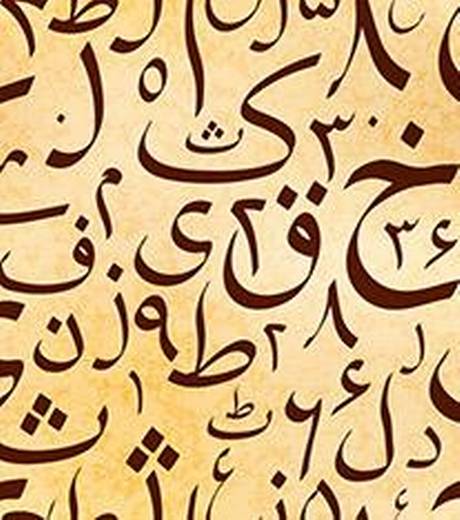
The language that gave the country the most popular slogan of the independence movement and produced unmatched patriotic verses during the freedom struggle suffered the most from Partition. Wrongly associated exclusively with Muslims and appropriated by Pakistan as its official language, Urdu has languished in India since Independence.

More News

The Time Is Now: Why Women’s Reservation Will Transform Indian Democracy  

Securing the Digital Lifelines of Global Connectivity

Baramulla: Transitioning from Historical Gateway to Sustainable Urban Hub

Load More

“Inquilab zindabad” or “long live the revolution,” coined by Urdu poet and freedom fighter Hasrat Mohani in 1921, became the principal slogan of millions who marched under Mahatma Gandhi’s leadership to demand the end to British rule. Subhas Chandra Bose chose three Urdu words as the motto for his Indian National Army: ittehad, itmad, qurbani, or unity, confidence, sacrifice.

Poet-philosopher Muhammad Iqbal’s Ode to India, “Saare jahan se accha, Hindostan hamara”, or “Our India is unrivalled in the world”, came close to being adopted as the national anthem. During the independence movement it reverberated throughout the country with stirring verses such as “Mazhab nahi sikhata, apas mein bair rakhna; Hindi hain hum watan hai Hindostan hamara”, or “Religion does not teach us to bear malice towards one another; We are all Indians and India is our homeland.”

This poem was projected as the national anthem of the country as India neared Independence and was recited at the opening session of the Constituent Assembly in December 1946. Had Pakistan not appropriated Iqbal as the progenitor of the idea of a Muslim homeland, the poem, unparalleled for its simplicity and intensity of emotion, would have certainly been adopted as the national anthem.

Urdu poetry was a major vehicle for the expression of patriotism and defiance of British rule. Ramprasad Bismil’s “Sarfaroshi ki tamanna ab hamare dil mein hai” (“The desire for martyrdom burns in our hearts”) became extremely popular once word spread that Bhagat Singh recited it on his way to the gallows. Josh Malihabadi’s “Mera naara, inqilaab o inqilaab o inqilaab” (“My slogan: revolution, revolution, revolution”) captured the spirit of the times succinctly.

There is a gem of a poem by Iqbal titled “Naya Shivala” or “New Temple,” which has not received adequate recognition. Here, Iqbal argues that Indians must shed their differences and build a temple dedicated to India rather than to a particular deity. In conversation with an imaginary Brahmin, Iqbal berates the latter for harbouring malice towards fellow countrymen. He simultaneously accuses the Muslim preacher for imbibing nothing but violence from his God. Iqbal concludes with the ringing assertion: “Finally, in disgust I have given up both the temple and the mosque; I have given up listening to the Muslim preacher’s sermons and to your tales; You think that God resides in your idols of stone and clay? To me, every particle of my country’s dust is God”.

It is time to reassert Urdu’s unique contribution to the construction of India’s inclusive national identity currently under threat from divisive forces of communalism and chauvinism.

Courtesy The Hindu

Previous Post

Misunderstandings in Relationships

Next Post

Imad Wasim travels to England for treatment

OPINION

OPINION

Related Posts

The Time Is Now: Why Women’s Reservation Will Transform Indian Democracy  

Regional-bilateral significance of Nepal PM Dahal’s India visit
April 16, 2026

While taking my first oath as a Minister of State, I looked around the packed room and made a count....

Read moreDetails

Securing the Digital Lifelines of Global Connectivity

Securing the Digital Lifelines of Global Connectivity
April 15, 2026

Beneath the vast waters of the Indo-Pacific lies a largely unseen but indispensable network powering the modern world. Subsea cables, often overlooked in...

Read moreDetails

Baramulla: Transitioning from Historical Gateway to Sustainable Urban Hub

Regional-bilateral significance of Nepal PM Dahal’s India visit
April 14, 2026

Nuzzled along the Jhelum River, Baramulla has long been known as the “Gateway to Kashmir.” At the moment, it is...

Read moreDetails

Why Kashmir’s Ghanta Ghar Defeats Its Tourism Pitch

April 13, 2026

The announcement of the Kashmir Travel Mart 2026 has been received with the usual optimism. Stakeholders will gather, presentations will...

Read moreDetails

Collateral Damage: The Unseen Cost of War

Collateral Damage: The Unseen Cost of War
April 12, 2026

For a long time, wars have been justified with the argument that collateral damage is unavoidable. Military strategists and political...

Read moreDetails

Mahatma Jyotirao Phule: A Light That Still Shows India the Way

Mahatma Jyotirao Phule: A Light That Still Shows India the Way
April 11, 2026

Today, 11th April, is a deeply special day for all of us. It is the birth anniversary of Mahatma Jyotirao...

Read moreDetails
Next Post
Imad Wasim travels to England for treatment

Imad Wasim travels to England for treatment

  • About us
  • Contact us
  • Our team
  • Terms of Service
E-Mailus: kashmirimages123@gmail.com

© 2025 Kashmir Images - Designed by GITS.

No Result
View All Result
  • TOP NEWS
  • CITY & TOWNS
  • LOCAL
  • BUSINESS
  • NATION
  • WORLD
  • SPORTS
  • OPINION
    • EDITORIAL
    • ON HERITAGE
    • CREATIVE BEATS
    • INTERALIA
    • WIDE ANGLE
    • OTHER VIEW
    • ART SPACE
  • Photo Gallery
  • CARTOON
  • EPAPER

© 2025 Kashmir Images - Designed by GITS.