By: Yoginder K. Alagh
Two policy issues remain a flea in my ear and I keep reiterating them in my column. The first is: Does the money we aim to spend on farmers reach the intended beneficiaries? Alternately, do markets give them advantages on their harvest? The second is: Does the money we spend on infrastructure for farmers lead to greater opportunities for them? Both are serious issues. If there were easy solutions to these issues, as many politicians often claim, the exploitation of the farming community would have stopped long ago.
When I worked with the government, I had a habit which I had picked up as a very young chairman of the Agricultural Price Commission (now called the Commission on Agricultural Costs and Prices). The agriculture ministry’s data office collects information about the prices of several crops in mandis across the country. This data is constantly improved, the last time based on the recommendations of a committee I was privileged to chair. I always hunt for “price quotes” below the MSP. I can track this only through financial newspapers — topical price quotes are made available only to policy makers every morning and I am not one of them. Some of the language papers are particularly good at giving such information.
So, if you looked at them with a trained eye, you might, for instance, get to know that moong was selling at one-third to two-fifth below the MSP at centres in Karnataka. This started in Bellary and then spread like wildfire to many districts. Local officials kept pleading with the central agencies to intervene. But many of the latter did not have the funds. The high MSP declared with the intention of covering 50 per cent additional over costs made their life more difficult, as funding had to be spread thin.
The problem spread to adjoining districts in Maharashtra. The trader was making a killing in the agricultural markets. He had the money and knew that when the agencies get the money, he would supply them moong. The same problem hit cultivators of tur, a staple in Western India. Here, again, there were widespread reports of sales below the declared prices.
My next story pertains to another baby of my mine: The Sardar Sarovar Project. The Sardar, whose statue the prime minister will unveil on behalf of a grateful nation, was a very practical man — as the Bardoli Agitation showed. He asked Pattabhi Sitaramayya to conduct a study of the Talala taluka to work out how the colonial state was exploiting the poor. Being a statistician type, I get such studies done periodically. This means we have data for over three quarters of a century for that one block.
But apart from having a towering statue, about which the Sardar may laugh, he would want to know how the delivery of water from the Narmada is progressing. It’s been 16 years since water was diverted into the main canal, which I know is an engineering marvel, because I designed it. A branch canal in the Sardar Sarovar System is, in many cases, bigger than most main canals of irrigation projects in India and abroad.
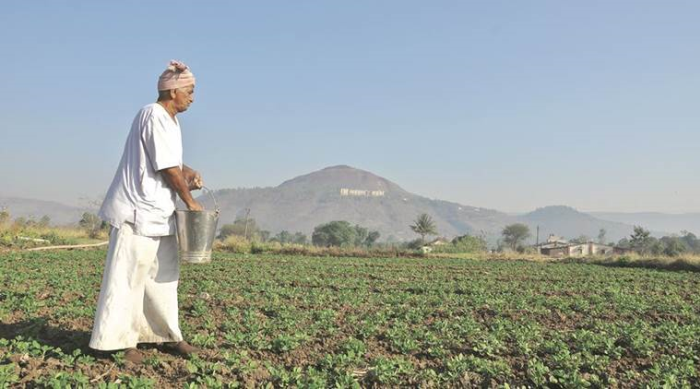
But the kisan does not benefit from the work that we have done. Since he does not get the water, the farmer sometimes pumps it out from the branches and sub-branches of the canals — and when he is caught, he goes to jail. But 57 per cent of the minor canals are yet to be constructed and the poor farmer has no choice. He can construct the field channels — the gracious government has told him that they will do it for him, but almost a third of them have not been constructed. The endeavour will be completed in a year, it has been said. I genuinely believe with determined effort, that is possible. We have done such things in the past. The great Sardar will be happy if we do so.
Courtesy Indian Express