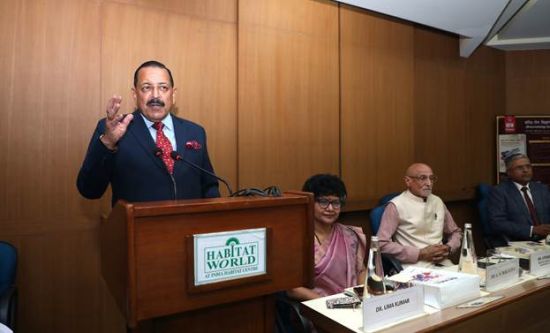
NEW DELHI: Union Minister of State for Science and Technology, Dr Jitendra Singh, on Sunday stressed the need for early diagnosis, timely medical intervention and avoidance of unnecessary investigations, describing them as the foundation of responsible patient care.
Speaking at the launch of Rheumatology Essentials: A New Frontier for Aspiring Clinicians, authored by noted rheumatologists Prof Anand N. Malaviya and Dr Prashant Kaushik, Singh said a three-pronged approach—early disease recognition, avoiding unnecessary investigations and ensuring timely referrals—could help reduce inappropriate medication, prevent diagnostic delays and improve patient outcomes.
The book was launched in the presence of senior members of the medical fraternity, including Dr Uma Kumar, Head of Rheumatology at AIIMS, and Dr Shankar Subramaniam. Prof Malaviya is regarded as a pioneer of rheumatology and clinical immunology in India, while Dr Kaushik serves as Clinical Professor of Medicine and Chief of Rheumatology at Northeastern Health System, Oklahoma, USA.
Describing Prof Malaviya as a “teacher of teachers”, Singh credited him with establishing rheumatology as a recognised super-speciality in India and creating structured training opportunities for young doctors through academic programmes and institutional initiatives.
Referring to the framework outlined in the book, Singh said it offers clinicians a practical method to distinguish between inflammatory rheumatic diseases, mechanical-structural disorders and nociplastic pain syndromes, enabling more accurate diagnosis and specialist referrals.
He said investigations such as MRI scans and immunological tests should complement clinical judgement rather than replace it, adding that their appropriate use was essential for ethical and responsible medical practice.
The minister also highlighted the broader impact of musculoskeletal disorders on mobility and overall health, cautioning against prolonged or inappropriate use of painkillers. Accurate diagnosis and timely referral, he said, are critical for patient safety.
Welcoming the book’s information on DM, DNB and fellowship programmes in rheumatology, Singh said it would help medical students and young doctors explore career opportunities in the speciality. He also underscored the need for quality scientific and medical literature in Hindi and other Indian languages to improve accessibility for students.
According to its synopsis, Rheumatology Essentials is intended for undergraduate and postgraduate medical students, primary-care physicians, general practitioners and emergency-room doctors. It provides a practical framework for diagnosing and triaging rheumatic and musculoskeletal disorders.
Congratulating the authors, Singh expressed hope that the book would contribute to more informed, ethical and patient-centred medical practice while helping carry forward the legacy of rheumatology to future generations.