Vector Borne Diseases (VBDs) are infections caused by parasites, viruses, and bacteria that pose significant threats to human health. These diseases are transmitted through vectors such as mosquitoes, sandflies, bugs, ticks, and mites. In India, the National Vector Borne Disease Control Programme (NVBDCP) under the Ministry of Health and Family Welfare focuses on the prevention and control of six major VBDs: Malaria, Lymphatic Filariasis (LF), Dengue, Chikungunya, Japanese Encephalitis (JE), and Kala-azar (KA). Among these, Lymphatic Filariasis, Kala-azar, and Malaria have been targeted for elimination by 2030 in line with the Sustainable Development Goals (SDGs).
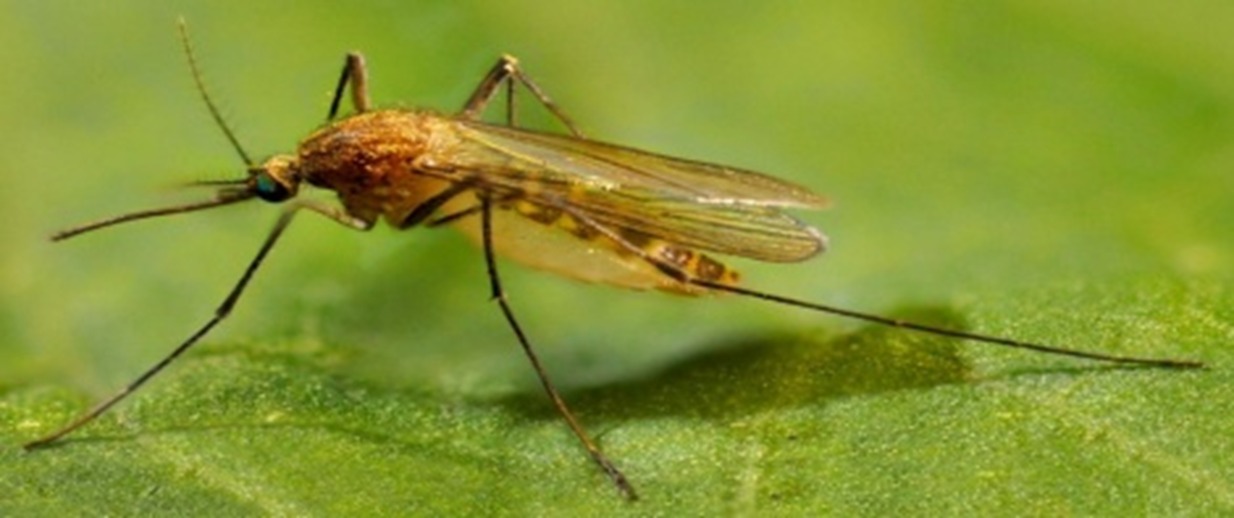
Lymphatic Filariasis (LF), commonly known as elephantiasis, is a parasitic disease transmitted through the bites of infected female mosquitoes, primarily Culex quinquefasciatus, which breed in dirty and polluted water. In India, the disease is mainly caused by the parasite Wuchereria bancrofti (99% of cases), while a smaller proportion is caused by Brugia malayi (1%).
The infection is often acquired during childhood and can silently damage the lymphatic system over many years. Over time, it may lead to chronic and disabling conditions such as lymphedema or elephantiasis of the limbs (Hathipaon) and hydrocele (swelling of the scrotum). LF is a serious and debilitating disease that significantly affects the quality of life and earning capacity of affected individuals.
Lymphatic Filariasis remains a major public health challenge in India, particularly in states with a high burden of disease. It disproportionately affects poor and vulnerable communities, thereby contributing to the cycle of poverty. In endemic areas, people of all age groups are at risk. Although infection commonly occurs in childhood, the visible symptoms and disabilities may appear later in life, causing temporary or permanent impairment.
A large number of LF cases in India remain hidden within communities. According to World Health Organization (WHO) estimates, more than 90% of LF cases are unreported or undetected. This is mainly because the disease often shows no visible symptoms in its early stages, and even advanced manifestations may go unrecognized or unreported due to social stigma, lack of awareness, and limited access to healthcare services.
Under the Sustainable Development Goals (SDGs), the global community aims to “end the epidemics of AIDS, Tuberculosis, Malaria, and Neglected Tropical Diseases (NTDs)” by 2030. India played a significant role in shaping the United Nations Sustainable Development Agenda 2030, and the country’s national development priorities closely align with the SDGs.
According to the World Health Organization (WHO), around 51 million people were living with lymphatic filariasis globally in 2018. Of the 72 endemic countries, 35 require preventive chemotherapy (PC) through the implementation of Mass Drug Administration (MDA), and India is among them. Globally, nearly 657 million people across 39 countries still require preventive treatment for lymphatic filariasis. India is particularly important in the global elimination effort, as it accounts for nearly 55% of the world’s population requiring MDA for LF, representing approximately 40 crore people.
India launched the National Filaria Control Programme (NFCP) in 1955 and later aligned its efforts with the WHO-led Global Programme to Eliminate Lymphatic Filariasis (GPELF). The country remains strongly committed to eliminating LF as a public health problem by 2027, three years ahead of the global SDG target of 2030.
Under the visionary leadership of the Hon’ble Prime Minister and the Hon’ble Union Minister of Health and Family Welfare, the Government of India has prioritized LF elimination as a key component of its Universal Health Coverage (UHC) and disease elimination initiatives. The overarching objective is to ensure that no individual in India continues to suffer from the pain, disability, social stigma, and economic burden associated with lymphatic filariasis.
India has made significant progress toward the elimination of Lymphatic Filariasis (LF) in recent years. A total of 145 districts (41%) have already been declared LF-free and have successfully stopped Mass Drug Administration (MDA) following favorable results in Transmission Assessment Surveys (TAS). Coverage and compliance under MDA campaigns have improved considerably, while enhanced surveillance systems and data-driven microplanning are helping to identify residual pockets of infection.
The country has also introduced antigen-based diagnostic tests for LF, which provide greater sensitivity and specificity compared to conventional methods such as Night Blood Surveys (NBS) and the DEC Provocative Test. To accelerate the interruption of transmission, India has implemented Triple Drug Therapy (IDA) in several endemic states. In addition, Morbidity Management and Disability Prevention (MMDP) initiatives have significantly improved the quality of life of thousands of affected individuals.
High-quality surveillance remains essential for informed decision-making and sustained progress toward elimination. Activities such as Night Blood Surveys (NBS), implementation of Transmission Assessment Surveys (TAS), quality assurance, and regular monitoring continue to play a critical role in the programme. However, some blocks continue to conduct MDA despite reporting low microfilaria (Mf) rates, mainly due to gaps in quality and inadequate coverage. These challenges can be effectively addressed through proper training, supportive supervision, and strict adherence to established quality standards.
Progress Towards Elimination and Key Strategies:
India has adopted a mission-mode approach to eliminate Lymphatic Filariasis (LF) through intensified Mass Drug Administration (MDA) campaigns in endemic areas. Traditionally, biannual MDA rounds were conducted on 10th February and 10th August each year, with a strong emphasis on directly observed drug consumption to ensure compliance. However, from 10th February 2026 onwards, the Government of India revised the policy to conduct MDA once annually.
A major milestone in the elimination programme was the introduction of Triple Drug Therapy (IDA) in 2018, consisting of Ivermectin, Diethylcarbamazine (DEC), and Albendazole. This strategy has significantly accelerated progress towards interruption of transmission. As a result, more than 41% of endemic districts have successfully stopped MDA after passing the required validation and Transmission Assessment Surveys (TAS). MDA coverage has also improved substantially, with recent campaigns in 2024, 2025, and 2026 achieving over 95% coverage among the eligible population.
To further strengthen elimination efforts, the Government launched the “Enhanced Strategy” in 2023, with a special focus on urban areas where MDA coverage had historically remained low, as well as on hotspot-specific interventions. Expansion of Morbidity Management and Disability Prevention (MMDP) services is also underway. More than 121,000 hydrocele surgeries have been conducted, and foot hygiene practices for the management of lymphoedema are being widely promoted to improve patient care and quality of life.
The Accelerated Plan for Elimination of Lymphatic Filariasis (APELF) has revitalized ongoing efforts by introducing new objectives, innovative interventions, and strengthened approaches for MDA, monitoring and evaluation, and surveillance. The key objectives of the LF elimination campaign are:
- To accelerate interruption of transmission in all endemic districts through enhanced preventive chemotherapy strategies.
- To provide a minimum package of care to all individuals affected with chronic manifestations of LF in order to reduce suffering and disability.
- To strengthen programme activities and support the preparation of the LF elimination validation dossier.
To accelerate progress towards elimination, the country launched an enhanced five-pronged strategy in January 2023, reinforcing its commitment to achieving LF elimination ahead of the global target.
Five-Pronged Strategy for Elimination of Lymphatic Filariasis (LF):
To accelerate the elimination of Lymphatic Filariasis (LF), the Government of India has adopted an enhanced five-pronged strategy comprising the following key components:
- Mission-Mode Annual Mass Drug Administration (MDA):
Annual MDA campaigns are conducted in endemic areas with a focus on achieving high coverage and compliance. Earlier, these campaigns were synchronized with the National Deworming Day on 10th February and 10th August each year. - Morbidity Management and Disability Prevention (MMDP):
Emphasis is placed on early diagnosis, timely treatment, and comprehensive care for affected individuals. Medical Colleges are actively engaged to strengthen patient management and disability prevention services. - Integrated Vector Control:
Vector control activities are implemented through coordinated multi-sectoral efforts aimed at reducing mosquito breeding and interrupting disease transmission. - High-Level Advocacy and Intersectoral Coordination:
Collaboration with allied ministries and departments such as Water and Sanitation, Panchayati Raj, Education, Rural Development, and Urban Development is being strengthened to support LF elimination activities through a whole-of-government approach. - Use of Digital Platforms and Innovative Diagnostics:
Existing digital platforms are being leveraged for improved monitoring, surveillance, and programme management. Simultaneously, efforts are underway to explore and adopt alternative diagnostic tools for more effective detection of LF infections.
To achieve the elimination of LF, a series of programmatic interventions have been designed and implemented. These include Mass Drug Administration (MDA), Morbidity Management and Disability Prevention (MMDP), and integrated vector control measures. Together, these interventions aim to interrupt the transmission of LF infection, prevent new cases, and reduce the suffering and disability among affected individuals.
The Elimination of Lymphatic Filariasis (ELF) programme has achieved considerable progress since its launch in 2004, resulting in a significant reduction in disease burden across the country. Six states and Union Territories—Goa, Puducherry, Dadra & Nagar Haveli and Daman & Diu, Tamil Nadu, Lakshadweep, and Andaman & Nicobar Islands—have successfully stopped Mass Drug Administration (MDA) after meeting the required criteria for interruption of transmission. In addition, several other states are now approaching elimination status, reflecting the sustained efforts and progress of the national programme.
The success of Lymphatic Filariasis (LF) elimination in India depends on sustained Information, Education, and Communication (IEC) activities that promote community participation, ensure high Mass Drug Administration (MDA) coverage in endemic districts, address misconceptions, and improve compliance with treatment protocols. Continued collaboration among government agencies, international organizations, non-governmental organizations (NGOs), corporate social responsibility (CSR) initiatives, and local communities remains crucial for achieving the national target of LF elimination by 2027.
Dr. Sudarsan Mandal is Senior Chief Medical Officer (Sr. CMO), NCVBDC, and former Deputy Director General (DDG), Directorate General of Health Services (Dte. GHS), Ministry of Health and Family Welfare (MoHFW).