Jammu: The Jammu and Kashmir administration has reviewed a comprehensive Rs 3,440.43 crore plan for permanent restoration of damages caused by floods and associated calamities in 2025.
Chief Secretary Atal Dulloo directed departments on Thursday to adhere to strict timelines and ensure swift project execution.
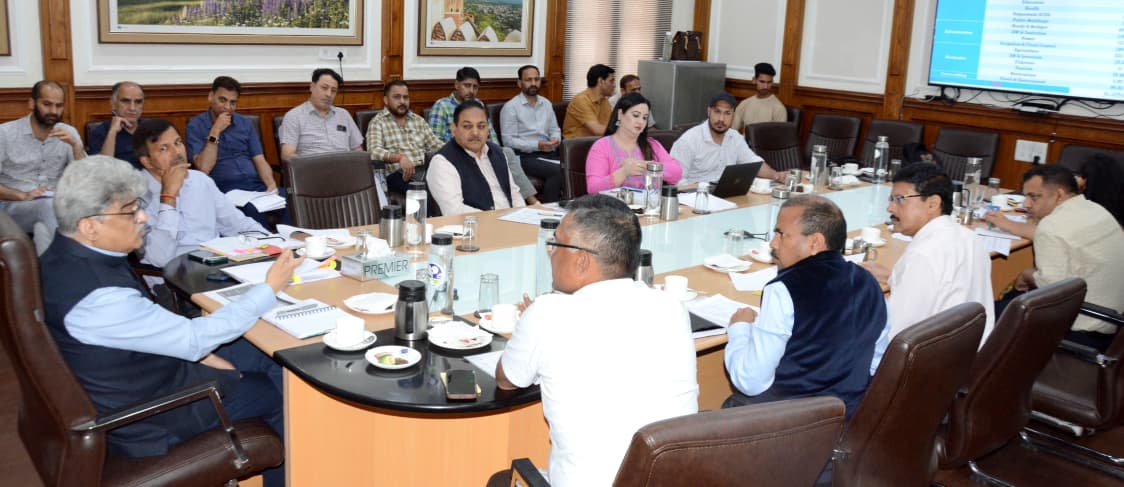
Chairing a high-level review meeting here, Dulloo emphasised the need to expedite approvals and tendering processes so that work execution begins by June this year. “All departments must ensure that work is tendered and completed without delay, strictly according to approved estimates and project lists,” he said.
Principal Secretary for Disaster Management, Relief, Rehabilitation and Reconstruction, Chandraker Bharti, outlined the component-wise allocation of the Rs 3,440.43 crore outlay, structured across multiple funding streams to address both immediate relief and long-term resilience.
He said the largest share of Rs 1,579.09 crore has been approved under the recovery and reconstruction component of the UT disaster response fund as central financial assistance based on the post-disaster needs assessment (PDNA).
This includes Rs 1,421.118 crore as the Central share and Rs 157.909 crore as the UT share, he said.
“The funds are aimed at permanent restoration of critical infrastructure such as roads, bridges, irrigation systems and other public assets, with a ‘build back better’ approach,” Bharti said.
He said a high-level committee approved an additional Rs 330.34 crore under SDRF/NDRF norms to meet the immediate and residual impacts of disasters, including floods, flash floods, landslides and cloudbursts.
The meeting also reviewed the strategy for utilising Rs 1,431 crore under the Special Additional Central Assistance (SASCI) component to bridge critical gaps and support resilience-oriented interventions.
“Of this, Rs 860 crore has been earmarked for the R&B sector, Rs 315 crore for Jal Shakti, Rs 173 crore for the Power Development Department, Rs 51 crore for Agriculture Production and Rs 32 crore for Youth Services and Sports,” he said.
Bharti highlighted capacity-building measures and said the National Institute of Disaster Management has been requested to train officers and officials to strengthen institutional capacity for effective project formulation, implementation and monitoring.
Dulloo stressed strict adherence to the guidelines of the Disaster Management Division of the Ministry of Home Affairs. “Project proposals must align with PDNA findings and there should be no duplication of funding, particularly between R&R and SASCI components,” he said, adding that the Ministry will closely monitor the execution of these works.