

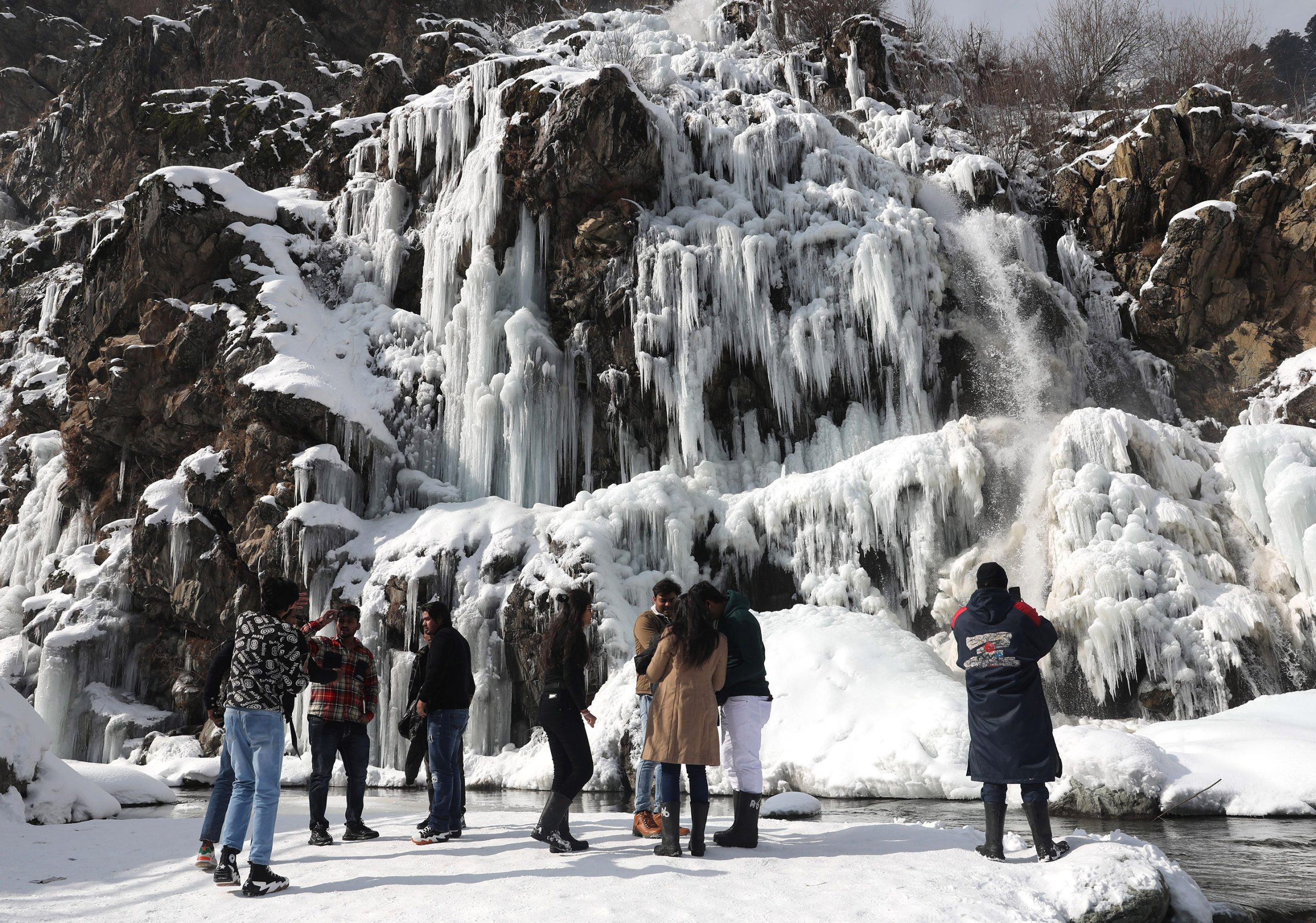
Chillai Kalan, the harshest phase of Kashmiri winter, occurs from December 21 to January 29 every year. It is followed by Chillai Khurd of 20 days and Chillai Bach of 10 days. Among these, Chillai Kalan has always been the most intense and defining period, forming the true identity of Kashmiri winter. It is not merely a seasonal cycle but a cultural, emotional, and climatic hallmark of the Valley.
The charm of winter in Kashmir truly began with Chillai Kalan, when the mercury dipped far below zero. Everything froze, from water taps to flowing streams, rivers, and lakes. As a child of the 1990s, I still vividly remember those mornings when we woke up to find water frozen in buckets, milk solidified in pots, and frost flowers carved on windowpanes. The entire Valley lay wrapped in a thick white blanket, turning every street, field, and rooftop into a playground.
For us children, Chillai Kalan was a season of endless joy. We eagerly waited for fresh snowfall, rushing outside before breakfast to feel the crunch of frozen snow beneath our feet. Making snowmen, snow chairs, and snow forts was a daily ritual. Snow art was at its peak because the snow remained hard and frozen for days. We carved long icy tracks for skating and used polythene sheets as makeshift skates, sliding for hours with laughter echoing across the silent white fields. Wet clothes, numb fingers, and red cheeks never mattered; winter was a festival in itself.
I remember friendly snowball fights that lasted till sunset, climbing snow-covered poplar trees, and jumping from rooftops into deep snow. Even school routes became adventures, as we walked carefully on frozen roads, competing to see who could slide the farthest without falling. In the evenings, we gathered around traditional kangris, warming our hands while listening to elders narrate folk tales and stories of even harsher winters of the past.
Adults too had their own way of living with Chillai Kalan. Slippery roads were common, and people wore traditional khraw and pulhoor footwear to protect themselves from icy surfaces. Women broke thick layers of ice on streams, ponds and springs to fetch water for their homes because taps remained frozen for weeks. Though it was one of the toughest periods of life, it carried a strange beauty and collective strength. Chillai Kalan was also the best season for glacier formation, silently storing water that sustained Kashmir throughout the year.
Sadly, with time, everything has changed. Climate change has stolen the soul of Chillai Kalan. The heavy, continuous snowfall that once defined these days has become rare. Frozen rivers and lakes are now memories shared only in stories. The snow-covered mountains that once gleamed through the entire winter now lose their white cloak too early. The once-famous frozen Dal Lake, admired across the world and remembered for games of cricket played on its surface, now seems unlikely to freeze again. What was once normal now feels like a distant dream.
Chillai Kalan was not only a season of extreme cold; it was the backbone of Kashmir’s water security. The snow deposited during this period fed rivers, springs, and lakes for the entire year. Today, dry spells, erratic snowfall, and untimely rains have broken this natural rhythm. Global warming has deeply disturbed the Valley’s fragile climate.
We Kashmiris may also share responsibility for this painful shift. Deforestation, water pollution, and careless garbage dumping along riverbanks have worsened the damage. Srinagar is becoming increasingly polluted, and Dal Lake has lost much of its original charm and purity.
The harsh cold of Chillai Kalan was once the pride and identity of Kashmir. Today, it lives mostly in childhood memories, memories of frozen mornings, playful snow days, and a winter that shaped our lives. What was once a living season has now become a longing, reminding us of what we have lost and what we must strive to protect before it disappears forever.
The author is a teacher in the department of education and a columnist


