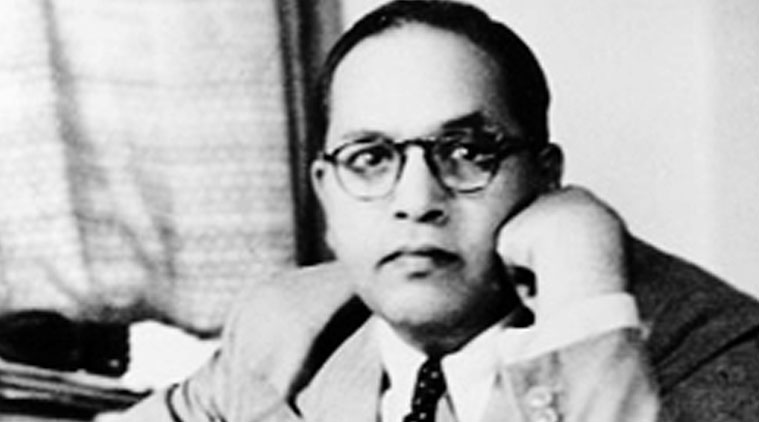
Today, we commemorate the 70th Mahaparinirvan Day of Baba Saheb Dr. Bhimrao Ambedkar, a larger-than-life figure and a champion of progressive measures that have shaped the course of modern human society. As a jurist, economist, philosopher, reformer, and above all, a nation-builder, his tireless efforts laid the foundation of modern India. He did not merely draft a Constitution; he provided a blueprint for an inclusive and empowered nation, where every citizen enjoys dignity and opportunity. Inspired by these foundational values, the Modi government has undertaken numerous initiatives promoting welfare and good governance.
On November 27, 2025, at UNESCO Headquarters in Paris, the world paused to witness the unveiling of a bust of Dr. Bhimrao Ramji Ambedkar, commemorating the 75th anniversary of the Indian Constitution. Among global dignitaries, the statue stood not merely as a tribute to an Indian leader but as a universal symbol of justice. The plaque reads “Architect of the Indian Constitution,” yet these words barely capture the legacy of a man who not only drafted laws but helped shape an entire nation in totality.
During his entire lifetimr, Baba Saheb Dr Ambedkar carried forward the struggle for justice, championing for labour rights and welfare. As the representative of the Depressed Classes in the Round Table Conference, he strongly advocated for living wages, decent working conditions, freedom for peasants from oppressive landlords, and the eradication of social evils affecting the downtrodden. He had personally witnessed the suffering of workers and the downtrodden. In Bombay, he lived for over 10 years in one-room tenements of the Bombay Development Department alongside mill workers, where there were no modern facilities and each floor had only one lavatory and one tap for all purposes. These conditions gave him firsthand knowledge of workers’ lives. He mobilized the masses and founded the Independent Labour Party (ILP) in 1936 with a comprehensive program for landless people, poor tenants, agriculturists, and workers. On September 17, 1937, during the Poona session of the Bombay Assembly, he introduced a bill to abolish the Khoti land tenure system in Konkan. In 1938, he led a peasants’ march to the Council Hall in Bombay, becoming a popular leader of peasants, workers, and the landless. He was the first Indian legislator to introduce a bill to end the serfdom of agricultural tenants. He also strongly opposed the Industrial Disputes Bill, 1937, because it curtailed workers’ right to strike.
When the world order was in uncertainty during the 2nd world war, Dr. Ambedkar as a abour Member of the Viceroy’s Executive Council was guiding the path for the labourer in India. As economies transformed and industries expanded, entrepreneurs gained opportunities for prosperity, but labour was not given its fair share. Dr. Ambedkar introduced key measures for labour welfare, laying the foundation of the Government’s labour policy. He handled complex labour issues with great efficiency and earned the respect of both employees and employers.
In his 1943 All India Radio address from Bombay, Dr. Ambedkar urged securing a “fair condition of life” for labour, grounded in liberty, equality, and fraternity. His efforts helped bring workers under social security. He made lasting contributions through key labour legislation, including the War Injuries (Compensation Insurance) Bill, the Indian Boilers (Amendment) Bill, 1943—addressing unsafe inspections that caused many mill deaths—the Indian Mines and Trade Unions Amendment Bills, the Miners Maternity Benefit Amendment, the Coal Mines Safety (Stowing) Amendment, and the Workmen’s Compensation Amendment.
On 9 December 1943, Dr. B.R. Ambedkar visited the Dhanbad coalfields, going 400 feet underground to inspect operations and labour conditions. This visit led to the Coal Mine Labour Welfare Ordinance of January 1944, creating a fund for workers’ welfare. He strengthened this fund by doubling the tax on extracted coal, ensuring better health and safety measures for miners. On 8 November 1943, he also introduced the Indian Trade Union (Amendment) Bill, requiring employers to recognise trade unions.
On 8 February 1944, during the Legislative Assembly debate on lifting the ban on women’s underground work in coal mines, Dr. B.R. Ambedkar stated, “It is for the first time that I think in any industry the principle has been established of equal pay for equal work irrespective of the sex.” This marked a historic moment for the nation. Through the Mines Maternity Benefit (Amendment) Bill, 1943, he strengthened maternity benefits and addressed absenteeism. In 1945, he further amended the Act to prohibit women from underground work for ten weeks before childbirth and ensured fourteen weeks of maternity leave—ten weeks before and four weeks after confinement.
Addressing the Indian Labour Conference in New Delhi on 26 November 1945, he reviewed the State’s obligations to labour and urged laws to raise Indian labour standards to international levels. Emphasizing the need for progressive labour welfare legislation, he said:—
“Labour may well say that the fact that the British took 100 years to have a proper code of labour legislation is no argument that we should also in India take 100 years. History is not to be studied merely with a view to know how well to imitate the mistakes of other countries. We study history with a view to know the errors people have made and how they could be avoided. History is not always an example. More often it is a warning.”
The next day at the same conference, he proposed legislation to reduce working hours to a 48-hour week in factories, introduce statutory industrial canteens, and amend the Workmen’s Compensation Act, 1934. He also announced plans to draft laws for minimum wages and for amending the Indian Trade Union Act, 1926. On 21 February 1946, Dr. B.R. Ambedkar moved the Factories (Amendment) Bill to reduce weekly working hours to 48, fix overtime rates, and provide paid leave. After review by the select committee, this landmark legislation—championed by Ambedkar—was passed on 4 April 1946.
The Mica Mines Labour Welfare Fund Bill, introduced by him to create a fund for welfare activities in the mica mining industry, was passed on 15 April 1946. It improved amenities and working conditions for child and women labourers, including hours and wage issues. Dr. Ambedkar also moved a Minimum Wages Bill on 11 April 1946, proposing advisory committees and boards with equal employer–labour representation. This bill was later enacted into law on 9 February 1948.
Dr. Ambedkar opposed the labour movement led by communists, rejecting Marx’s totalitarian approach of controlling all means of production. He disagreed with Marx’s view that abolishing private property would end poverty and suffering. In his essay Buddha or Karl Marx, he writes:—
“Can the Communists say that in achieving their valuable end they have not destroyed other valuable ends? They have destroyed private property. Assuming that this is a valuable end can the Communists say that they have not destroyed other valuable end in the process of achieving it? How many people have they killed for achieving their end. Has human life no value ? Could they not have taken property without taking the life of the owner?”
While drafting the Constitution, Dr. Ambedkar placed labour in the Concurrent List to ensure uniform legislation and alignment with international standards. His foresight also eliminated bonded labour by declaring it illegal in the Constitution.
Guided by the Mantra of “Reform, Perform, Transform,” and taking inspiration of Dr. Ambedkar’s values, the government has implemented four comprehensive labour codes—the Codes on Wages, Industrial Relations, Social Security & Welfare, and Occupational Safety, Health & Working Conditions. These reforms aim to ensure universal social security, protect workers’ rights, boost productivity, create jobs, and strengthen India’s economic growth toward a Viksit Bharat by 2047. The Pradhan Mantri Shram Yogi Maan-Dhan Yojana, launched in February 2019, provides old-age protection for unorganised workers, while the Maternity Amendment Act, 2017, extends maternity leave from 12 to 26 weeks and mandates crèche facilities.
As we honor the countless contributions of laborers in nation-building, guided by the enduring spirit of Shramev Jayate, Dr. Ambedkar’s Mahaparinirvan Diwas offers a fitting moment to reflect on the vision and actions of this great nation-builder. His ideals remain a guiding light, inspiring us to achieve the goal of a Viksit Bharat by 2047.
Courtesy PIB, Srinagar
The Author is Union Minister of State for Law & Justice (I/c) and Parliamentary Affairs, Govt of India.