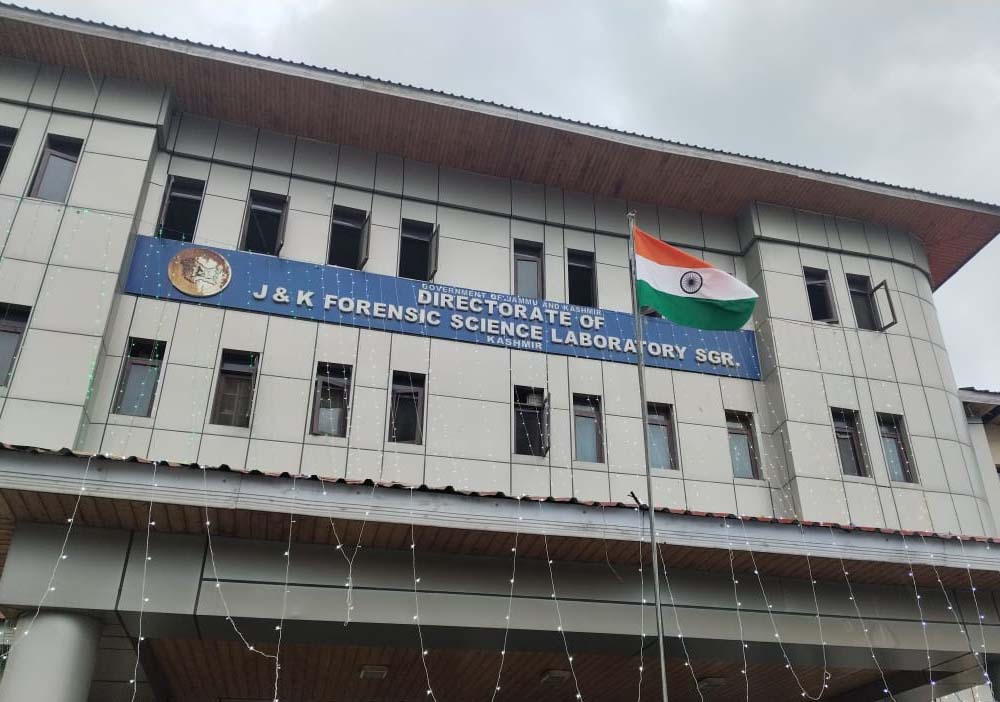
JAMMU: Forensic Science Laboratory, Jammu and Kashmir, has announced the first-ever genetic data publication based on hypervariable Short Tandem Repeats (STRs) on UT’s human population which was published in the International Journal of Legal Medicine (IJLM).
Pertinently, the study was conducted on 694 unrelated individuals selected randomly from the large population to find out the genetic implications of demographic dynamics that have taken place in the region. The study confirmed considerable admixture and genetic relation of different districts of Kashmir with adjoining Central Asian/Arab countries which were connected through ancient silk route.
Jammu districts, on the other hand, show an appreciable genetic similarity with adjoining states of the Indian Union. Besides, Ramban, Reasi and Kishtwar though adjacent geographically were found to be genetically scattered.
“This is the first broad-based autosomal STR study that has a potential impact on justice delivery in the courts of Law. DNA evidence produced in the courts will now be supplemented by the statistical data presenting the weight of evidence. Besides, it will profoundly impact the management of genetic diseases in the UT of J&K,” said the lead author Dr. Nadeem Mubarik.
Director FSL Gurmukh Singh, applauding the contributions of all the authors, said that this will unequivocally have a positive impact on the delivery of justice in the courts, thus increasing the rate of conviction in DNA-related cases, especially in POCSO cases.
Moreover, such a contribution will undoubtedly help in boosting research & development in FSL J & K. Officer-in-charge FSL Srinagar, Syed Ishfaq Manzoor, congratulated the team of scientists for achieving this milestone. He said that this publication will have an everlasting impact on the justice delivery system in the UT of J&K.