By: Himangshu Ranjan Bhuyan
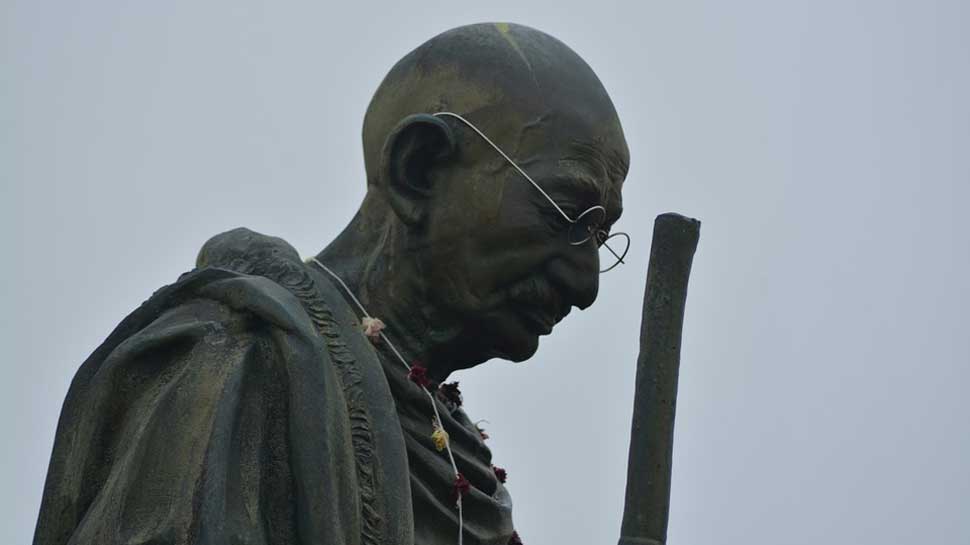
Mahatma Gandhi, revered as the “Father of the Nation” in India, led a life steeped in values that emphasized the welfare of all individuals, regardless of their social, economic, or religious backgrounds. His commitment to social justice, equality, and nonviolence was not merely a political strategy but a profound moral philosophy that guided his actions throughout his life. Gandhi’s vision encompassed not only the struggle against British colonial rule but also a broader aspiration for a society where every individual was treated with dignity and respect. His life and teachings continue to inspire movements for social change and justice around the world.
At the core of Gandhi’s philosophy was the principle of Sarvodaya, which translates to the welfare of all. He believed that true progress could only be achieved when the weakest and most marginalized members of society were uplifted. This concept shaped his vision of a just society, where social and economic inequalities were addressed, and where every individual had the opportunity to lead a dignified life. Gandhi often stated, “The best way to find yourself is to lose yourself in the service of others.” This idea encapsulated his belief that personal fulfillment is intertwined with the welfare of others.
Gandhi’s commitment to the welfare of all was reflected in his opposition to the caste system, which he viewed as a grave injustice that divided Indian society. He actively campaigned against untouchability and referred to the untouchables as Harijans, or “children of God.” Gandhi sought to eradicate the stigma associated with untouchability and worked tirelessly to integrate marginalized communities into the social fabric of India. He believed that social reform was essential for the attainment of true independence, as a nation that allowed discrimination could never be truly free. His efforts to uplift the downtrodden and ensure their participation in the independence movement demonstrated his dedication to the welfare of all.
In addition to addressing social inequalities, Gandhi advocated for economic self-sufficiency, particularly through the promotion of swadeshi, the use of indigenous goods. He believed that economic independence was crucial for India’s political freedom. The British colonial rule had systematically exploited Indian resources and undermined local industries. By encouraging Indians to produce and consume local products, Gandhi aimed to empower communities economically and reduce dependency on foreign goods. This emphasis on self-reliance was also a call to individual responsibility, urging people to take ownership of their economic destinies while fostering a sense of solidarity within communities.
Gandhi’s dedication to nonviolence, or ahimsa, was another significant aspect of his commitment to the welfare of all. He believed that nonviolence was not only a strategy for political resistance but also a way of life that should be embraced in all aspects of human interaction. Gandhi argued that violence, even when justified, ultimately leads to more suffering and hatred. Instead, he promoted peaceful resistance as a means of achieving social and political change. His approach to nonviolence was deeply rooted in compassion, empathy, and understanding, reflecting his belief that the welfare of all could only be achieved through peaceful coexistence and mutual respect.
The philosophy of nonviolence guided Gandhi in his numerous campaigns against British rule, such as the Salt March in 1930, which was a direct challenge to the British monopoly on salt production. By leading a mass mobilization to produce salt from the sea, Gandhi demonstrated the power of civil disobedience grounded in moral principles. The Salt March not only galvanized the Indian populace but also drew international attention to the Indian independence movement. Through this act of peaceful resistance, Gandhi exemplified how a commitment to the welfare of all could mobilize a nation and inspire global solidarity against colonial oppression.
Gandhi’s vision for India also included the promotion of communal harmony among its diverse religious communities. He believed that unity among Hindus, Muslims, Christians, and others was essential for the well-being of the nation. Throughout his life, Gandhi emphasized the importance of mutual respect and understanding between different religious groups, often advocating for interfaith dialogue and cooperation. His efforts to promote peace during the communal violence surrounding India’s partition in 1947 illustrated his unwavering commitment to the welfare of all people, regardless of their religious affiliations. Even in the face of hatred and division, Gandhi sought to heal wounds and build bridges between communities, underscoring his belief that a nation can only thrive when its citizens live in harmony.
Gandhi’s dedication to the welfare of all was also evident in his approach to education and self-improvement. He believed that education should be holistic, emphasizing not only academic knowledge but also moral and ethical development. He advocated for a system of education that fostered critical thinking, self-discipline, and character-building, encouraging individuals to become responsible and engaged members of society. Gandhi’s vision of education aimed to empower individuals to uplift themselves and their communities, thereby contributing to the greater welfare of society.
Moreover, Gandhi’s lifestyle reflected his commitment to simplicity and sustainability. He believed in living a life of minimalism, rejecting materialism and excess. His advocacy for self-sufficient rural economies and sustainable practices was a call to return to a way of living that honored the earth and its resources. Gandhi understood that a society committed to the welfare of all must also consider the environmental impact of its choices. By promoting simple living, he encouraged people to recognize the interconnectedness of all beings and the importance of stewardship of the planet.
Gandhi’s life was also marked by self-sacrifice and resilience. He endured numerous imprisonments, hardships, and personal losses in pursuit of his ideals. Despite the challenges he faced, Gandhi remained steadfast in his commitment to nonviolence and the welfare of others. His ability to remain undeterred in the face of adversity inspired countless individuals to join the struggle for independence and social justice. Gandhi’s life story is a powerful reminder of the strength of conviction and the impact one individual can have on society.
After India gained independence in 1947, Gandhi continued to advocate for peace, communal harmony, and social justice. He worked tirelessly to address the consequences of partition, which had resulted in significant violence and displacement. Gandhi’s vision for India extended beyond political independence; he sought to create a nation where every individual could thrive, free from discrimination and violence. Tragically, his life was cut short when he was assassinated in January 1948, but his legacy of compassion and commitment to the welfare of all lives on.
Gandhi’s principles and teachings continue to resonate globally, influencing movements for social justice, civil rights, and nonviolent resistance. Figures such as Martin Luther King Jr., Nelson Mandela, and countless others drew inspiration from Gandhi’s philosophy as they fought against oppression and injustice in their own contexts. His emphasis on the welfare of all remains a guiding principle for those advocating for equality and human rights today.
In conclusion, Mahatma Gandhi’s life was a profound testament to the idea of commitment to the welfare of all. His unwavering dedication to truth, nonviolence, social justice, and communal harmony formed the foundation of his philosophy. Gandhi’s vision transcended the struggle for Indian independence; it encompassed a holistic approach to building a just society where every individual could thrive. His teachings and legacy continue to inspire individuals and movements around the world, reminding us that true progress can only be achieved when we prioritize the welfare of all humanity. Gandhi’s life serves as a powerful example of how one person’s commitment to compassion and justice can change the world, urging us all to strive for a more equitable and peaceful society. ◾
(The Writer is Editor in Chief of the Assamese E-Megazine SAMPROTIK)
Email – himangshur1989@gmail.com