

By: Hilal Ahmad Tantray
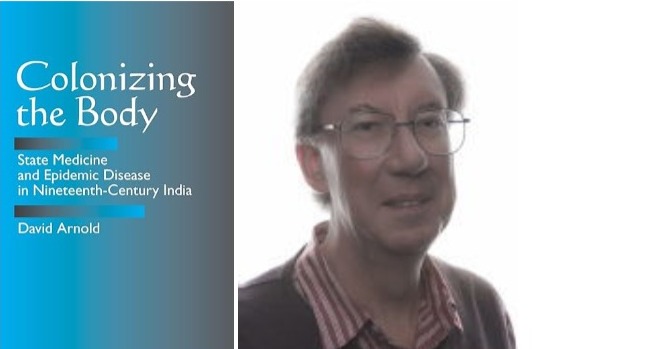
‘Colonizing the Body: State Medicine and Epidemic Disease in Nineteenth Century’ India is a seminal historical study by David Arnold that scrutinizes the intertwined relationship between medical science, colonialism, and public health during the 19th century in British India.
Arnold asserts that the British colonial rulers introduced modern medicine as a strategy to reinforce their control over the Indian populace. This book delves into how colonial officials, medical professionals, and missionaries utilized medicine to assert power over Indian cultures and bodies, often encountering local resistance.
Despite a comprehensive investigation of colonial policy in the book’s introduction, Arnold’s arguments occasionally overlook critical details. For instance, his claim that dissection was not practiced in Ayurveda contradicts the historical evidence that dissection and inspection of the human body were indeed integral to Indian medical practice.
Arnold’s study makes a substantial contribution to understanding the interaction between imperial objectives and medical knowledge in a colonial context. However, his framework for examining the body as a colonized entity is not entirely robust. After the cessation of colonial support for Indian medicine in 1835, interest was revived in 1837 with native classes at the Calcutta Medical College, becoming formal schools by the 1880s. While the dominance of Western medicine is explored, a deeper analysis of how it became ingrained in Indian society would have been beneficial.
The book discusses the colonial ‘learning’ from Indian medicine, highlighting the significant role of local medications. Indian doctors, who served as practical medical knowledge teachers in dispensaries and hospitals, continued to enrich the Western pharmacopeia with essential drugs. Arnold could have strengthened his arguments by mentioning the Native Medical Institution, which symbolized the early coexistence of Indian and Western medical practices.
In the second chapter, Arnold provides a useful discussion on the establishment of colonial enclaves such as the army and jails, where Western medical policies justified the monopoly of occidental medicine. He details public health facilities and the Indian Medical Services as extensions of colonial policies. The chapter also addresses the crisis of military health, reforming army health, and exploring the relationship between army and civilian health, focusing on the disparity between European and Indian soldiers’ health.
Arnold investigates the impact of epidemic diseases like smallpox, cholera, and plague on Indian society, and the colonial medical response to these crises. Smallpox was deeply ingrained in Indian culture, with the goddess Sitala worshipped for protection. The colonial response to cholera was relatively muted, while the severe measures during the plague outbreaks of the late 19th century sparked fierce public resistance. The pandemic of 1896–1897 saw extraordinary actions such as compulsory postmortems and forced hospitalizations, which led to widespread alienation from Western medicine.
The final chapter provides an informative account of Western hegemony in India, although some points would have been better placed earlier in the book. This chapter also discusses the role of women physicians in expanding Western influence in colonial India.
Overall, Colonizing the Body offers a critical examination of how Western medicine served as a colonizing force in British India. Arnold’s detailed and insightful analysis makes this book a valuable resource for those interested in the history of colonialism, public health, and medicine in British India.
The reviewer is a Doctoral Fellow at Jamia Millia Islamia, New Delhi,


