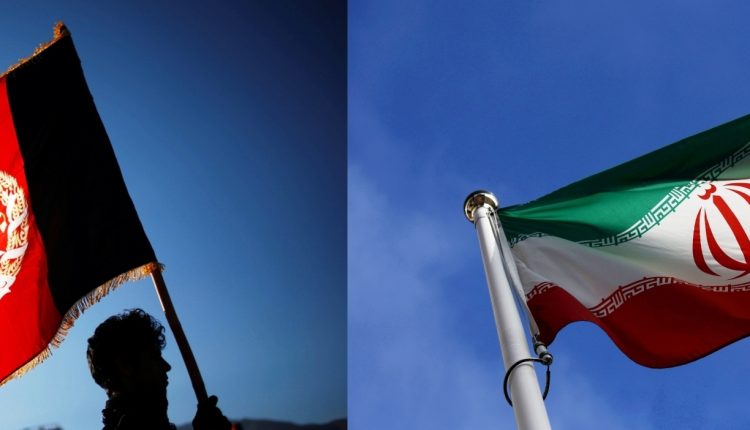
The recent border clashes between Iran and Afghanistan have a really dreaded portent for the future, both at the local and global levels, besides being a pointer to how we have managed our environment resources in a foolish manner.
As per reports from the Iranian Tasnim News Agency, deadly clashes broke out between Iranian border guards and the Afghan soldiers in the border area encompassing the Zabul district of Sistan and Baluchestan province on the Iranian side and the Keng district of Nimruz province in Afghanistan.
The deadly clashes resulted in death of two Iranian border guards in clashes with Taliban forces, while the Iranians, on their part, claimed to have killed 12 Talibani soldiers.
Perplexingly, the issue over which tensions between the two neighbours ran high is how to divide the waters of the Helmand River, which the two nations must share.
Iran accuses Afghanistan’s Taliban rulers of violating a 1973 treaty by restricting the flow of water from the Helmand River to Iran’s parched eastern regions, an accusation denied by the Taliban.
China’s Xinhua News Agency reported that Iranian member of parliament Hossein-Ali Shahriari, who represents Zahidan, the capital of Sistan and Baluchestan province, charged the Taliban government in Afghanistan with stopping up the flow of the Helmand River and storing extra water in the Kamal Khan Dam and other reservoirs. He complained that the Afghans have recently built new dams that are storing water that would otherwise have flowed to Iran.
Though this development might be a shocking news to many, however this is not a new phenomenon but was bound to happen not just between Iran and Afghanistan but amongst other countries too. Journalist Fatemeh Aman wrote a good summary of this conflict for the Atlantic Council, noting that drought and climate change have exacerbated the tensions over water sharing.
Both countries have built dams on the Helmand and irrigated off it, often to raise water-hungry crops not suitable to this arid environment.
Fatemeh noted that Helmand is the longest river in Afghanistan, constituting over 40 percent of Afghanistan’s surface water. With 95 percent of the Helmand located in Afghanistan, it is a critical source of livelihood for the country’s southern and southwestern provinces. The river further flows into Iran’s arid southwest to feed the Hamoun wetlands on the Iranian side and lakes on the Afghan side, but damming, irrigation, and drought have partially dried these up, creating conditions for toxic dust clouds.
As per environmentalists, Iran and Afghanistan are projected to heat up faster than the world average, twice as fast, in fact. Already, poor water management and extra heat have had a devastating effect on the Helmand basin. Extra heat dries out the soil and contributes to more intense and more frequent droughts. It also causes greater and more rapid evaporation of water from lakes and rivers.
The water resources are critical for people living in the increasingly drought-prone Sistan and Baluchestan region; in addition the Sistan wetland ecosystem also supports flamingos, pelicans, and other migratory birds. And while the history of conflict over the Helmand River is long, the scenario is similar to conflicts over water in other regions of the world. Many social scientists foresee water wars as a result. This border clash is a small omen of bigger conflicts to come.
Tensions between Egypt, Sudan and Ethiopia over the latter’s Grand Ethiopian Renaissance Dam (GERD) and Blue Nile River resources haven’t been resolved in years, with both Egypt and Ethiopia threatening a military response at various points.
Last year, Russian troops destroyed a Dnieper River dam that diverted water away from Crimea and into Ukraine. Armed groups in Mali, Somalia and beyond destroyed water infrastructure needed by civilians. Mexico, Chile, Israel and Palestine, Kenya and Peru – the Water Conflict Chronology database lists hundreds of conflicts over water in the modern era, as well as across history.
Journal Sustainability Times quoting UN Statistical Division’s data pertaining to 2019, reports that the number of water conflicts by different regions globally as of April 2022 runs up to more than 1100 conflicts.
Environmentalist Laureen Fagan in her report for Sustainability Times further quoted Dr. Peter Gleick, co-founder of the Pacific Institute in the United States and author of The Three Ages of Water, as warning that the frequency of water-related conflicts has grown in the past two decades. That’s due to violence in the Middle East, growing disputes during severe droughts over access to water in regions like Indian subcontinent and ethnic and community confrontations in sub-Saharan Africa.
Fagan further referred to a February 2023 paper on the database, co-authored by Shimabuku and published in the journal Environmental Research Letters, saying that it’s the uneven access to fresh water around the world that makes it a strategic priority during conflict, as is the case along the Iran-Afghanistan border.
Gleick and Morgan are of the view that social, economic, and political challenges associated with freshwater resources pose a variety of severe risks to communities around the world, from water-related diseases, to crop failures, to ecological destruction, to actual violence, the risks and incidences of water-related conflicts in recent years, are on the rise, and the factors driving such violence appear to be worsening. We need to understand the root causes of water conflicts and more effective strategies for reducing their probability and consequences.
Increasing tensions over water resources point out to the emergence of a new dimension to the global geopolitics, adding to the regional and neighbourly rivalries.
Now indeed the time seems to be apt to work cohesively to find a collective solution to the global demand & supply and sharing of water resources, besides taking a conscious, serious and determined approach to care more for our environment instead of just hollow talks, which seem to have become the trend of most global environmental agencies and plans. If indeed we do not act even now, then it may be too late when the real wars due to scarce water resources start erupting across the globe.