New Delhi: For many women and girls in Delhi, the journey to a metro station or bus stop itself is a source of fear, with nearly nine in 10 feeling unsafe making their way to the nearest public transport stop, a study by a gender equality organisation has found.
The study, conducted by the Centre for Equity and Inclusion (CEQUIN), found that 87.5 per cent of those surveyed felt unsafe walking to the nearest metro station or bus stop, while 88.9 per cent felt unsafe in their nearest public park after dark. More than three-fourths reported poorly lit footpaths, and 60 per cent said the footpaths were broken or missing.
According to a statement by CEQUIN, the findings, based on responses from 1,588 women, girls and LGBTQ+ people, point to a safety concern that extends beyond the threat of sexual violence — to the conditions in which people navigate the city every day.
For nearly 80 per cent of those surveyed, men’s behaviour — including staring, passing comments and following them — made everyday journeys unsafe. The study also found that 80.5 per cent could not identify the civic authority responsible for addressing their concerns, leaving a question mark over where they can turn when public spaces fail them.
The study, titled ‘Everyday Journeys: Women’s and Girls’ Access to Footpaths and Public Parks in Delhi’, examines how infrastructure, social behaviour and institutional failures shape women’s access to public spaces. CEQUIN, which works on gender-based violence and women’s rights, has submitted its recommendations to the Supreme Court, the statement read.
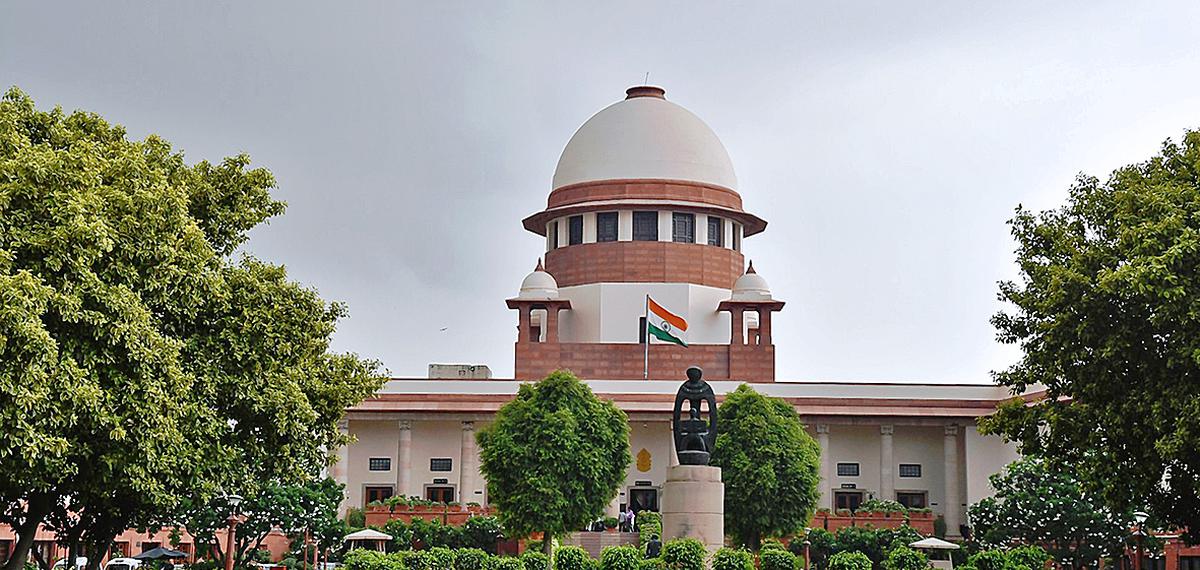
The findings come against the backdrop of a spate of rape and sexual assault cases reported across Delhi-NCR, including the alleged gangrape of a 17-year-old girl at Aastha Kunj Park. At least 13 such cases were reported in the first three weeks of September, prompting the Supreme Court to take suo motu cognisance on September 28 and direct authorities to identify vulnerable public spaces and strengthen safety measures.
According to the statement, the study was undertaken in response to this intervention and draws on CEQUIN’s 17 years of work on gender-based violence and women’s rights. It looks beyond individual crimes to examine how the design and upkeep of public spaces, along with social behaviour and gaps in institutional accountability, can limit women’s ability to move freely, the statement further read.
“When over 80 per cent of respondents cannot even identify which civic authority is responsible for addressing these gaps, exclusion becomes built into the city itself,” Lora K Prabhu, co-founder and managing director of CEQUIN, said, adding that the organisation hoped its recommendations would drive measurable, gender-responsive urban reform.
The report also cites National Crime Records Bureau data showing that Delhi recorded 13,396 crimes against women in 2024, the highest among India’s 19 major metropolitan cities.
It further points to the disparity in workforce participation, with Delhi’s female Labour Force Participation Rate standing at 14.5 per cent in 2023-24, compared with 54 per cent for men. The report argues that safety fears and restricted mobility affect women’s access to employment, though the figures do not establish a direct causal relationship.
The study is set to be released on Wednesday at CEQUIN’s annual event, ‘Hain Haq Hamara Hissedari’, marking the start of the ’16 Days of Activism’ against gender-based violence, the statement read.
Founded in 2009, CEQUIN works across Delhi-NCR, Haryana, Rajasthan and Bihar to prevent and address gender-based violence through community mobilisation, advocacy and institutional engagement, with a focus on women, adolescent girls and gender-diverse people from marginalised communities.