JAMMU: The Solid Waste Management (SWM) Rules, 2026, place greater emphasis on segregation of waste into four categories at source, scientific processing, recycling and accountability of waste generators, officials said during a media briefing organised by the Press Information Bureau (PIB), Jammu, in collaboration with the Jammu and Kashmir Pollution Control Committee (JKPCC) on Thursday.
The briefing focused on the provisions of the new rules and the responsibilities of government agencies, municipal bodies, commercial establishments, institutions and citizens in ensuring effective waste management.
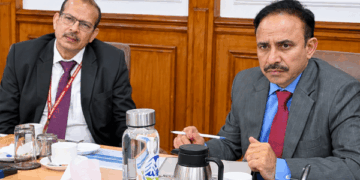
JKPCC Chairman Vasu Yadav said the rules mandate segregation of waste into four categories—wet, dry, sanitary and special care waste. The framework also provides for scientific waste processing, recycling, resource recovery and remediation of legacy dumpsites.
He said provisions for user fees, spot fines and environmental compensation had been incorporated to improve compliance and ensure greater accountability among waste generators.
Yadav called for coordinated efforts by government departments, institutions, commercial establishments and citizens, stressing that effective implementation would depend on responsible waste disposal and public participation.
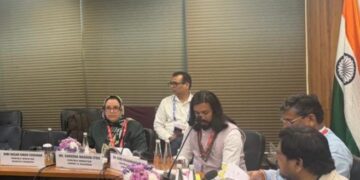
PIB Jammu Director Neha Jalali said the briefing was organised to familiarise media organisations and the public with the provisions of the new rules and promote awareness about responsible waste management.
She emphasised that implementation would require behavioural changes and active participation from citizens, institutions and local authorities. She also highlighted the role of media in disseminating information about source segregation, cleanliness and sustainable waste management practices at the grassroots level.
Jammu Municipal Corporation (JMC) Commissioner Ayushi Sudan outlined the measures being undertaken to strengthen waste management and improve accountability among bulk waste generators.
She said bulk waste generators were required to register through a dedicated online portal to facilitate monitoring and ensure compliance with prescribed norms. She stressed the need to promote recycling, reuse and scientific processing, observing that waste should be treated as a resource rather than merely a disposal burden.
Sudan said violations by bulk waste generators, including dumping waste in public places, attract a penalty of ₹10,000 per violation, besides user charges of ₹5,000.
She also highlighted the deployment of GPS-enabled vehicles to monitor waste collection and improve operational efficiency. She urged residents to use the ‘My Jammu’ mobile application to register sanitation-related complaints and report civic issues.
Joint Commissioner, Srinagar Municipal Corporation (SMC), Syed Abul Qasim, outlined the measures being taken to strengthen solid waste management infrastructure, particularly at the Achan dumpsite near Anchar Lake.
He said around 91,789 tonnes of waste had already been processed at the site as part of efforts to reclaim land, recover useful materials and reduce environmental risks.
Qasim also informed that an integrated solid waste management facility with a proposed processing capacity of 800 tonnes per day was planned at Achan at an estimated cost of ₹361 crore.
The proposed facility will include material recovery, compressed biogas generation, composting and refuse-derived fuel processing. A leachate treatment plant is also proposed to address environmental concerns associated with waste disposal at the site.
He further said a construction and demolition waste processing plant with a capacity of 125 tonnes per day was projected to be completed by December 2026.
The speakers emphasised that source segregation, recycling, scientific processing and public participation would be central to improving waste management and achieving the objectives of the Swachh Bharat Mission.