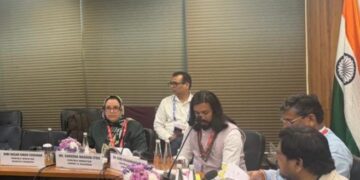
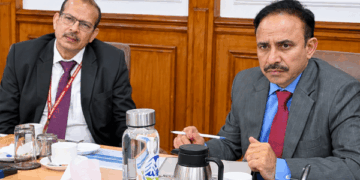
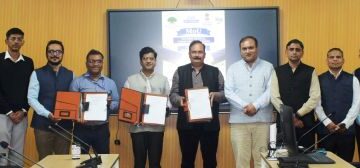
PULWAMA: The Jammu and Kashmir Board of School Education (JKBOSE), in collaboration with PARAKH, NCERT, New Delhi, on Thursday organised a one-day orientation programme in Pulwama to familiarise school heads with the pilot implementation of the Jammu and Kashmir School Quality Assessment and Assurance Framework (JKSQAAF).
The programme, held at Government Degree College Pulwama, was attended by around 200 heads of government and private schools from the district. JKBOSE is functioning as the School Standard Setting Authority (JKSSSA) for the initiative.
The orientation aimed to familiarise participants with the framework’s domains and indicators, the online self-assessment process, documentation of evidence and preparation of School Quality Improvement Plans (SQIPs).
The initiative seeks to institutionalise a culture of self-evaluation, accountability, continuous improvement and quality assurance in school education, in line with the National Education Policy (NEP) 2020.
JKBOSE Chairman Ghulam Hassan Sheikh said the pilot implementation reflected the Board’s commitment to strengthening institutional standards and adopting a structured, outcome-oriented approach to school quality assurance across Jammu and Kashmir.
He said the framework would provide schools with a systematic mechanism to assess their performance across different domains, identify areas requiring improvement and translate assessment findings into actionable School Quality Improvement Plans to support institutional development and improve learning outcomes.
Prof. Indrani Bhaduri, Chief Executive Officer and Head of PARAKH, NCERT, highlighted the role of school quality assessment in building a holistic, learner-centric and quality-oriented education system. She said the framework should encourage schools to undertake honest self-assessment, critically examine their institutional practices and use the findings constructively to identify gaps and bring about continuous improvement.
She observed that such frameworks should not be viewed merely as assessment instruments but as tools for institutional transformation, helping establish a sustained culture of quality, accountability and excellence in school education.
JKBOSE Director Academics Dr Parveen Singh described the implementation of JKSQAAF as an important step towards strengthening school education through a systematic, evidence-based and self-reflective process. He said its success would depend on the ownership, commitment and active participation of school leadership and the teaching community.
He emphasised that frameworks alone could not ensure quality improvement and called for collective responsibility and sustained efforts by all stakeholders to translate the initiative’s objectives into improvements at the school level.
Chief Education Officer Pulwama Anjum Raja welcomed the selection of the district for the pilot phase and urged participants to approach the self-assessment exercise with sincerity, objectivity and a constructive outlook to ensure tangible improvements in school functioning and learning outcomes.
Three technical sessions were held during the programme. In the first session, JKBOSE Deputy Director Academics Dr Arif Jan delivered a presentation on the framework’s vision, objectives, key domains and assessment indicators.
The subsequent sessions were conducted by Academic Officer Iftikhar Imran and Mohammad Yunis, In-charge of the JKSQAAF portal, who explained the operational aspects and implementation procedures.
The sessions included a digital walkthrough and hands-on demonstration of the portal developed by JKBOSE. Participants were familiarised with assessment indicators, descriptor-based evaluation, evidence requirements and the steps involved in completing school-level self-assessments.
The technical sessions were followed by interactive discussions, during which school heads raised queries and sought clarifications on implementation. Participants expressed their commitment to undertaking the assessment systematically and using its findings to prepare school improvement initiatives.