Jammu: Minister for Tribal Affairs Javed Ahmed Rana on Sunday called for identifying and documenting tribal personalities who have contributed to Jammu and Kashmir’s history, stressing the need to preserve the languages, folklore and cultural traditions of tribal communities for future generations.
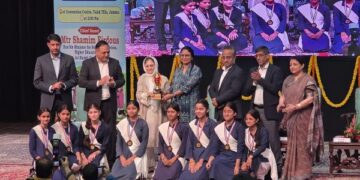
Addressing the Janjatiya Gaurav Diwas function at Kala Kendra, Jammu, organised by the Tribal Affairs Department under the Tribal Research Institute, Rana said the contributions of tribal men and women from Jammu and Kashmir deserved recognition alongside national tribal icons such as Bhagwan Birsa Munda.
The programme marked the 151st birth anniversary of Birsa Munda and the culmination of the fortnight-long Janjatiya Gaurav Pakhwada, observed from November 1 to 15.
The Tribal Affairs Department said Jammu and Kashmir had secured the top position among States and Union Territories in the number of events uploaded to the Union Ministry of Tribal Affairs’ Adi Prasaran portal during the fortnight. The ministry had also appreciated the department and its district teams for their participation, it said.
Rana emphasised the importance of preserving tribal languages, folk songs, traditional crafts and oral histories, saying younger generations should remain connected with the communities and individuals responsible for sustaining these traditions.
He also appreciated the work of the Tribal Research Institute in documenting the region’s tribal heritage. The institute has collaborated with IIT Jammu to record Gojri folklore in the Pir Panjal region.
The department has also sanctioned a project for IIT Jammu during 2026-27 to develop a digital repository of tribal knowledge, including oral histories, folk music and traditional crafts.
During the programme, Rana inaugurated a photo exhibition showcasing the lives and cultural heritage of Jammu and Kashmir’s tribal communities through photographs, paintings, traditional jewellery, handicrafts and other artefacts.
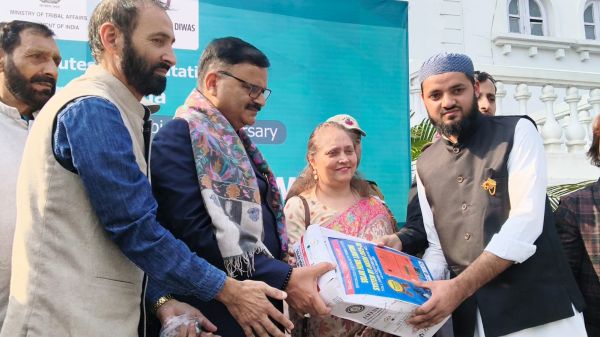
He also felicitated meritorious tribal students and distributed housing sanction letters under the Pradhan Mantri Awaas Yojana-Gramin (PMAY-G). Tents, portable drinking water storage tanks and solar lights were also distributed among eligible families.
Artistes from Gujjar, Bakarwal, Pahari, Gaddi, Sippi and other tribal communities presented folk music and dance performances, featuring Gojri and Pahari songs in traditional attire.
Commissioner Secretary, Tribal Affairs Department, Sheetal Nanda, highlighted the cultural diversity of Jammu and Kashmir’s tribal communities and the importance of documenting their distinct customs and traditions.
Dr Javaid Rahi, Secretary of Kala Kendra Society, Jammu, delivered the keynote address, highlighting the importance of preserving Gojri folklore and the cultural heritage of the Gujjar and Bakarwal communities.
As part of the fortnight-long celebrations, the department also undertook welfare and outreach activities across districts. In Samba, Rana announced a girls’ hostel estimated to cost Rs 7 crore. In Shopian’s Kanjiullar block, a Gram Sabha took up forest rights claims of tribal residents, while a health screening camp was organised at an Anganwadi centre in Kanzalwan, Bandipora.
Director Tribal Affairs Mohammad Mumtaz Ali and other departmental officers attended the programme.