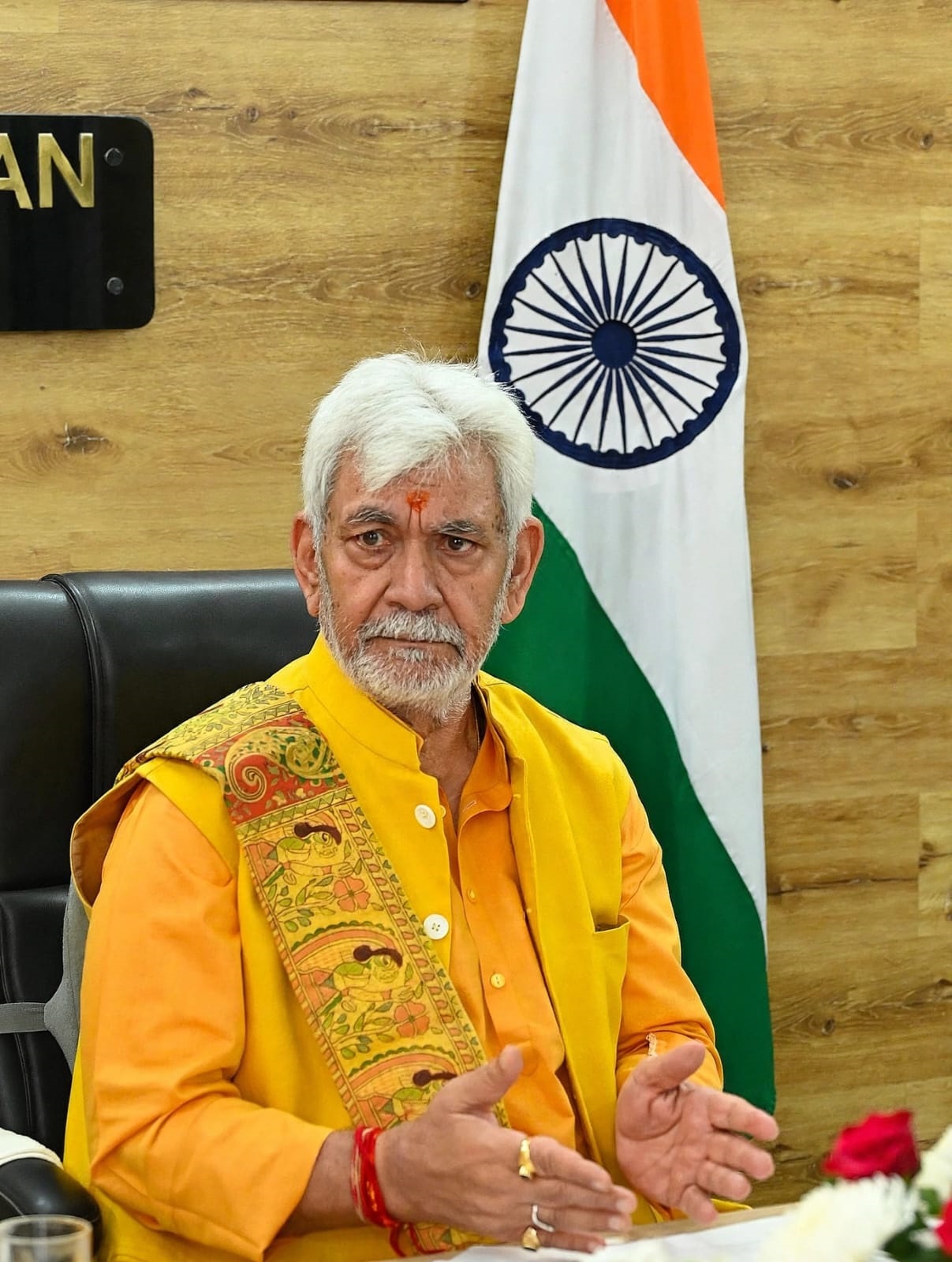
SRINAGAR: Lieutenant Governor Manoj Sinha on Friday hailed the inscription of Kalhana’s 12th-century historical chronicle Rajatarangini in UNESCO’s Memory of the World Asia-Pacific Regional Register, describing it as a proud moment for Jammu and Kashmir and the nation.
The manuscript, preserved at the Oriental Research Library in the Sri Pratap Singh Library Complex in Srinagar, is among three Indian documentary works included in the prestigious register during its 11th session held in Jakarta, Indonesia. The other two are a manuscript of the Mahabharata, preserved at the Bhandarkar Oriental Research Institute in Pune, and Kautilya’s Arthashastra, housed at the Oriental Research Institute in Mysuru.
In a post on X, Sinha said the inclusion of Rajatarangini celebrated Jammu and Kashmir’s rich intellectual heritage and reaffirmed the enduring value of India’s civilisational traditions.
“Proud moment for Jammu Kashmir and the nation! Kalhaṇa’s Rajatarangini, Mahabharata and Arthasastra have been inscribed in UNESCO’s Memory of the World Asia-Pacific Regional Register. The inclusion of Rajatarangini celebrates UT’s rich intellectual heritage,” the Lieutenant Governor posted.
He said the global recognition reaffirmed the timeless value of India’s civilisational traditions and their contribution to humanity, while reminding people of their collective responsibility to preserve and promote this heritage for future generations.
Chief Minister Omar Abdullah also congratulated the people of Jammu and Kashmir on the recognition, describing it as a matter of pride for the Union Territory.
In a statement, Abdullah said the manuscript, preserved at the Oriental Research Library in Srinagar, served as an invaluable repository of Kashmir’s historical and cultural traditions. He said the international recognition celebrated Jammu and Kashmir’s historical legacy and underlined the importance of preserving its rich heritage.
The Union Ministry of Culture announced the inscriptions through the Press Information Bureau on Thursday and shared photographs of the UNESCO certificates. The decision was taken during the 11th session of the Memory of the World Asia-Pacific Regional Committee in Jakarta.
The Indira Gandhi National Centre for the Arts (IGNCA) played an important role in preparing the nomination dossiers for all three works, officials said. Union Culture Minister Gajendra Singh Shekhawat described the inscriptions as a landmark recognition of India’s documentary and civilisational heritage.
Written in Sanskrit by Kalhana in the 12th century, Rajatarangini, literally meaning the ‘River of Kings’, is regarded as one of the most significant historical accounts of Kashmir. The chronicle documents the region’s rulers, successive dynasties, political developments and social conditions across centuries, offering an extensive account of Kashmir’s past.
Its narrative extends from Kashmir’s legendary origins to the reign of King Jayasimha, who ruled during Kalhana’s lifetime. The work is particularly noted for its historical approach, with Kalhana drawing upon earlier accounts and available sources while examining the rise and fall of rulers and political developments.
The inscription brings international attention to the Oriental Research Library in Srinagar, which has preserved the historic manuscript as part of Kashmir’s documentary heritage.
The other two works recognised alongside Rajatarangini represent important strands of India’s literary and intellectual traditions. The Mahabharata, one of the country’s two major Sanskrit epics, explores themes of Dharma, duty, ethics and human values, while Kautilya’s Arthashastra deals with governance, administration, economics, diplomacy and statecraft.
With the latest additions, India’s total number of inscriptions in UNESCO’s Memory of the World Asia-Pacific Regional Register has risen to six. The three earlier entries, recognised in 2024, include illustrated manuscripts of Tulsidas’s Ramcharitmanas, a rare manuscript of the Panchatantra and Sahrdayaloka-Locana, a significant work on Indian poetics.
The latest recognition places Kalhana’s chronicle among the region’s important historical and intellectual works, acknowledging its contribution to documenting Kashmir’s past and bringing renewed international focus to the region’s literary and scholarly heritage.