

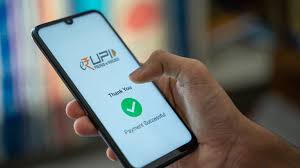
UPI has become a normal part of everyday life in India. People use it to buy vegetables, pay at restaurants, book tickets, shop online, or send money to friends. Many payments that once required cash or cards can now be completed through a phone.
So, when news came that some UPI payments above ₹2,000 would attract a 0.4% Merchant Discount Rate, many people wondered whether UPI was becoming a paid service.
The answer is no, at least for consumers.
The new framework mainly concerns certain merchant payments. Consumers are not supposed to pay the 0.4% MDR directly. Person-to-person UPI payments remain free, while merchant payments up to ₹2,000 remain outside the MDR framework.
This makes the ₹2,000 figure important, but it needs to be understood properly.
What exactly has the government changed?
On 14 September 2026, the Ministry of Finance issued a notification under Section 10A of the Payment and Settlement Systems Act, 2007.
The notification covers two electronic modes of payment:
Debit cards powered by RuPay
UPI transactions up to ₹2,000
For these specified modes, banks and system providers cannot impose charges, directly or indirectly, on the person making or receiving the payment.
The new framework is scheduled to take effect from 15 October 2026.
So, you need to understand the two announcements separately. The September 14 notification protects specified payments up to ₹2,000 from charges, while the September 15 framework explains MDR for certain transactions above that amount.
Why has ₹2,000 suddenly become important?
Not every UPI payment is the same.
A person paying ₹100 at a tea stall is making a different type of payment from a business receiving ₹50,000.
The government has therefore created a distinction between smaller everyday payments and certain larger merchant transactions.
Merchant payments up to ₹2,000 will remain free of MDR. Eligible small merchants under the specified P2PM framework will also continue to receive payments without MDR.
According to the government, around 96% of person-to-merchant UPI transactions are expected to remain unaffected by the new framework.
This means the change concerns a relatively small part of the merchant-payment ecosystem.
What is MDR?
MDR stands for Merchant Discount Rate.
In simple terms, it is a charge connected with processing a digital payment. It operates within the payment ecosystem and is generally associated with the merchant side.
For example, if a ₹10,000 eligible merchant transaction carries an MDR of 0.4%: ₹10,000 × 0.4% = ₹40
This does not mean ₹40 will automatically be taken from the customer’s bank account.
MDR and a consumer transaction fee are different things.
Why was UPI MDR zero?
India kept MDR at zero for UPI merchant payments for a long period to encourage digital payments.
The aim was to make digital payments easy and affordable and encourage more people and businesses to use them.
The policy supported several goals:
- encouraging digital payments
- reducing dependence on cash
- increasing financial inclusion
- bringing small businesses into the digital economy
- encouraging QR-based payments
- supporting greater formalisation of economic activity
UPI has become too big to ignore; UPI is now a major part of India’s payment system.
According to government figures, UPI processed around 2,366 crore transactions worth about ₹29.9 lakh crore in July 2026 alone.
Behind every transaction is a large technological system. It requires servers, payment infrastructure, cybersecurity, authentication, fraud detection, network maintenance, customer support and regular technological upgrades.
As the number of transactions grows, maintaining this system also becomes more important.
The government says that the new MDR structure can support the long-term sustainability of UPI without making ordinary payments expensive for consumers.
So, will UPI become chargeable?
Therefore, saying “UPI above ₹2,000 will be charged 0.4%” can be misleading.
A more accurate explanation is that some specified merchant transactions above ₹2,000 will attract MDR within the payment ecosystem, while consumers continue to use UPI without a direct transaction fee.
Person-to-person payments are different
P2P means: Person → Person
For example, you send ₹5,000 to a friend or family member.
P2M means: Person → Merchant
For example, you pay ₹5,000 to a restaurant or shop.
The new MDR framework concerns specified P2M transactions. It does not turn normal transfers between individuals into chargeable transactions.
Why protect smaller payments?
Small payments are a major part of everyday UPI use.
A cup of tea, vegetables, an auto-rickshaw ride, groceries, street food or a small repair may involve only ₹50 or ₹200, but such transactions happen millions of times.
Adding extra friction to these payments could affect the segment that helped UPI become part of daily life.
That is why smaller merchant payments remain protected.
The government has also retained zero-MDR treatment for eligible small merchants under the specified P2PM category. The broader idea is to protect mass adoption while creating a revenue structure around selected higher-value commercial payments.
What about larger merchant payments?
The 0.4% rate does not apply equally to every payment above ₹2,000. Under the framework, specified merchant transactions above ₹2,000 attract 0.4% MDR, with the MDR capped at ₹300 for transactions of ₹75,000 and above.
There are separate arrangements for certain sectors.
Eligible transactions above ₹2,000 in railways, telecommunications, insurance, fuel and agricultural inputs will have a flat MDR of ₹5.
Certain capital-market transactions have a separate rate of 0.02%, subject to a ₹300 cap. So, the exact rate depends on the type and category of the transaction.
Who ultimately receives the MDR?
MDR is not the same as a government tax.
It operates within the payment ecosystem and is distributed among participating entities such as banks and payment providers according to the applicable framework.
Why does the payment system need money?
For a user, making a UPI payment is simple:
Scan → Enter amount → Enter PIN → Payment complete.
Behind those few seconds is a much larger system.
Banks maintain infrastructure, payment applications maintain technology, networks require security, fraud needs to be detected and transactions must be authenticated.
The system also has to remain available when millions of people are using it at the same time.
As UPI grows, these requirements grow too. The government has therefore connected the new framework with the long-term sustainability of UPI, cybersecurity, technological development, resilience and continued expansion of digital payments.
The international comparison
India’s approach is different from many other digital payment systems around the world. The government has referred to countries including Australia, Brazil, China, Indonesia, South Korea, Singapore, Thailand and the United States when discussing payment-processing costs in other markets.
India is not necessarily trying to copy these systems.
UPI has developed around a different principle: making digital payments interoperable, widely available and very low-cost.
The challenge is now to maintain that advantage while ensuring that the infrastructure behind UPI remains financially sustainable.
The economic question goes beyond UPI
The new framework also allows researchers to study how people respond when payment economics changes. Suppose one transaction is just below ₹2,000 and another is just above it.
Would people behave differently?
Would a merchant change the way a transaction is structured? Would a customer use a card? Would someone postpone a purchase? Would the merchant absorb the cost?
These questions require actual data.
The idea of Marginal Monetary Sacrifice. This brings us to the idea of Marginal Monetary Sacrifice (MMS). Broadly, MMS could examine how much additional money or payment-related cost a person is willing to accept to complete a transaction.
In the UPI context, one person buying something worth ₹2,500 may continue with the purchase despite additional friction. Another may wait, use another payment method or decide against the purchase.
A Marginal Monetary Sacrifice Index could potentially be developed to study such decisions, but it should be treated as a proposed research framework, not an established economic indicator.
The ₹2,000 threshold as a research opportunity
The ₹2,000 threshold could provide researchers with a useful point for studying behaviour. They could compare transactions just below and above ₹2,000 and examine changes in:
- transaction size
- payment method
- purchase timing
- transaction splitting
- merchant behaviour
There is also an important caution.
If UPI transactions decline, it does not automatically mean people are spending less. They may simply move from UPI to cash, cards, or another payment method. This payment-method substitution needs to be separated from an actual reduction in consumption.
The bigger picture: The UPI change is about more than a 0.4% figure. It raises a larger question about how a digital payment system can remain affordable while also paying for the infrastructure needed to operate it.
A payment may take only a few seconds, but it can reveal how people decide when to spend, when to wait, which payment method to use and how much inconvenience they are willing to accept.
UPI has grown from a simple way of transferring money into a major part of India’s economic infrastructure. The larger question now is how to keep that infrastructure affordable, secure and sustainable while preserving the simplicity that made people adopt it.
The Author is a writer, social educator, and researcher from Baramulla, and holds a master’s in Gender Studies and a BED.
shoiabhat2018@gmail.com

