Every year, 1 October is observed as the International Day of Older Persons. The day gives us an opportunity to renew our commitment to the respect, rights, security and dignified life of senior citizens. Rising life expectancy is a significant achievement of modern society, but a long life is truly meaningful only when every senior citizen has the opportunity to live with security, respect, self-reliance and social participation.
In India, the welfare of senior citizens is regarded as an important part of the government’s broader social security framework. Under the leadership of the Hon’ble Prime Minister Shri Narendra Modi, the Ministry of Social Justice and Empowerment is working continuously to ensure shelter, health-related support, social security, ease of living and a life of dignity for senior citizens.
The government’s vision is not limited to implementing welfare schemes. Its aim is to create an inclusive environment in which senior citizens remain active participants in the mainstream of society, and in which future generations benefit from their experience, knowledge and life values.
A Robust Institutional Framework for Senior Citizens
Ensuring shelter and care for senior citizens who do not have adequate support from family or other sources is among the government’s priorities.
Under the Integrated Programme for Senior Citizens (IPSrC), old age homes and continuous care homes for senior citizens have been operating since the financial year 2014-15. Run through non-governmental organisations, panchayats and local bodies, these institutions have provided assistance to more than 10.76 lakh senior citizens.
Government financial assistance in this area has also grown significantly, rising from about ₹15 crore per year to more than ₹124 crore.
This increase reflects the government’s sustained commitment to institutional care and social security for senior citizens.
Self-Reliance Through Assistive Devices
Assistive devices play an important role in enabling senior citizens to remain self-reliant. Devices that make reading, hearing, walking and daily activities easier can bring about a significant improvement in their quality of life.
With this objective, camps have been organised across the country under the Rashtriya Vayoshri Yojana. Through these camps, more than 53 lakh free assistive devices have been distributed to over 9 lakh senior citizens.
These devices include wheelchairs, hearing aids, walking sticks and spectacles, among others. The initiative aims to make senior citizens more self-reliant in daily life and to promote their mobility and social participation.
ELDERLINE 14567: A Strong Channel for Support and Guidance
The ELDERLINE helpline, 14567, is being operated to provide senior citizens with assistance, counselling and guidance in times of need. Run by the Ministry of Social Justice and Empowerment, the helpline was launched in 2021.
Over 29 Lakh calls have been received on the HELPLINE. The National
Institute of Social Defence (NISD), which monitors its implementation, has catered to more than 8.67 Lakh Actionable Calls covering information, guidance, emotional support and field intervention since FY 2021 upto September 21, 2026 which remains a continuous process.
Alongside this, attention has also been given to developing trained human resources to improve the quality of care for senior citizens. Since 2023, more than 30,000 geriatric caregivers have been trained. These trained caregivers are assisting senior citizens in rural and urban areas across the country.
Not Just Government Schemes: Social Participation Is Essential Too
Along with strengthening institutional arrangements for senior citizens, it is equally necessary to foster a spirit of sensitivity and participation in society.
Urbanisation, employment opportunities, education and increasing mobility have changed the structure of families. As a result, many senior citizens are living apart from their children and grandchildren. In such circumstances, intergenerational dialogue and engagement become all the more important.
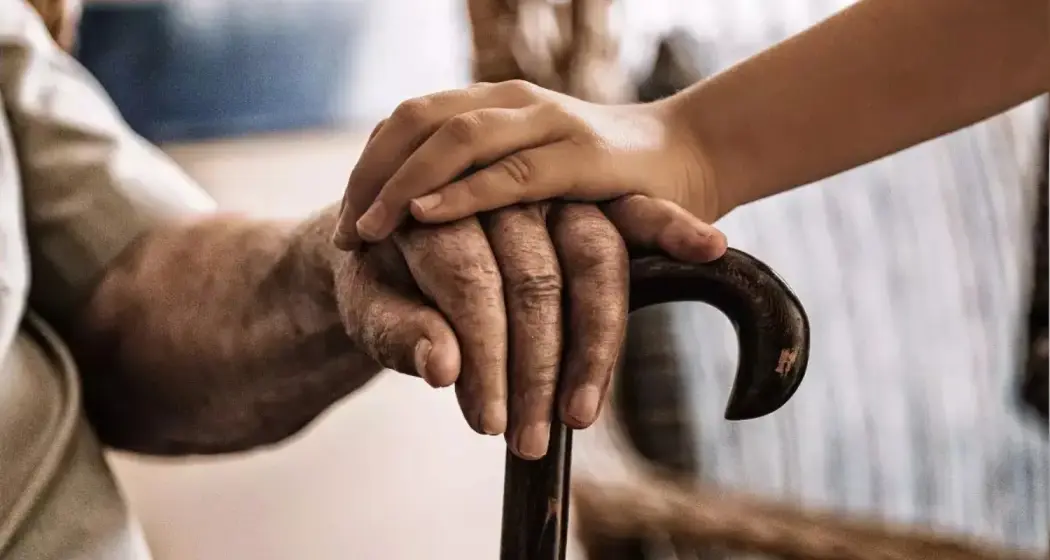
Senior citizens are not merely recipients of assistance. They possess vast life experience, knowledge, skills and social memory. They can serve as mentors, volunteers and sources of inspiration for their families, communities and society.
Likewise, the younger generation, through its energy, technical know-how and understanding of changing times, can make the lives of senior citizens easier. This dialogue between the two generations can play an important role in building a sensitive and inclusive society.
Initiatives to Promote Intergenerational Bonds
The Ministry of Social Justice and Empowerment has organised various programmes across the country to strengthen dialogue and relationships between senior citizens and the younger generation.
Programmes such as ‘Dada-Dadi Milan Samaroh’ (Grandparents’ Get-Together) were organised through schools, giving children the opportunity to interact with senior citizens, listen to their life stories and learn from their experiences.
Similarly, events such as walkathons have also played an important role in bringing senior citizens and young people together and in promoting social participation.
The Ministry has also signed 7 Memoranda of Understanding (MoUs) with social and spiritual organisations working in the field of elderly care, such as the Brahma Kumaris, the Ramakrishna Mission and the All World Gayatri Pariwar.
The experiences, efforts and inspiring stories from various programmes held across the country between 2024 and 2026 have been compiled by the Ministry in the ‘SNEHA e-Book’.
Respect for Elders in the Indian Tradition
In Indian culture, the tradition of honouring elders and learning from their experience is centuries old. In the Taittiriya Upanishad, the teaching given to students on completing their education carries the message “Matru Devo Bhava, Pitru Devo Bhava” (Regard your mother as God, regard your father as God).
This is not merely a message of respect for parents; it also expresses the broader spirit of reverence for family, experience and knowledge in the Indian outlook on life.
What is needed today is to connect these values with the modern social order and further strengthen intergenerational dialogue.
From Service to Social Sensitivity
The government is developing schemes and institutional arrangements for the welfare of senior citizens, but social sensitivity and personal involvement are just as essential.
This year, the International Day of Older Persons falls during the ‘Seva Sankalp Abhiyan’ (Service Pledge Campaign). Through this service campaign, running across the country since 17 September, the spirit of service and social participation is being encouraged.
Serving senior citizens is not limited to grand gestures. Helping an elderly neighbour with daily chores, assisting them in using digital services, helping them fill out an important form, accompanying them to the bank or hospital, or simply listening to them patiently — these too are important forms of service.
Such small initiatives strengthen senior citizens’ self-confidence and sense of social connection.
The Important Role of Senior Citizens in a Viksit Bharat
In keeping with the guiding vision of ‘Sabka Saath, Sabka Vikas’, the welfare of senior citizens is an integral part of inclusive development.
The government can provide policies and an institutional framework, but an environment of respect, belonging and sensitivity towards senior citizens can only be created through the collective participation of society.
A Viksit Bharat is not just about economic progress and modern infrastructure. It is an India where every citizen, whatever their age, can live with respect, security and dignity.
Senior citizens are the living memory of our society and the bearers of its experience and knowledge. Connecting their experiences with the next generation is both our social responsibility and a national necessity.
The respect, patience and sensitivity with which we treat senior citizens today will shape the social character of the India of tomorrow.
One conversation, one hour and one heartfelt connection – that may be all it takes to begin a positive change in a senior citizen’s life.
The resolve of a Viksit Bharat will be fulfilled only when every senior citizen has the opportunity to live with respect, security and dignity, and every new generation has the opportunity to learn from the experiences and life values of its elders.
Courtesy PIB, Srinagar
(The Author is Union Minister of State of Social Justice and Empowerment)