“This man has been shouting outside our office for the last few days.”
The Personal Assistant placed his phone on the District Collector’s desk and played a video.
On the screen stood a thin, weather-beaten man in worn clothes, surrounded by a few villagers. His voice was loud, but there was something unusual about it. It was not the voice of a habitual protester. It carried the weight of years—years of waiting, pleading, disappointment and silence.
“Does he have any genuine reason for creating this disturbance?” the District Collector asked.
“Yes, Sir.”
“What is it?”
“Water scarcity.”
The Collector looked up.
“Water scarcity? In this area?”
“Yes, Sir.”
The Collector sighed and leaned back in his chair.
“Water scarcity has been a problem here for years. We have reports, files, schemes and proposals. What does he expect us to do?”
The PA hesitated.
“Nothing, Sir.”
The Collector frowned.
“Nothing?”
“He says everything has already been done on paper.”
For a moment, the room became silent.
The PA continued, “But, Sir, there is something strange about this man. He doesn’t speak like an ordinary protester. He speaks like a leader. He questions officers. He remembers dates, orders and promises. He knows exactly what happened to his village.”
The Collector watched the video once more.
The man’s face appeared on the screen—tired, angry, but strangely dignified.
“Let him come in,” the Collector said.
“Sir?”
“Let him speak. If he has the courage to stand outside my office for days, he deserves at least a few minutes inside it.”
The PA went outside.
“Hey! Listen,” he told the man. “Keep your cool. The DC Sahib is ready to listen to you. Come inside.”
The man looked at him suspiciously.
“Listen?” he repeated.
“Yes. Listen. But please don’t shout.”
The man gave a faint smile.
“Sir, I have been shouting for years. Nobody listened.”
He walked inside.
“Assalam-o-Alaikum, DC Sahib.”
“Wa-Alaikum-Salaam.”
“Sir, with due respect, may I request you to listen to me?”
“Of course. Sit down.”
The man remained standing.
“Sir, my villagers have been listening to you and other authorities for years. Today, perhaps, it is our turn to be heard.”
The Collector studied his face.
“You seem very angry. Calm down first.”
The man slowly sat down.
“Anger is not my nature, Sir. It is what remained after hope was exhausted.”
The words caught the Collector off guard.
The man continued.
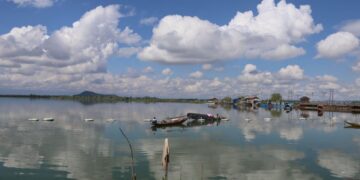
“Our village is full of streams. Water flows through our fields. In the rainy season, the sound of water surrounds our homes.”
He paused.
“But we have no water to drink.”
His voice softened.
“Our women wake up before sunrise and walk long distances carrying empty containers. They stand in queues in neighbouring villages. Sometimes they return after hours with only a few pots of water.”
“Children wait for them.”
“Old people wait.”
“Families ration every glass.”
“Sometimes a mother has to decide whether the little water left in the house should be used for drinking, cooking or washing her child.”
He looked at the Collector.
“Sir, imagine having water all around you and still being thirsty.”
The Collector said nothing.
“We have been in newspapers. Television channels have shown our village. Officers have visited us. Photographs have been taken. Statements have been recorded. Files have moved from one table to another.”
He smiled bitterly.
“Only the water has not moved towards us.”
The Collector lowered his eyes.
“Twenty years ago, Sir, our village had a clean and reliable water supply.”
“What happened?”
“It was discontinued.”
“Why?”
“We were told that our local spring would meet our needs.”
The man leaned forward.
“Sir, please visit that spring once.”
“Do you know what we are getting from it?”
He pointed towards the floor.
“Water collected from fields where chemicals, sulphur and other harmful substances accumulate. Water that should never be called drinking water.”
His voice trembled.
“We know it is dangerous. We have complained about it. We have begged for an alternative.”
He swallowed hard.
“But thirst is a cruel teacher. When there is no other option, people drink what they know may harm them.”
The Collector looked at him carefully.
The man continued.
“Sir, our problem is no longer just water.”
“It has entered our homes.”
“It has entered our minds.”
“It has entered our children’s childhood.”
“It has entered our fears.”
His eyes became moist.
“People are depressed. Families live with anxiety. Every illness creates fear because we don’t know whether the water we drink is making us sick.”
He paused.
“Eight people from our village have died of cancer.”
The Collector looked up sharply.
“Are you saying the water caused their deaths?”
“No, Sir.”
The man shook his head.
“I am saying we are frightened. We do not know. And nobody has given us an answer.”
His voice became quieter.
“That uncertainty is itself a punishment.”
Silence filled the room.
The Collector finally asked, “What have you done about it?”
The man almost laughed.
“What haven’t we done, Sir?”
“We submitted applications.”
“We met officers.”
“We approached departments.”
“We wrote representations.”
“We attended public hearings.”
“We waited outside offices.”
“We were told to be patient.”
“We were told the matter was under consideration.”
“We were told funds would be sanctioned.”
“And finally…”
He stopped.
“What finally?”
“Funds were sanctioned for a borewell.”
The Collector nodded.
“So the problem was being solved.”
“No, Sir.”
The man looked straight into his eyes.
“The work began.”
“And then?”
“After one month, it stopped.”
“Why?”
“We don’t know.”
“Did anyone tell you?”
“No, Sir.”
“Did you ask?”
“Many times.”
“And what did they say?”
The man smiled sadly.
“They said the matter was being looked into.”
The Collector leaned back.
For the first time, he seemed uncomfortable.
The man stood.
“Sir, you have files.”
“We have empty containers.”
“You have reports.”
“We have thirsty children.”
“You have meetings.”
“We have women standing in queues.”
“You have schemes.”
“We have promises.”
“You have drinking water in your office.”
“We have to decide every morning where to find it.”
His voice cracked.
“We are not asking for a road made of gold. We are not asking for special treatment. We are not asking for charity.”
He placed his hand on his chest.
“We are asking for the most basic thing a human being can ask for.”
“Water.”
The room was completely silent.
The Collector looked at the man for a long moment.
“Why have you been shouting outside my office?”
The man’s eyes filled with tears.
“Because I was silent for twenty years.”
The Collector frowned slightly.
The man continued.
“I watched my neighbours wait.”
“I watched women carry heavy containers.”
“I watched children grow up knowing the value of a single glass of water.”
“I watched people become sick.”
“I watched promises being made and forgotten.”
“I watched files move while our lives stood still.”
“And I remained silent.”
His voice became almost a whisper.
“Because we were taught that respectable people do not shout.”
He wiped his eyes.
“But, Sir, there comes a time when silence becomes a crime against your own people.”
The Collector did not interrupt him.
The man took a deep breath.
“So I shouted.”
“Not because I hate the administration.”
“Not because I want publicity.”
“Not because I want to become a leader.”
“I shouted because nobody was listening.”
The Collector looked towards his PA.
“Bring me the file.”
The PA immediately left.
The man looked surprised.
“Sir?”
“I want to see the borewell file.”
A few minutes later, the file arrived.
The Collector opened it.
Pages turned.
Sanction.
Approval.
Estimate.
Work order.
Expenditure.
Inspection.
Then—
Silence.
The work had stopped.
The Collector looked up.
“Why was the work discontinued?”
Nobody in the room had an answer.
For years, the village had been asking the same question.
Now, for the first time, the question had reached the desk where answers could be demanded.
The Collector closed the file.
“Your village will be inspected.”
The man looked at him.
“Sir, we have heard that before.”
The Collector nodded.
“I know.”
There was no anger in his voice now.
“Then this time, don’t listen to my words.”
He stood up.
“Judge me by what happens next.”
The man remained silent.
Then he folded his hands.
“Thank you, Sir.”
As he reached the door, the Collector stopped him.
“One thing.”
“Yes, Sir?”
“What is your name?”
The man turned around.
For a few seconds, he said nothing.
Then he smiled faintly.
“Sir…”
“I am the silent man of the village.”
The Collector waited.
“And today,” the man continued, “I spoke for the first time.”
He walked out.
Outside the office, dozens of villagers were waiting.
Some held empty containers.
Some held applications.
Some held photographs of dead family members.
And some simply stood there, saying nothing.
The Collector looked through the window at them.
For the first time, the empty containers did not look like plastic or metal.
They looked like unanswered questions.
And the silence outside no longer seemed peaceful.
It sounded like a warning.
A village does not become voiceless because its people have nothing to say.
Sometimes, people become silent because they have said the same thing too many times to people who never listened.
And when silence finally finds a voice, it should not always be mistaken for rebellion.
Sometimes, it is simply the sound of human dignity refusing to die of thirst.