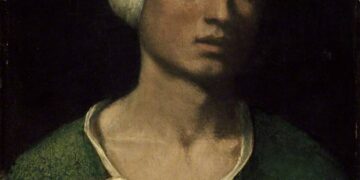
This special issue of “Imkan”, the academic and literary journal of Maharashtra State Urdu Sahitya Academy, is dedicated to Zafar Gorakhpuri. Maharashtra State Urdu Sahitya Academy has thus presented us with a historical document. This is the best tribute to Zafar Sahib from the concerned academy. Because the Maharashtra State Urdu Academy has accomplished an important feat by combining articles and literature written on Zafar Sahib at different times and from different periods.
This is benefiting the fact that today’s young generation is getting the opportunity to read Zafar Gorakhpuri at the same time. For those who have not read his various collections, this step by the aforementioned academy is also a source of joy as they are getting the golden opportunity to read Zafar Gorakhpuri with such love in one place. Therefore, while reading this issue, it feels like he is still among us, talking to us!
Zafar Gorakhpuri’s poetry is a direct conversation with a reader. When you sit down to read his poetry, it feels like you just keep reading. All your work gets left aside. The way he saw the village, the soil of the village, and then the way he observed the environment of Bombay very closely, these experiences created a new colour and harmony in his poetry. Zafar Gorakhpuri’s poetic language is very lovely and it is the language of everyone. He wrote very lovely poems for children too which are included in the curriculum of various states till date. He wrote excellent poetry for adults too, it is impossible to deny that.
In his poetry, topics such as thirst and solitude, forest, wilderness, village, dream, tree, kindness, compulsion, thirst, river, eyes, night, firefly, sun and shadow, and many others can be seen. When we read such poetry, we get lost in it because his poetry is not emotional poetry. It is poetry that comes out of thoughts, imagination and the heat that rises from within a person. In a way, these titles became the hallmark of his life, proved to be his visiting card, if we say this, it would not be wrong.
Today, when the era of reading has ended, readers are not found by searching, people are busy scrolling on their mobile phones, day and night. In such a situation, when Zafar Gorakhpuri’s poetry or any of his books comes to hand, the reader reads it with all his heart. Zafar Gorakhpuri’s poetry cannot be left out during study. Incidentally, this fortune is given to very few poets and writers.
He also wrote some very good couplets about the condition at home. For example,
Main Zafar bikta raha, ta Zindagi pardes mein,
Apni ghar wali ko ik kangan dilane ke liye
(I, Zafar, have been working abroad all my life, to get a bracelet for my wife.)
Judai pi gai biwi ke rukhsaron ki shadabi,
Main khush,haali liye jab tak Samandar paar se aaya
(By the time till I returned from abroad bringing prosperity with me, separation had already sapped the joy from my wife’s face.)
This type of poetry is the poetry of our time, reflecting our lives and also questioning why our families have left us alone abroad to fulfill their own prosperity and needs. While there are other beautiful subjects in Zafar Gorakhpuri’s poetry, beautiful metaphors like street, neighbourhood, market, roads, village, sea have also been incorporated. Along with this, rain, sun, roof, shade and fruit trees can be seen. Which he has used with great perfection in his poetry.
An interesting thing is that while studying Zafar Gorakhpuri’s poetry, one does not feel like leaving him in the middle. Keep reading, keep reading him and while reading, there comes a time when the reader automatically stops, is forced to think, a strange feeling comes over him. Some couplets, definitely make him cry. The way Zafar Gorakhpuri has expressed his thoughts, his experiences, and the questions surrounding him in his poetry, the way he has written poetry, such poetry is truly rare to see today.
One of the characteristics of Zafar Sahib’s couplets is that some of his couplets are such that after reading them, a picture emerges in the heart, which can be pondered over for a long time. After re-reading them, another picture, another scene, corresponding to the same one, emerges before our eyes. Then, if we ponder a little, a third picture appears, accurately reflecting and interpreting the time. In this way, the possibilities of his couplets continue, they do not end. The things expressed in his poems continue their flow, breaking through the rocks and obstacles in the path, which is a great thing. For example, this couplet,
Bulandi se utare ja chuke hain,
Zami’n pe la ke maare ja chuke hain.
(We have been lifted from on high and thrown to the ground.)
Zafar Gorakhpuri has written poetry about home from the heart. For him, home is not a figure or a metaphor, but a symbol. Rather, it can be said that for him, home is a symbol of India. See a couplet,
Mitti tujhse kya Rishta hai? jis din humne chhoda gaon,
Der talak diwarien roeen, door talak sath aaya ghar
(I ask the soil of my village, what is my relationship with you? The day I left my village, I felt like I had gone far beyond the village, but then I felt that the walls of the village were crying in my memory and my village, my home, was walking alongside me.)
Shams-ur-Rahman Farooqi has given a very good example regarding the poetry of Zafar Gorakhpuri. He writes that thanks to Zafar Gorakhpuri, a light, cool and fresh breeze has been blowing in Urdu ghazal for the last several decades. We should be grateful to him and also thank Allah.
Zafar Gorakhpuri has also written beautiful poems. He has also written poems for children, couplets and songs. His poetry cannot be ignored. His poetry has its own special importance and its own usefulness.
Another thing is that the natural simplicity and skill with which Zafar Gorakhpuri’s intelligence and creative power are expressed in ghazals, is not seen in other genres. Therefore, the identity of his style and tone in ghazals seems different and unique from that of his contemporaries. The reason is that he has always been connected to the earth and he has never composed poetry in isolation from it. This is the reason why Zafar Gorakhpuri’s name is at the top among those who inspire loyalty with a realistic attitude. Zafar Sahib had a high creative vision. He directly recognized the pain of the people. He used to speak with the pain of the people in mind, and perhaps this could be the hallmark of his identity.
Is mein, meri maa’n ke haath mahakte hain,
Rahne de mitti ka ghaza mere saath
(It smells like my mother’s hands,
Let the claypot be with me)
The beauty of Zafar Gorakhpuri’s poetry is that metaphor in his poetry is not a substitute for reality, but rather becomes reality itself in the context of the entire poem. It creates a special world of meanings in its construction and also conveys it, and this is the beauty of Zafar Sahib’s poetry.
His poetry is not the poetry of a plant or a tree growing in a pot. His poetry is the poetry of a tree growing from the earth, one that keeps its roots strong in the earth, always connected to the earth. It is a matter of wonder that not everyone gets the privilege of being connected to the land and paying off its debt, which Zafar Gorakhpuri had. He has also written poetry on the environment, which we can see with great merit. His various poems on the environment give a big message, a lasting message, which is also impressive.
Many great writers have written on Zafar Gokhpuri’s poetry, very well written, of course very well written, but his poetry is still being written on and will continue to be written on in the future. His poetry is such poetry in which the possibilities of research will always remain. His poetry introduces us to a new colour and harmony. It forces us to think with time. It forces us to write something and opens the doors to new research, and this is also the distinctive aspect of his poetry.
Sabza diwaar pe ug aya zafar khush ho lo,
Aage aakhon mein ye manzar bhi nahi’n aayega
(O Zafar, rejoice that greenery has spread over the walls, such a sight will not be seen in the future.)
By writing such poems, he has touched the painful veins of society and has done so with great courage. Zafar Gorakhpuri is considered one of the beloved poets not only by the public and readers but also by a large section of poets and writers. The history of ghazals, poems and couplets (Doha) in Urdu cannot be complete without the name of Zafar Gorakhpuri, and this is the truth!
While reading Zafar Sahib’s poetry, a strange state of inspiration comes over the heart and mind. When you read his ghazals, you feel like writing ghazals. When you read his poems, you feel like writing poems. And similarly, when you read his couplets (Dohas), it seems that we too should say something couplets (Dohas). This is Zafar Sahib’s brilliance and literary miracle, which perhaps not everyone has had the chance to do!
Zafar Sahib also wrote film songs, most of which became very popular. For example,
*kaise besharm aaashiq hain ye aaj ke… (Film : Putli bai : 1972)
*Chaand apna safar khatm karta raha… (Film : Shama : 1981)
*Kitabein bahot se padhi hongi tumne… (Film : Bazigar : 1993)
Thus, one can see many of his film songs which, in addition to being film songs, also maintain the integrity of literature and language, its greatness and purity.
Zafar zinda rahunga main hamesha is ta’alluq se
Ke mera ahad, meri shayeri mein saans leta hai.
Anyway!
(I will always live in this regard in Zafar. Because my era breathes in my poetry)
This special issue of Maharashtra State Urdu Sahitya Akademi is a milestone in opening the doors of possibilities for the identification of Zafar Gorakhpuri. It is worth reading. Its study is indispensable.
Ghulam Mohammed Ansari
(Editor : “Asasa” an Urdu Quarterly, Ahmedabad)
(Member SWA : Screen Writers Association, Mumbai)
Email : gulamansari1948@gmail.com