Zehanpora (Baramulla): The ancient archaeological site of Zehanpora in Baramulla is steadily emerging as an important window into the region’s buried history, with the second phase of scientific excavation now underway and drawing renewed attention to its potential to unravel the cultural, social and settlement history of Kashmir.
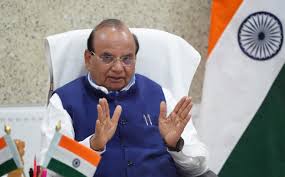
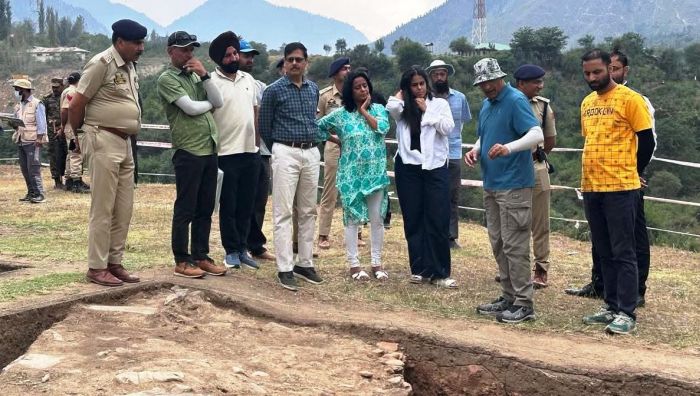
The growing significance of the site came into focus on Saturday when Principal Secretary, Home Department, Jammu and Kashmir, Chandraker Bharti (IAS) visited the ongoing excavations being conducted by the Centre of Central Asian Studies (CCAS), University of Kashmir, in collaboration with the Directorate of Archives, Archaeology and Museums.
During the visit, Bharti took stock of the archaeological investigations and reviewed the progress of the second phase of excavation. He toured the excavation area and interacted with the research team, who briefed him on the archaeological remains, cultural material and various stages of field investigation.
A detailed presentation was made by Dr Mohammad Ajmal Shah, Director of Excavations, who explained the objectives, methodology and preliminary observations emerging from the excavation. He also highlighted the historical importance of Zehanpora and its potential to contribute significantly to a deeper understanding of Jammu and Kashmir’s ancient cultural landscape.
The visit assumes particular significance as archaeologists have already recovered important material during the first phase of excavation, strengthening the case for continued exploration of the site.
Zehanpora is believed to be a nearly 2,000-year-old Buddhist archaeological site, offering an opportunity to examine an important period in the region’s past when Buddhism and associated cultural traditions played a significant role in the wider Kashmir and Central Asian landscape.
The first phase had produced a number of noteworthy archaeological discoveries, including a pebble wall, iron nails, pottery fragments and a human skeleton. Though individually modest, such remains can provide valuable clues when examined in their archaeological context, helping researchers reconstruct aspects of ancient habitation, construction practices, material culture and everyday life.
The discovery of the human skeleton, in particular, has added another dimension to the archaeological investigation, while pottery fragments and structural remains could assist researchers in establishing the chronology and character of the ancient settlement.
The ongoing second phase is expected to expand the archaeological picture by exploring additional areas of the site and examining the relationship between the structural remains and other cultural material recovered from the excavation.
Experts involved in the project are also examining the site not merely as an isolated archaeological location but as part of the wider historical network that connected Kashmir with Central Asia and adjoining regions. The findings could, therefore, have implications beyond Zehanpora itself and contribute to understanding ancient patterns of movement, settlement, cultural exchange and religious activity in the region.
During his interaction with the excavation team, Bharti appreciated the efforts of CCAS and the Directorate of Archives, Archaeology and Museums towards documenting, researching and preserving Jammu and Kashmir’s archaeological heritage.
The renewed excavation has also brought Zehanpora into sharper focus at a time when increasing attention is being given to documenting archaeological sites that can help piece together Kashmir’s pre-modern history through material evidence.
Unlike written records, archaeological remains provide physical evidence of how communities lived, built settlements, used tools and pottery, and interacted with their surroundings. At Zehanpora, researchers hope that continued excavation will help connect these individual pieces of evidence into a clearer picture of life around two millennia ago.
With the second phase now in progress, expectations are growing that Zehanpora could yield further evidence capable of placing the site within the broader archaeological map of Kashmir.