Srinagar: The second day of the IFAD Project Partners’ Learning Forum 2026 focused on field-based learning, with delegates from IFAD-assisted projects across the country visiting successful models of farmer collectivisation, women-led enterprises and modern horticulture in Kashmir.
Organised by the Mission Directorate, HADP/JKCIP under the Agriculture Production Department, the programme aimed to provide participants first-hand exposure to agricultural interventions and interactions with farmers, Farmer Producer Organisations (FPOs) and other stakeholders.
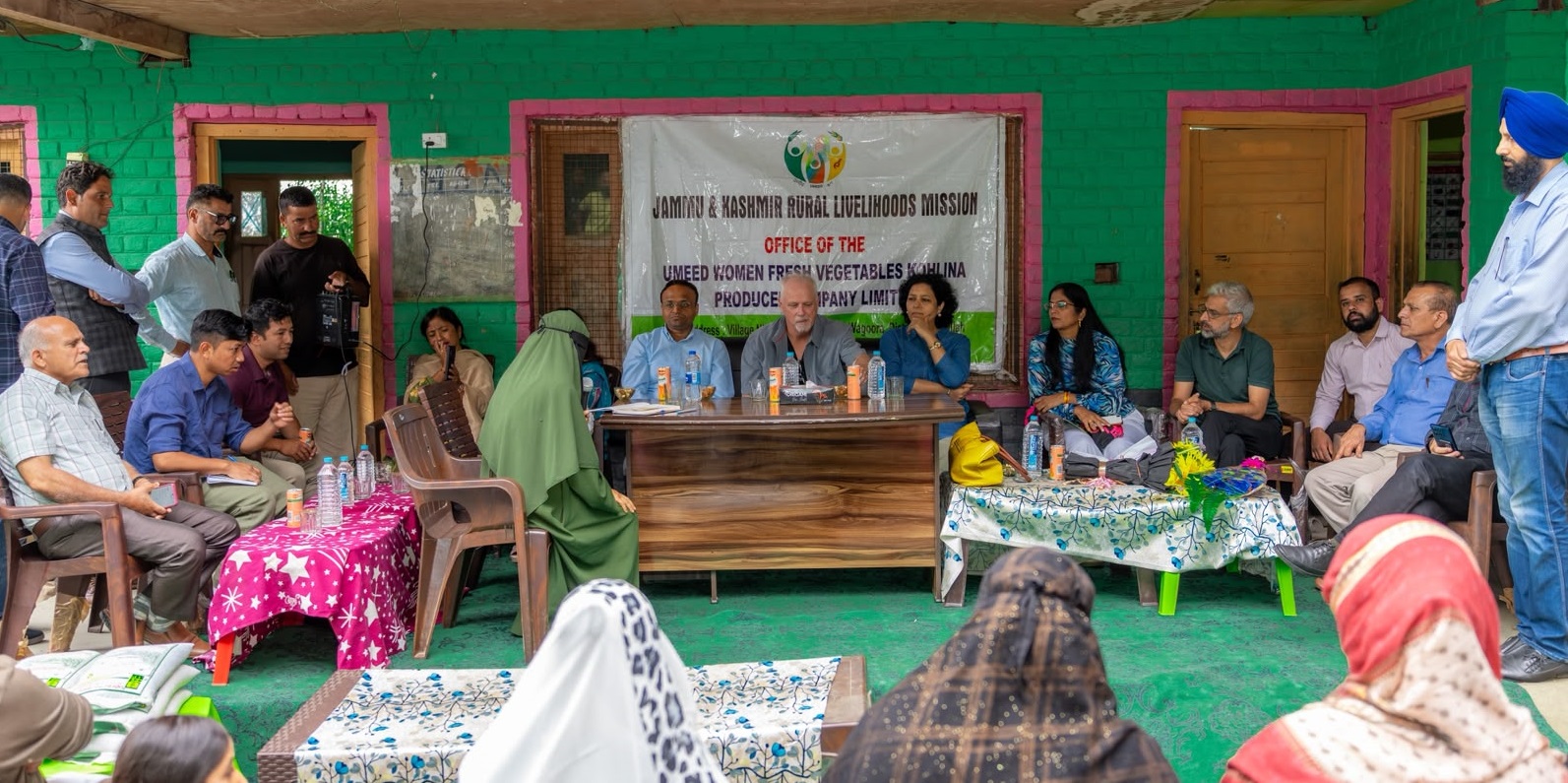
The delegation first visited Umeed Women Fresh Vegetables Kolina Producer Company Limited at Nilsar in Baramulla district, an all-women FPO comprising 617 members. Delegates interacted with the board of directors, chief executive officer and members of the organisation and reviewed its production and aggregation facilities.
Discussions centred on the FPO’s business operations, marketing strategies, value addition and future expansion plans. The organisation deals in commodities such as garlic, red chilli, basil seed and shallot.
The participants later visited a high-density horticulture farm at Khonmoh on the outskirts of Srinagar. Spread over 12 kanals and comprising around 1,920 apple plants, the orchard provided insights into modern plantation techniques and the commercial potential of high-density apple cultivation.
Mission Director HADP/JKCIP, Dr Sagar D. Dattatray, said the field visits helped connect policy discussions with practical experiences on the ground. He said the women-led FPO and high-density orchard demonstrated how institutional support, farmer collectivisation and modern agricultural practices can create sustainable livelihood opportunities.
According to organisers, the exchange enabled delegates from different states to learn from successful interventions and explore approaches that could be adapted to their own regions.
The two-day forum, held under the theme “Celebrating the International Year of Women Farmers: Empowering Women, Transforming Agriculture,” concluded with a focus on experiential learning, women-led agricultural development, innovation, farmer institutions and cross-project collaboration.