

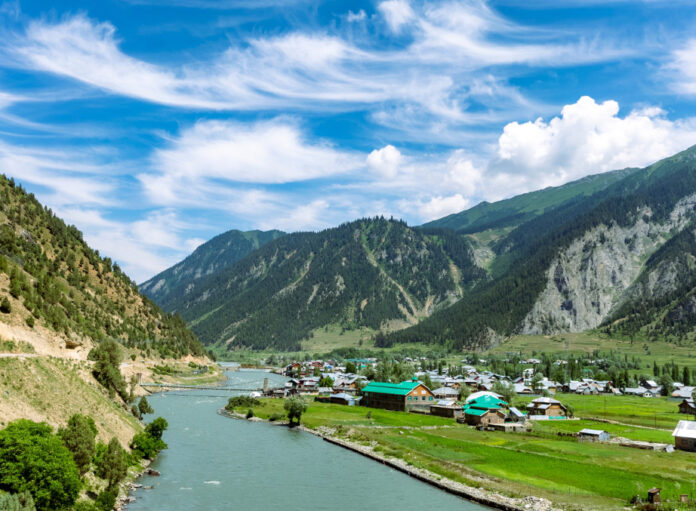
Nestled in the northernmost reaches of Kashmir, Gurez Valley is one of the most picturesque yet geographically isolated regions of the Himalayas. Located beyond the Razdan Pass and adjoining the Line of Control (LoC), the valley lies at an altitude ranging from 8,000 to 11,000 feet above sea level. The majestic Kishanganga River flows through the valley, surrounded by snow-capped mountains, dense coniferous forests, alpine meadows and rugged terrain. Gurez experiences a temperate to sub-alpine climate characterized by prolonged winters with heavy snowfall and a short cropping season extending from May to September. While these conditions limit agricultural activities, they also provide an ideal environment for several traditional high-altitude crops. Agriculture continues to sustain the socio-economic fabric of Gurez Valley. Out of a total cultivable area of approximately 732.54 hectares, potato dominates cultivation with 243.64 hectares (33%), followed by rajmash occupying 169.86 hectares (23%) and wheat covering 164.73 hectares (22%). Maize accounts for nearly 12 percent of the cultivated area, while oats occupy about 6 percent. Vegetables constitute only 3 percent, with buckwheat and millets together occupying another 3 percent of the cultivated landscape. Livestock rearing complements crop production and significantly contributes to household food security and income generation.
Although buckwheat currently occupies a relatively small area, it once served as one of the most important traditional crops of the valley.
Buckwheat: The Forgotten Heritage Crop of Gurez
Buckwheat (Fagopyrum esculentum), locally known as Barawh, has been cultivated in Gurez for centuries and forms an integral part of the valley’s agricultural and cultural heritage. Unlike true cereals, buckwheat is a pseudo-cereal well adapted to mountain ecosystems where conventional crops often fail.
Its cultivation begins soon after snowmelt in June and harvesting is completed before the onset of frost during late August or early September. With a crop duration of only 70–90 days, buckwheat perfectly fits the valley’s short growing season.
Farmers traditionally cultivate the crop on terraced slopes and valley bottoms with minimal external inputs. The grains are milled into flour and used to prepare traditional foods including rotis, pancakes and porridge. Crop residues serve as nutritious fodder for livestock, making buckwheat an important component of integrated farming systems.
Why Buckwheat is Considered a Wonder Crop
Buckwheat is increasingly gaining global recognition as a climate-resilient and nutritionally superior crop. Scientists consider it one of the most promising crops for mountain agriculture because of its multiple ecological, nutritional and economic benefits.
Nutritional Benefits
- Rich source of high-quality protein with balanced amino acids.
- High dietary fibre content promoting digestive health.
- Contains essential minerals, vitamins and antioxidants.
- Rich in bioactive compounds such as rutin with antioxidant and anti-inflammatory properties.
- Helps regulate blood sugar and supports cardiovascular health.
Agronomic Advantages
- Completes its life cycle within 70–90 days.
- Performs well under low-input farming conditions.
- Thrives even on poor and marginal soils.
- Requires minimal fertilizer and irrigation.
- Naturally suppresses weeds due to its dense canopy.
- Suffers from comparatively fewer insect pests and diseases.
- Highly suitable for organic and climate-resilient agriculture.
Ecological Importance
Buckwheat produces abundant flowers that attract honeybees and numerous pollinating insects, thereby enhancing biodiversity and improving pollination of surrounding crops. The straw and green biomass also serve as valuable livestock fodder, making the crop an important contributor to sustainable farming systems.
Why Buckwheat Declined in Gurez
Despite its numerous advantages, buckwheat cultivation has steadily declined over recent decades. Several socio-economic factors have contributed to this trend.
The availability of subsidized rice and wheat through the Public Distribution System significantly altered traditional food consumption patterns. Younger generations gradually shifted away from traditional diets, reducing local demand for buckwheat products. Additionally, limited market opportunities, lack of organized value chains and comparatively lower economic returns discouraged farmers from continuing cultivation. Consequently, a crop that once represented the identity of Gurez agriculture became increasingly marginalized.
KVK Gurez Leads the Revival Mission
Recognizing the importance of conserving traditional crops and strengthening climate-resilient agriculture, Krishi Vigyan Kendra (KVK) Gurez, under the dynamic leadership of the Vice-Chancellor, SKUAST-Kashmir, Prof. Nazir Ahmad Ganai, and the guidance of Director Extension, Prof. Raihana Habib Kanth, has initiated a comprehensive programme for the revival of buckwheat cultivation.
The initiative is being implemented in collaboration with the Dryland Agriculture Research Station (DARS), Srinagar, under the Tribal Sub-Plan of the All India Coordinated Research Project (AICRP) on Potential Crops.
Rather than focusing solely on seed distribution, the programme follows a holistic approach encompassing:
- Distribution of quality buckwheat seed.
- Farmer orientation programmes.
- Capacity building and skill development.
- Scientific production technologies.
- Continuous technical backstopping.
- Demonstrations in farmers’ fields.
- Market development and value addition.
- Packaging, branding and promotion.
To strengthen commercialization, KVK Gurez has also partnered with the Institute of Business and Policy Research (IBPR), SKUAST-Kashmir for developing market linkages and promoting value-added buckwheat products.
Dangan Village: A Model for Heritage Crop Revival
As part of the initiative, Dangan village in Bagtore Block was adopted during 2025-26 as a model village under the Buckwheat Revival Programme.
Farmers were supplied with quality seed, trained in improved cultivation practices and provided continuous scientific guidance throughout the cropping season. The initiative has generated renewed enthusiasm among farmers, who are once again recognizing buckwheat as a profitable, climate-resilient and environmentally sustainable crop. Today, Dangan has emerged as an inspiring example of how scientific intervention combined with traditional knowledge can successfully revive indigenous crops and strengthen rural livelihoods.
The Road Ahead
With continued support from SKUAST-Kashmir, DARS Srinagar, and the AICRP on Potential Crops, KVK Gurez aims to expand buckwheat cultivation across more villages in the valley.
Future efforts will focus on:
- Expanding area under buckwheat cultivation.
- Strengthening seed production systems.
- Promoting organic cultivation.
- Developing value-added buckwheat products.
- Establishing sustainable market linkages.
- Encouraging youth participation in heritage agriculture.
- Enhancing livelihood opportunities for tribal farming communities.
The revival of buckwheat is more than the restoration of a traditional crop—it is the revival of Gurez’s cultural identity, nutritional heritage and ecological resilience. By combining scientific innovation with indigenous knowledge, KVK Gurez is laying the foundation for a sustainable agricultural future where heritage crops once again become engines of prosperity, nutrition and climate resilience in the Himalayan region.
(Dr Hilal Ahmad Malik is working as Head KVK/MAR&ES while as Dr Jauhar Rafeeq is working as Scientist KVK Gurez)

