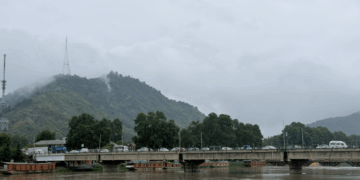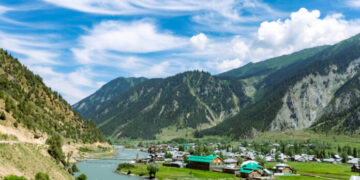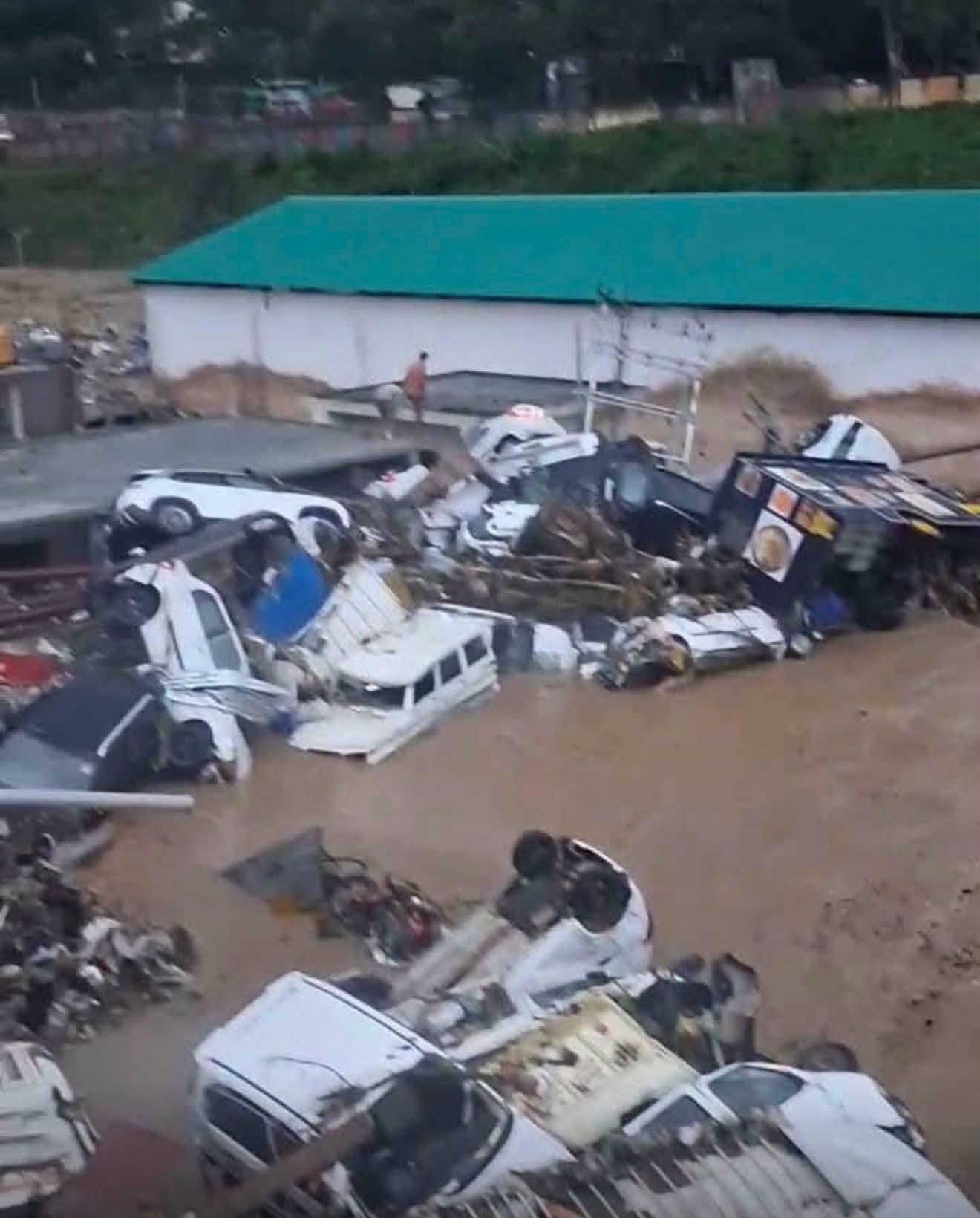
The flash floods that recently devastated Poonch and Rajouri were more than just another natural disaster. They were a painful reminder that the Himalayan region is entering an era of increasingly unpredictable and destructive weather. Within a few hours, torrential rain transformed peaceful streams into raging torrents, sweeping away homes, vehicles, livestock and, most tragically, human lives. Families who had begun the day as usual suddenly found themselves fighting for survival.
There was massive damage in Surankote of the Poonch region due to flooding of streams in villages that had taken people by surprise. In Rajouri, there was submergence of colonies, road damage, and hard work on the part of rescue teams to evacuate people trapped due to floods. All said and done, there was loss of life and irreparable losses incurred by many families despite the best efforts of administration, disaster management forces, security men and volunteers.
Every disaster teaches us something important, but then whether we learn from it is our choice because very often we tend to ignore the broader issues of environmental protection and climate change. The tragedy in Poonch and Rajouri should instead become a turning point in how Jammu and Kashmir plans its development and prepares for future climate risks.
A Changing Climate and Rising Extreme Weather
The climate of Jammu and Kashmir has changed noticeably over the past two decades. Summers are becoming hotter, winters shorter, snowfall less reliable and rainfall increasingly erratic. Instead of gradual seasonal transitions, the region is witnessing sudden cloudbursts, prolonged dry spells and intense rainfall concentrated within a few hours.
Scientists have consistently warned that climate change is increasing both the frequency and intensity of extreme weather events. The Intergovernmental Panel on Climate Change (IPCC) has observed that mountain regions are warming faster than the global average, making fragile ecosystems like the Himalayas more vulnerable to glacier retreat, extreme rainfall, floods and landslides. Jammu and Kashmir, located in this ecologically sensitive region, is therefore among the areas most exposed to climate-related hazards.
Districts such as Poonch, Rajouri, Ramban, Doda, Kishtwar, Reasi, Anantnag, Kulgam and Ganderbal have witnessed repeated incidents of flash floods, cloudbursts and landslides in recent years. These are no longer isolated events but clear indicators of a changing climate that demands immediate attention.
Scientific Evidence of a Warming Himalayas
Scientific research now confirms what local communities have experienced for years. A recent study titled Warming of the High-Mountainous Climate-Sensitive Jammu and Kashmir During the Period 1980–2024, published in Scientific Reports, found that several high-altitude regions of the Union Territory have warmed by nearly one degree Celsius over the past two decades. Conducted by researchers from the Centre for Ocean, River, Atmosphere and Land Sciences (CORAL), IIT Kharagpur, the study analysed more than four decades of climatic observations.
The researchers found that mountain stations such as Gulmarg, Pahalgam and Bhaderwah are warming faster than lower-altitude regions, while night-time temperatures are increasing more rapidly than daytime temperatures. Although the increase may appear small, scientists say it is enough to disrupt snowfall, glacier stability, biodiversity and water availability across the Himalayan ecosystem.
These findings are reinforced by the International Centre for Integrated Mountain Development (ICIMOD), which reports that glaciers across the Hindu Kush Himalayan region are retreating at an accelerating pace due to rising temperatures. The organisation warns that continued glacier loss will threaten water security, increase disaster risks and affect millions of people who depend on Himalayan rivers.
Retreating Glaciers and Growing Water Insecurity
The first evidence that can be easily seen with regard to climate change in Jammu and Kashmir is the melting of glaciers. Glaciers like Kolahai, Thajiwas, Hoksar, Nehnar and Shishram are some of those which have seen the effects of shrinkage while there has been an absence of snowfall.
Studies of the Kolahai glacier, which is Kashmir’s largest glacier, suggest that it has been affected adversely by the melting of ice as a result of warming and low snowfalls. Experts say that the continued melting of glaciers could cause changes in the flow of rivers, low water levels in the summer, among other problems.
In the past, people used to witness long periods of time when their homes were buried under layers of snow. Today, however, the occurrence of snowfall has been restricted to areas of high altitudes, including during the time of Chillai Kalan. The early snowmelt has created problems in the water cycle, with less water being available in the summer.
Nearly half of Kashmir’s stream flow depends on snowmelt, making glaciers and seasonal snowfall critical for irrigation, drinking water, hydropower generation and the region’s famous apple and saffron industries. Ironically, climate change is creating two contrasting realities at the same time. Less snowfall will mean less water security in the future, while warmer air means more water, thus causing sudden bursts of heavy rains and resulting in deadly flash floods, such as those seen in Poonch and Rajouri.
Actions of Man Contributing to the Ecological Crisis
While climate change is a global issue, the extent of damage caused in Jammu and Kashmir can also be attributed to man’s actions. Everything cannot be blamed on nature, including floods and landslides. Years of unregulated development have left the region vulnerable to weather extremes.
The devastating floods of September 2014 should have been a turning point. Instead, floodplains continued to be encroached upon, wetlands were reclaimed for construction, forests were degraded, and hillsides were cut to make way for roads and buildings. Rivers and streams that once carried excess water freely have been narrowed by unchecked urban expansion. Consequently, even moderate rainfall now has the potential to trigger flooding in many areas.
Deforestation has further increased the vulnerability of mountain slopes. Forests stabilise soil, regulate water flow and reduce the risk of landslides. Their destruction weakens these natural defences. Likewise, excessive extraction of sand and gravel from riverbeds and construction in ecologically fragile zones have altered the natural course of rivers, increasing the likelihood of flash floods.
Tourism, a major contributor to Jammu and Kashmir’s economy, has also placed growing pressure on the environment. Popular destinations such as Pahalgam, Gulmarg, Sonmarg, and Gurez are increasingly burdened with plastic waste and other non-biodegradable materials. Without responsible tourism and effective waste management, these fragile landscapes risk losing the very beauty that attracts visitors.
Climate experts point out that when global warming combines with shrinking wetlands, disappearing forests and unplanned urbanisation, natural disasters become far more destructive. Protecting the environment, therefore, is not only the responsibility of governments but also of every citizen.
The Urgent Need for Sustainable Development
Development and conservation have to be undertaken together. Infrastructure such as roads, schools and hospitals is very important, but should not be implemented at the expense of the environment. All developmental projects in the Himalayas have to be put through the rigours of an Environmental Impact Assessment before their execution.
Disaster preparedness also needs to be improved upon. Modern weather forecasting, early warning systems and community disaster management programs will greatly help in reducing casualties that are likely to occur due to extreme weather conditions.
Climate adaptation must also become a policy priority. Reforestation, restoration of wetlands, protection of riverbanks, and sustainable water management are essential to improving the region’s resilience. Educational institutions, civil society organisations, and the media can further strengthen public awareness by encouraging environmentally responsible behaviour and promoting climate literacy.
Learning from Disaster: The Way Forward
The tragedy in Poonch and Rajouri should not be remembered only for the lives lost and the damage caused. It should also be remembered as a warning that the Himalayan environment is becoming increasingly fragile.
Scientists are now monitoring the rapid growth of glacial lakes across the Himalayas. As glaciers continue to melt, these lakes expand and become more unstable, increasing the risk of Glacial Lake Outburst Floods (GLOFs). Such events can release enormous volumes of water within a short time, causing catastrophic floods and widespread destruction downstream. Although GLOFs have not been as frequent in Jammu and Kashmir as in some neighbouring Himalayan regions, experts caution that rising temperatures could increase the risk in the future.
Protecting the environment is no longer only about conserving forests or wildlife; it is about safeguarding livelihoods, water security, agriculture, tourism and human lives. Ignoring scientific evidence today will only increase the social and economic costs of disasters tomorrow.
The people of Jammu and Kashmir have repeatedly shown resilience in the face of adversity. That resilience must now be matched with collective responsibility. Governments must prioritise sustainable development, scientists must continue monitoring climate trends, local communities must protect their natural resources, and every citizen must recognise that environmental conservation is essential for a safer future.
Nature always seeks to restore its balance. Rivers reclaim their floodplains, mountains respond to relentless excavation, and forests disappear when neglected. The flash floods in Poonch and Rajouri are therefore not merely another natural disaster; they are a warning from the Himalayas themselves. Whether we choose to listen and act today will determine the future of one of the world’s most fragile and beautiful mountain ecosystems.
The Author is a writer, social educator and researcher and holds a master’s degree in Gender Studies and a B Ed.
shoaibhat2018@gmail.com