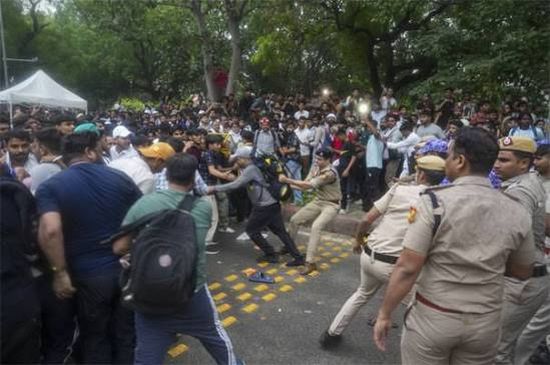
New Delhi: White clouds of teargas over Parliament House, the insistent chant of slogans from restive young fighting police batons and, by end of day, police vacating Jantar Mantar as the government and the Cockroach Janta Party tried for rapprochement.
It was an unprecedented Monday of highs and lows as thousands of young and angry people converged near Parliament on the first day of the Monsoon session to push for the resignation of Education Minister Dharmendra Pradhan, only to be pushed back by lathis and teargas shells.
‘Chalo Sansad’. That was the rallying cry bringing together the young who transformed the leafy, high security streets of central Delhi into extraordinary scenes of protests.
Carrying placards and the tricolour, shouting slogans such as “Bharat Mata Ki Jai”, “Jai Bhim”, “Vande Mataram” and “Dharmendra Pradhan Istifa Do”, many just sat where they were stopped, the protests mushrooming in multiple places across the city.
The crowd included schoolchildren, college students, parents and senior citizens. Some came in uniforms, while others wore cockroach costumes.
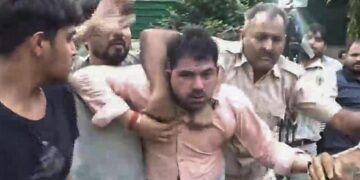
More than 50 police personnel and protesters were injured during clashes with CJP protesters in New Delhi district on Sunday, prompting a massive security response, police sources said.
Sources added that about 100 people were detained and 65 medico legal cases registered at the Ram Manohar Lohia Hospital.
The CJP, an organic movement against paper leaks and alleged irregularities in the exam system that started with a comment by Chief Justice of India Surya Kant referring to the youth as ‘cockroaches’, has been sitting at Jantar Mantar since June 20. The protest gathered traction with activist Sonam Wangchuk’s hunger strike and that of some youngsters.
Exactly a month later, the main stage at Jantar Mantar was dismantled, the three young activists who were also on a fast unto death called it off but hundreds of protesters milled around still. Undeterred by rain, they gathered where they could – in the bylanes around Jantar Mantar, in Connaught Place’s Central Park and outside metro stations.
There were also reports of vandalism. Videos showed stones on the road in Connaught Place and crowds damaging parked vehicles.
The protest, which took an ugly violent turn, will continue peacefully, the CJP said in a statement.
CJP founder Abhijeet Dipke, who took up the fast after Wangchuk was forcibly removed from Jantar Mantar after 21 days of forgoing food, was also picked up from the place.
Dipke and others, including Wangchuk’s wife Gitanjali Angmo, moved to Kerala House close by where they continued their sit-in.
A two-member CJP delegation met Union Health Minister J P Nadda in an effort to resolve the escalating crisis.
The CJP said Nadda assured them that he would hold internal talks and requested time to align with the government leadership on the CJP’s demands – the immediate release of Wangchuk, Pradhan’s resignation and Rs 1 crore compensation for all NEET aspirants who committed suicide.
“This morning, for the first time, a proposal came from the protesters to hold talks with the government, and our discussions have been ongoing since 11:50 am. The meeting took place in a cordial atmosphere… I have requested all the protesters to end their sit-in and assist the administration in restoring normalcy,” Nadda said in a post on X.
A few kilometres away from ground zero of the action, Wangchuk, who is admitted at Safdarjung Hospital, said he would continue fasting till youth leaders were allowed to meet MPs in Parliament or they came to meet him in hospital.
The issue found echo in Parliament and in political discourse.
Both houses of Parliament, meeting for the first time since the protests began, were adjourned repeatedly amid uproar by opposition members over the issue.
Several leaders spoke out.
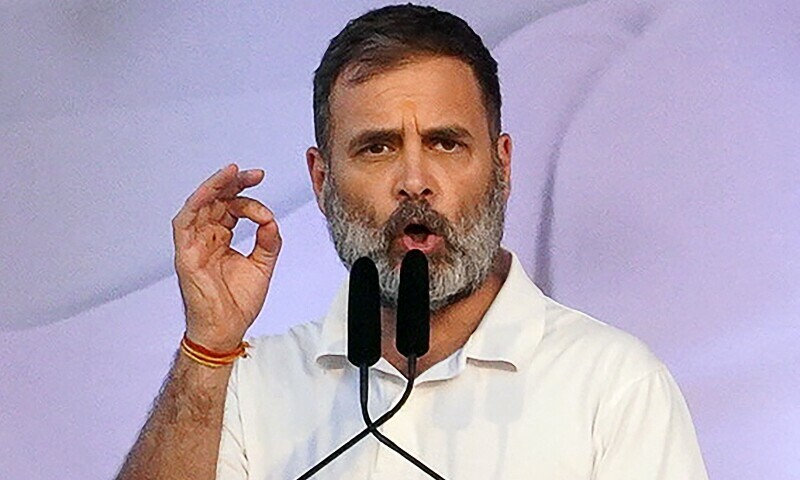
Congress leader Rahul Gandhi dubbed Prime Minister Narendra Modi as the “most anti-youth” PM in the country’s history as he accused the government of not just failing the youth but also pouncing on them.
Gandhi said in a post on X, “Prime Minister Modi… is so ‘anti-youth’ that he can’t even take the resignation of a failed Education Minister Dharmendra Pradhan.
“152 paper leaks. 7.5 crore students victimised. And not a single guilty person punished. Who got the punishment? The hardworking youth,” he said on X.
Aam Aadmi Party chief Arvind Kejriwal also slammed the Modi government for using force against the protestors, demanding that the Centre listen to the youth and not order a lathi charge against them.
AAP leaders Atishi and Manish Sisodia, CPM’s MA Baby, Brinda Karat as well as Samajwadi Party’s Dimple Yadav were among those who joined the protest at Parliament Street close to Parliament House.
“We are here to hold a peaceful protest. This is a right guaranteed by our Constitution. Mahatma Gandhi taught us the path of non-violence. We have no intention of resorting to violence,” actor Shabana Azmi told PTI Videos during the march.
Away from celeb and politician speak, the youth, some who had come from other states, gave vent to their angst.
Anshika, 17, lied to her family, telling them she was going to school but headed in the morning to join the march to Parliament. She tried to climb over barricades and was pulled down by women police personnel.
“We did not lie to our families and come here to be picked up and detained like criminals,” Anshika said, showing bruises on her hand.
“When it is time for elections, they come to our homes and ask for votes. But they did not even come to engage in a dialogue over the NEET paper leak,” she said.
Women from several states, including Bihar, Maharashtra, Uttar Pradesh and Haryana, joined in too.
“We all travelled together from Pune in an overnight bus. We got in touch with each other through a WhatsApp group and decided where we would meet after reaching Delhi,” said 27-year-old Purva.
The anger was palpable.
A protester from Maharashtra, who said he had travelled to Delhi solely to participate in the demonstration, described education as the foundation of the country’s development and alleged that the system would deteriorate if quality education was not ensured.
A government job aspirant from Bihar said the protesters had gathered peacefully to make their voices heard and seek answers from the authorities. He said many young people had spent years preparing for competitive examinations and deserved transparency and accountability.
If many came to Delhi, many more gathered at their hometowns. Similar agitations were seen in cities, including Mumbai and Ahmedabad, where scores gathered to express their support for the CJP.
In Delhi, life was disrupted till late in the evening.
Though large parts of central Delhi were gridlocked as the protests gathered pace and security personnel swarmed the streets, the ripple effects were seen all over.
Several commuters were stranded inside nearby metro stations after access was restricted and station gates were closed as a precautionary measure.