Srinagar: Vice-Chancellor of Sher-e-Kashmir University of Agricultural Sciences and Technology of Kashmir (SKUAST-K), Prof. Nazir Ahmad Ganai, chaired the Scientific Advisory Committee (SAC) meetings of Krishi Vigyan Kendras (KVKs) Srinagar and Budgam to review their performance and chart future strategies for strengthening agricultural extension, innovation and sustainable farming across Kashmir.
The meetings were attended by Director Extension Prof. Raihana Habib Kanth, Registrar Prof. Azmat Alam Khan, Additional Deputy Commissioner Budgam Vivek Agarwal, Chief Planning Officer Budgam Javid Ahmad, heads of KVKs, scientists, officers from agriculture and allied departments, progressive farmers, agri-entrepreneurs, representatives of Farmer Producer Organisations (FPOs), Self-Help Groups (SHGs) and other stakeholders.
Presentations by Dr. Shamim Ahmad Simnani, Head, KVK Srinagar, and Prof. Bilal Ahmad Lone, Head, KVK Budgam, reviewed the action taken reports and achievements for 2025-26 while outlining priorities for 2026-27.
The deliberations focused on technology assessment, frontline demonstrations, capacity building, entrepreneurship development and the wider dissemination of climate-resilient agricultural technologies. District-specific opportunities, including urban agriculture, Dal vegetable cultivation, niche crops and natural farming, also came under discussion.
Addressing the meetings, Prof. Ganai stressed the need to promote innovation-led agriculture, value addition, processing and market-oriented farming to improve rural livelihoods. He appreciated the efforts of both KVKs in expanding extension services, promoting improved farming technologies and strengthening farmers’ skills through capacity-building initiatives.
He also highlighted the role of KVKs in supporting the university’s Students Rural Exposure Programme, describing it as an important initiative for providing students with practical understanding of rural agriculture.
Director Extension Prof. Raihana Habib Kanth commended the contribution of the KVKs in technology dissemination and sustainable agriculture. She emphasised the need to transform traditional farming into a commercially viable enterprise through targeted skill development, champion farmer models, low-cost organic solutions and focused training programmes.
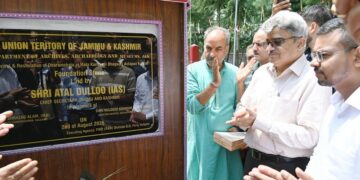
Earlier, several facilities at KVK Budgam, including a high-density cherry orchard, custom hiring centre, two hi-tech polyhouses, an insulated mushroom unit and a bio-resource centre for natural farming, were inaugurated. Publications brought out by both KVKs were also released.
The meetings concluded with interactive sessions during which stakeholders discussed key challenges, emerging opportunities and collaborative strategies to accelerate agricultural transformation and enhance farmers’ incomes across Kashmir.