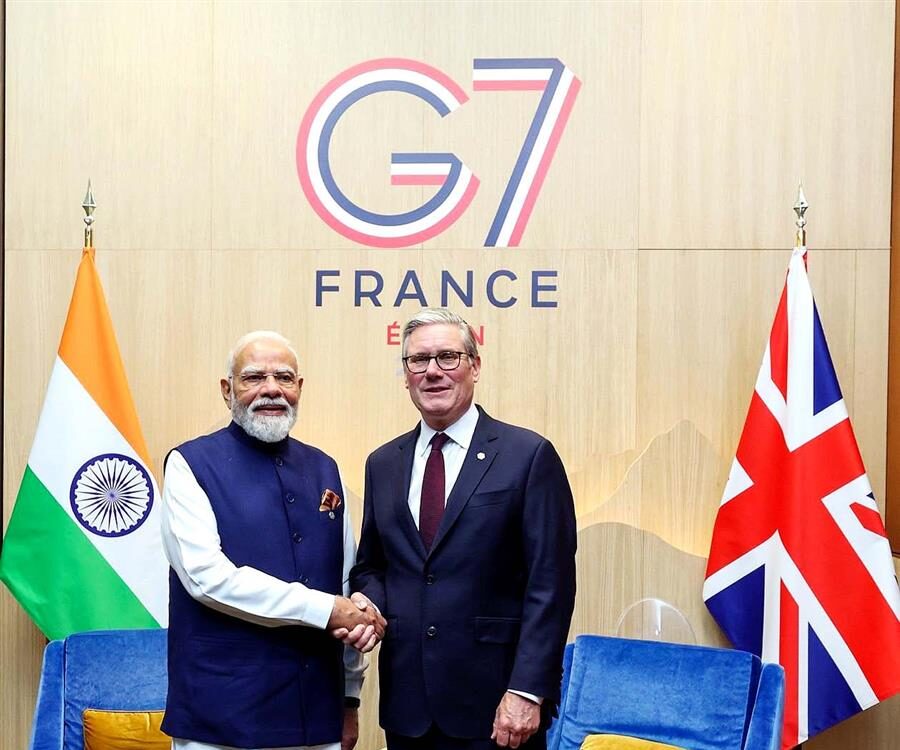
The world’s attention is currently focused on the G7 Summit being held in France. Leaders of the seven major advanced economies have gathered to deliberate on a wide range of critical issues, including the global economy, international politics, trade, climate change, artificial intelligence, energy security, and ongoing conflicts. At such a moment, a natural question arises: Is the G7 still as relevant and influential as it was at the time of its inception? Has it truly evolved into an effective platform for addressing global challenges, or has it largely become a mechanism for safeguarding the interests of a handful of powerful nations? Furthermore, are the actions and policies of U.S. President Donald Trump undermining the relevance and effectiveness of this forum in pursuit of narrow national interests?
The success of international organizations established to promote world peace, balanced economic development, and global cooperation is ultimately measured not by their declarations but by their outcomes. Unfortunately, in the case of the G7, questions continue to be raised about the actual impact of its decisions and commitments. In recent years, the organization has struggled to play a decisive role in resolving major global crises, including the Russia-Ukraine conflict, instability in the Middle East, global economic uncertainty, climate change, and growing trade rivalries.
The G7 comprises the United States, the United Kingdom, France, Germany, Italy, Canada, and Japan. In practice, however, the direction and policy orientation of the group have often been heavily influenced by the United States. Under President Donald Trump in particular, American foreign policy has frequently appeared to prioritize pressure and dominance over cooperation and consensus. On several occasions, Trump has treated allied nations less as equal partners and more as followers expected to align with American priorities. Tariff wars, trade restrictions, pressure regarding defense spending, and a series of unilateral decisions have contributed to growing mistrust among member countries.
The Iran-Israel conflict has further intensified global economic uncertainty. In recent months, the violent confrontation created fears of a broader regional war. Iran, Israel, and several non-state actors appeared poised for direct confrontation, with the Strait of Hormuz emerging as a critical flashpoint. Nearly one-fifth of the world’s oil supplies pass through this strategic waterway, making any disruption a matter of global concern. Even within the G7, countries appeared divided in their approach to the crisis. It is precisely for this reason that the unity once associated with the G7 is no longer as visible. France, Germany, Canada, and Japan have frequently adopted positions that differ from those of the United States on issues ranging from the Iran conflict and climate change to global trade rules and the role of multilateral institutions. Under such circumstances, it becomes difficult to expect the organization to formulate universally acceptable and effective strategies for resolving the world’s increasingly complex challenges.
India’s participation in the summit carries special significance. Although India is not a member of the G7, its growing economic strength, expanding global influence, and role as a representative voice of the developing world have made it an important participant in such forums. This is not merely an opportunity for India to showcase its achievements; it is also a platform to articulate the aspirations of developing and underprivileged nations whose voices are often marginalized in global decision-making processes. Across Africa, Asia, and Latin America, numerous countries continue to grapple with economic crises, food insecurity, climate-related disasters, and unsustainable debt burdens. Their priorities often differ significantly from those of the G7 nations. India must therefore raise a fundamental question: Should the authority to shape the world’s future remain concentrated in the hands of a few developed countries? Shouldn’t global governance become more democratic, inclusive, and representative? This is the time to strengthen the voice of the Global South and place its concerns at the center of international discourse.
The greatest challenge to the G7’s relevance lies in its effectiveness. If an organization is unable to prevent or resolve the world’s most pressing crises, its utility naturally comes under scrutiny. The Russia-Ukraine war continues without a lasting resolution. The Middle East remains deeply unstable. Terrorism and extremism continue to pose serious threats. Climate change is pushing humanity toward unprecedented environmental and humanitarian challenges. Yet the achievements of institutions that claim global leadership remain limited. Recent reports suggesting a reduction in tensions between the United States and Iran and a movement toward dialogue and reconciliation have brought a sense of relief across the world. Prolonged hostility had contributed significantly to instability in the Middle East, with adverse consequences for the global economy. As prospects for negotiations strengthened, financial markets responded positively. Investor confidence improved, energy markets showed signs of stabilization, and oil prices softened. This demonstrates that peace is not merely a political achievement; it is intrinsically linked to global economic stability and the well-being of ordinary citizens.
However, an important question remains. If dialogue and compromise ultimately represented the path to resolution, why was the period of confrontation allowed to continue for so long? Why did President Trump eventually find it necessary to embrace negotiations and consensus-building? Was it due to economic pressures? Concerns about global financial markets? Expectations from the American public? Or was it an acknowledgment that the politics of pressure and confrontation have inherent limitations? These are precisely the kinds of questions that deserve serious discussion within forums such as the G7. The international community cannot be satisfied with symbolic or temporary peace agreements. What is needed is peace that is durable, credible, and just. If agreements are driven primarily by political image-building, electoral considerations, or short-term strategic calculations, they are unlikely to endure. The G7 should take meaningful initiatives to ensure that peace efforts around the world are genuine and centered on the protection of humanity’s collective interests.
Today, the global order stands at a critical crossroads. The world is no longer unipolar. Emerging economies such as India, China, Brazil, South Africa, Indonesia, and others are reshaping the global balance of power. In this changing environment, the G7 must also adapt its vision and functioning. If it continues to be perceived primarily as an instrument of American leadership and Western interests, its credibility, legitimacy, and influence are likely to diminish further. The need of the hour is for the G7 to become more inclusive, provide greater representation to developing nations in decision-making processes, take concrete initiatives toward economic and climate justice, and place global peace at the forefront of its agenda. The United States, too, must recognize the distinction between leadership and dominance. Leadership earns trust; dominance breeds resistance.
The summit in France should therefore be more than a forum for discussing economic and political issues. It should serve as an opportunity for genuine introspection. The G7 must reassess its role in a rapidly changing world and explore how it can become more relevant, effective, and credible. Only by overcoming internal divisions and embracing the principles of equality, cooperation, and mutual respect can it meet the expectations of the international community. India, on this occasion, should boldly convey that the future of humanity lies in balance, dialogue, cooperation, and inclusivity. Lasting peace, economic stability, and human welfare cannot be secured through the dominance of any single nation or group of nations. They can only emerge from a shared sense of responsibility and a collective commitment to common progress. That is the greatest need of our time, and it is the true test of forums such as the G7.