Srinagar: At least 15 people have been killed in clashes between protesters and security forces in Pakistan occupied Jammu and Kashmir (POJK) BBC reported.
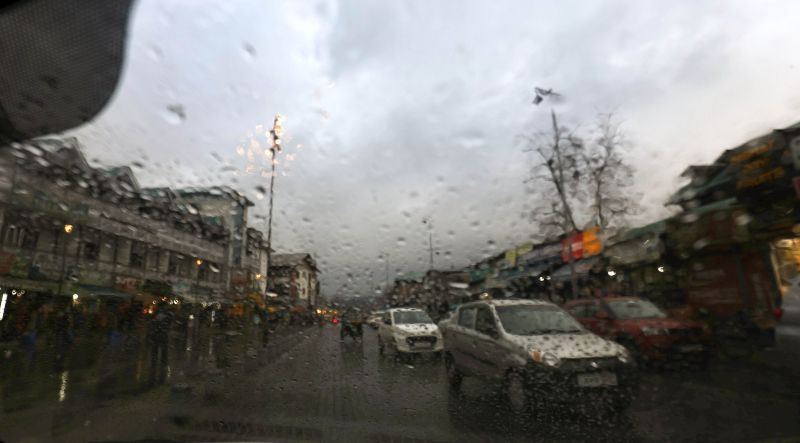
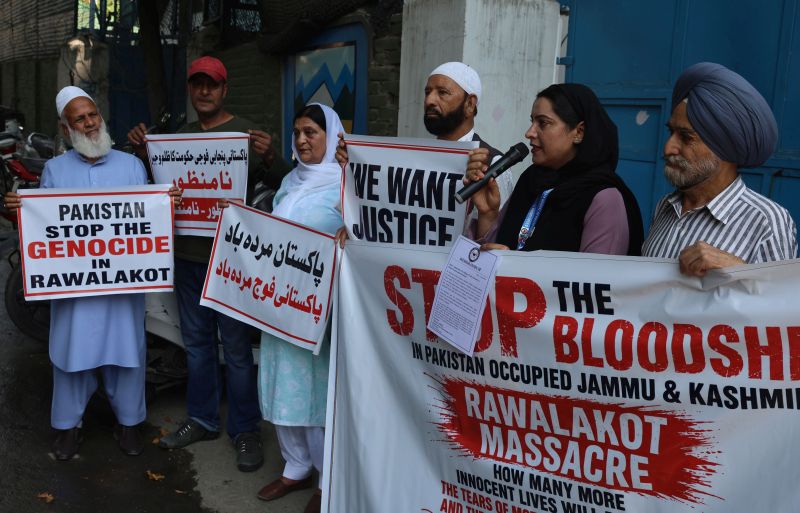
Hundreds of people in Srinagar took to streets to protest against the killings condemning Pakistan armed forces.
The Joint Awami Action Committee (JAAC), a collective of activist groups, have called on people to protest against the reservation of a large number of legislative seats for refugees who do not live in the territory, ahead of an upcoming election.
Authorities responded by accusing the group of sedition and violence, banning it and offering a bounty for the arrest of its leaders.
However, this has not deterred thousands of people from marching towards the regional capital Muzaffarabad, leading to deadly clashes with security forces.
The dead include 11 civilians and four security officers.
Local officials say that a massive convoy of protesters – more than 10,000 by official estimates – are 4km (2.4 miles) outside the city of Rawalkot.
The Poonch district commissioner of Pakistan-administered Kashmir Sardar Waheed Khan told BBC Urdu that security officials were patrolling the area to ensure law and order, while residents had been told not to leave their homes.
He added that the convoy of protesters would not be allowed to pass through Rawalkot to go to Muzaffarabad.
BBC Urdu reporters say that local mosques are broadcasting announcements asking people not to leave their homes.
There are fears of further violence but Khan said that rule of law “would be ensured”.
Authorities in the region have stepped up security, with helicopters flying surveillance flights in the state capital Muzaffarabad as well as in Rawalakot.
A helicopter crashed in Muzaffarabad on Wednesday, killing all 22 people on board. The military says a “technical fault” shortly after take-off was to blame.
The reservation of the 12 seats for Kashmiri refugees – who do not live in Pakistan-administered Kashmir – in the local legislative assembly election coming up in July has been a contentious issue in the region. It effectively bars people who live inside Pakistan-administered Kashmir from contesting the seats, which make up almost a quarter of the legislature.
The JAAC has called for the abolition of the reserved seats, arguing that it undermines local representation and that all the seats in the legislature must go to those who actually reside in the region.
But the authorities banned the group on 5 June under anti-terrorism laws, claiming that the group “engaged in terrorism” and behaved “in a manner prejudicial to the peace and security of the State”, local media reported.
The Supreme Court of Pakistan-administered-Kashmir also ruled that the seats are constitutionally protected and cannot be altered through administrative measures, political agreements, or public pressure, according to a detailed advisory opinion issued on a presidential reference.
BBC Urdu reports that the situation first escalated in Rawalakot earlier this week when protesters and security forces clashed.
Officials told the BBC that another three people had died in clashes in the city of Kotli on Tuesday.
At least 50 people have been injured in the clashes and the number of dead is expected to rise.
Amnesty International said in a statement on Tuesday that the “violent and sweeping crackdown” on the protests, which includes “an internet shutdown, mass arbitrary arrests, and deadly use of force”, “continues an alarming deterioration of human rights in the region”.
But despite the violence, the march to Muzaffarabad is still continuing, and the JAAC has also called for a general strike. An uneasy silence has now blanketed the city, with streets empty, businesses shuttered and police on patrol.