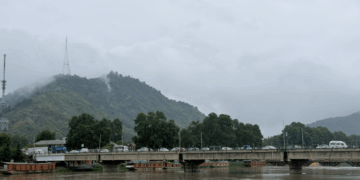
Every year, thousands of tourists dream of visiting our J & K, its breathtaking valleys, serene lakes, magnificent gardens, and majestic mountains. Travel campaigns and advertisements proudly showcase its beauty to the world. Yet, behind these perfect images lies a growing environmental concern that deserves urgent attention.
As we have just observed World Environment Day, it is important to reflect on our responsibility towards the environment. My recent visit to Jammu and Kashmir brought to light a troubling reality. The environmental challenges I witnessed were not isolated incidents but signs of a larger problem—one that threatens the future of tourism, public health, and environmental sustainability. Unless addressed collectively and with urgency, these challenges could gradually diminish the natural beauty that has earned Jammu and Kashmir its reputation as a beautiful place on Earth.
My journey began aboard the Vande Bharat Express. It was my first experience travelling on India’s modern high-speed train. The technology, comfort, and efficiency were impressive. Yet, despite the advanced infrastructure, I noticed pollution and litter that reminded me of an uncomfortable truth: development without environmental responsibility is incomplete development.
Upon reaching my hometown of Tral in Kashmir, I looked forward to enjoying the natural beauty that has always defined the region. Early the next morning, I went for a walk expecting the serenity that Kashmir mornings are known for. Instead, I found an orchard beside the road covered with waste. What should have been a symbol of nature’s abundance had become an unofficial dumping site. Plastic bottles, wrappers, and other litter had replaced the natural beauty that tourists come to admire. The experience was disappointing but unfortunately not unique.
A few days later, after Eid celebrations, I visited Wazir Bagh Park with my family. Public parks are meant to provide people with an opportunity to connect with nature. However, the condition of the park raised serious concerns. Garbage was scattered in several places, and even used diapers were visible beneath the trees. Such scenes not only damage the environment but also diminish the dignity of public spaces. Wazir Bagh is a treasure of beauty, but sadly, in some places, it appeared to be turning into a treasure of pollution as well.
The pollution problem extended beyond parks. Roads in Tral showed visible signs of poor waste disposal. Jammu Railway Station also reflected similar challenges. Everywhere I looked, there seemed to be evidence of a growing disconnect between people and their environment. These observations led me to ask a difficult but necessary question: Do we really deserve tourism?
Tourists travel from different parts of India and the world to witness the beauty of Kashmir. They come to experience its landscapes, culture, hospitality, and natural charm. However, tourism cannot flourish where environmental responsibility is absent. Cleanliness and civic sense are just as important as scenic beauty. A polluted destination eventually loses its appeal, regardless of how beautiful nature has made it.
Many people blame governments and municipal authorities for pollution. While institutions certainly have an important role to play, environmental protection begins with individual responsibility. Every discarded bottle, wrapper, plastic bag, or diaper has been thrown by someone. Every polluted public space is the result of countless individual acts of negligence.
Governments can install dustbins, municipal authorities can organize cleanliness drives, and policymakers can frame environmental regulations, but none of these efforts can succeed without public cooperation. The environment belongs to all of us, and so does the responsibility to protect it.
The places mentioned above are not the only areas affected by pollution and irresponsible behavior. This problem extends far beyond them, affecting our country and many nations across the world. Pollution has become a global menace, threatening the well-being of present and future generations. Rivers, forests, mountains, parks, tourist destinations, and urban spaces everywhere are facing increasing pressure from human negligence. The time for concern has passed; now is the time for action. We must act, and we must act swiftly, to protect our environment and preserve the beauty of our planet.
World Environment Day should not be reduced to slogans, banners, speeches, and ceremonial activities. It should inspire genuine self-reflection and collective action. We must ask ourselves whether we are contributing to the solution or becoming part of the problem. The future of our environment will not be decided by a single policy or campaign. It will be determined by millions of everyday decisions made by ordinary people.
The writer is Associate Professor, Department of Management, President Institution’s Innovation Council, ITM Gwalior and an IIMA (FDP) Alumnus. He is certified Business Consultant by AIMA and can be reached at dr.shahidamin15@gmail.com)