The idea of a direct train connecting Jammu to Srinagar once belonged more to imagination than to engineering feasibility. For decades, the Kashmir Valley remained breathtakingly beautiful yet logistically isolated—connected to the rest of the country largely through a single, fragile road corridor and limited air services. Today, that narrative is decisively changing.
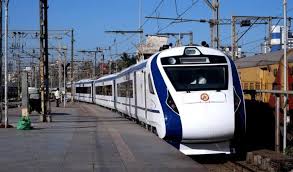
With the direct train from Jammu to Srinagar set to be inaugurated on 30th April, a historic chapter is about to unfold. What was once dismissed as an unlikely dream is now becoming a tangible reality—one that promises to reshape connectivity, the economy, and everyday life in Jammu and Kashmir.
A DREAM THAT CHALLENGED NATURE
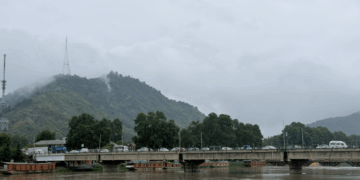
The Himalayan terrain between Jammu and Srinagar is among the most complex landscapes in the world. Young, fragile mountains, deep gorges, seismic sensitivity, and extreme weather conditions have long posed formidable barriers.
For generations, the Jammu–Srinagar National Highway served as the primary lifeline. Yet, it has remained highly vulnerable—frequently disrupted by landslides, snowfall, shooting stones, and traffic congestion. Entire regions would often remain cut off for days, creating uncertainty for travelers, traders, patients, and students alike.
In this context, the vision of a railway line cutting through such terrain was nothing short of extraordinary.
ENGINEERING AGAIN AT THE ODDS
Transforming this vision into reality required extraordinary engineering ingenuity. The project involved:
Construction of long tunnels through fragile and unpredictable geology
Erection of massive bridges across deep valleys
Designing infrastructure capable of withstanding earthquakes and extreme weather
Every phase brought new challenges. Geological surprises forced engineers to constantly adapt. Harsh winters slowed progress, while remote locations made logistics difficult.
Yet, despite these obstacles, the work continued—year after year—driven by persistence and innovation.
HUMAN EFFORT BEHIND THE PROJECT
Beyond machines and technology, this railway is a story of human endurance. Thousands of workers and engineers laboured in difficult and often dangerous conditions—far from their families, battling cold, altitude, and uncertainty.
Their contribution is not merely technical; it is deeply human. Each tunnel completed and each track laid reflects their resilience and commitment.
A LANDMARK MOMENT: 30th APRIL INAUGURATION
The inauguration of the direct train service on 30th April is more than a ceremonial milestone—it marks the culmination of years of effort and aspiration.
It signals the beginning of a new era in which the Kashmir Valley will no longer remain dependent solely on a vulnerable road network. Instead, it gains a reliable, structured, and modern transport backbone.
ENDING UNCERTAINTY: AN ALL-WEATHER LIFELINE
One of the most significant advantages of this railway is its ability to reduce the long-standing uncertainty associated with the Jammu–Srinagar highway.
For decades, travel on the highway has been unpredictable:
Sudden closures due to landslides
Snowfall blocking movement in winters
Traffic jams stretching for hours—or even days
The railway introduces a dependable, all-weather alternative. While no system is entirely immune to disruptions, railways are far more resilient and manageable than mountain roads.
This shift from uncertainty to reliability is perhaps the most meaningful change for ordinary people.
TRANSFORMING CONNECTIVITY
The railway fundamentally alters how people move between Jammu and Srinagar:
Faster travel: Reduced journey time compared to congested road travel
Safer journeys: Lower risk than mountainous highway routes
Affordable access: Economical travel for a wider population
Students, patients, traders, and families will benefit immensely. The psychological comfort of predictable travel cannot be overstated.
ECONOMIC TRANSFORMATION
The railway is poised to become a powerful driver of economic growth.
- Boost to Trade
Kashmir’s horticulture sector—especially apples, cherries, and other fruits—depends heavily on timely transportation. Delays on highways often result in spoilage and financial losses.
Rail connectivity ensures faster and more reliable movement, helping farmers and traders access markets efficiently.
- Lower Costs
Rail transport significantly reduces logistics costs, making local products more competitive and encouraging business expansion.
- Industrial Opportunities
Improved connectivity makes the region more attractive for investment. Industries that once hesitated due to logistical challenges may now find new opportunities.
TOURISM: A NEW GATEWAY
Kashmir’s tourism potential is immense. With easier rail access:
More tourists can visit affordably
Travel itself becomes part of the experience
Tourism may become less seasonal
This can generate employment, strengthen local businesses, and contribute to broader economic growth.
SOCIAL IMPACT: CONNECTING LIVES
The railway is not just about movement—it is about inclusion.
Healthcare access: Easier travel for patients seeking treatment
Education: Safer and more affordable mobility for students
Social ties: Stronger family and community connections
For many, this railway will transform daily life.
STRATEGIC IMPORTANCE
Beyond civilian benefits, the railway enhances the region’s strategic connectivity. Improved logistics and accessibility strengthen integration and preparedness, adding another layer to its significance.
ENVIRONMENTAL PERSPECTIVE
Railways are generally more energy-efficient and environmentally sustainable compared to road transport. By reducing dependence on heavy vehicular traffic, the railway can contribute to lower emissions over time.
CHALLENGES AHEAD
While the achievement is remarkable, sustaining its benefits will require:
Regular maintenance in harsh terrain
Efficient operations and scheduling
Seamless integration with road and local transport systems
Addressing these factors will be essential for long-term success.
A SYMBOL OF DETERMINATION
The Jammu–Srinagar rail link stands as a powerful symbol of what vision, perseverance, and engineering excellence can achieve. It reflects the ability to overcome even the most daunting natural challenges.
CONCLUSION
With its inauguration on 30th April, the direct train from Jammu to Srinagar marks the beginning of a transformative journey. It reduces long-standing uncertainty associated with the highway and establishes a reliable, all-weather connection.
What was once an improbable dream is now a reality—one that will reshape mobility, strengthen the economy, and improve quality of life for millions.
This railway is not just about connecting two places. It is about connecting people, opportunities, and aspirations—laying the foundation for a more accessible, resilient, and prosperous future.
(The author is a National TV debater and columnist. He can be reached at: ahmadayaz08@gmail.com)