Journalism was once seen as the guardian of truth. Its ethical foundation was clear: verify facts, report honestly, remain independent, minimize harm, and stay accountable to the public. These principles built credibility and made journalism a pillar of democratic society.
But today, a growing question hangs in the air: is modern journalism still worthy of that trust?
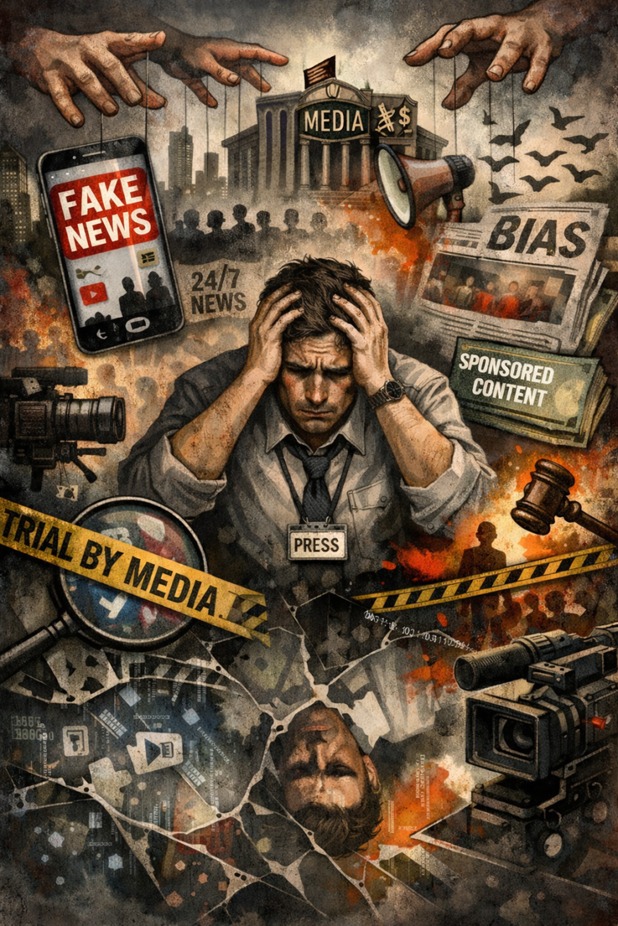
The pressure to be first has overtaken the duty to be right. In the age of the 24-hour news cycle and social media, speed often wins over verification. Headlines are crafted not just to inform but to attract clicks. Sensationalism travels faster than careful reporting, and engagement metrics increasingly shape what becomes “news.”
Economic realities have also reshaped the industry. Shrinking newsroom budgets and declining revenues have reduced the time and resources needed for serious investigative work. Too often, journalism risks becoming repetition rather than reporting, recycling information instead of uncovering it.
At the same time, political polarization has blurred the line between journalism and advocacy. Many outlets are now seen as aligned with particular ideological camps. Instead of presenting facts that allow citizens to form their own judgments, some media appear to present facts selectively, reinforcing the beliefs of their audiences.
The digital age has added a new layer of confusion. Misinformation spreads rapidly across social media, often faster than it can be corrected. Artificial intelligence can now generate convincing fake content, making the line between reality and fabrication increasingly difficult to detect. In such an environment, the public often struggles to know what to believe.
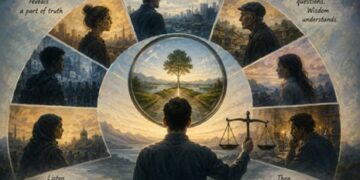
Yet, amid this skepticism, it would be unfair to paint all journalism with the same brush. Investigative journalism and documentary filmmaking continue to offer depth, context, and alternative perspectives. For those willing to engage critically, by comparing sources, watching credible documentaries, and following multiple news platforms, it is still possible to arrive at a more convincing, closer-to-truth understanding of events.
There are also journalists whose work rarely makes headlines but carries immense courage. Reporters covering floods, earthquakes, and climate disasters often bring out some of the most genuine and unfiltered stories, where politics plays little role and human reality takes center stage. In contrast, in war-torn and conflict zones where political interests dominate, free and fair journalism is often curtailed, and media blackouts are imposed. In such environments, courageous journalists risk not only their own lives but also the safety of their families to report what is happening on the ground.
For many of them, journalism is not just a profession but a moral calling. Some believe that every story must be told, while others see it as their duty to give a voice to the voiceless, the people who would otherwise remain unheard.
Even so, the larger concern remains. Sponsored content disguised as reporting, “paid news,” and the rise of trial by media continue to erode credibility. It is therefore not surprising that public trust in the media is declining across many societies. The issue today is not simply access to information, it is confidence in the information we receive.
Journalism now stands at a crossroads. It can continue down the path of speed, outrage, and narrative-building, or it can return to its core mission: truth, independence, and accountability.
The public still needs journalism, perhaps now more than ever. But trust will not be given freely; it must be earned again. And that responsibility lies not with algorithms or platforms, but with journalists themselves, especially those who still dare to tell the truth when it is hardest to do so.
Until then, the uncomfortable question will remain: is journalism informing the public, or merely shaping the narrative?